And why this simple nomenclature is relevant for planning military operations.
| << N/A | Lessons in artillery abuse >> |
Welcome to my website, and my inaugural post to coincide with the eightieth anniversary of the Normandy landings. I hope you like what you see, and want to see more of it. If so, please subscribe. Comments below are always appreciated, and you can email me or comment for any topic requests.
If you enjoy this blog and want to support it, please consider a donation. Keeping this blog going doesn’t cost much, but it isn’t free either, so any help would be very much appreciated👍
The name of the operation was not “D-Day”
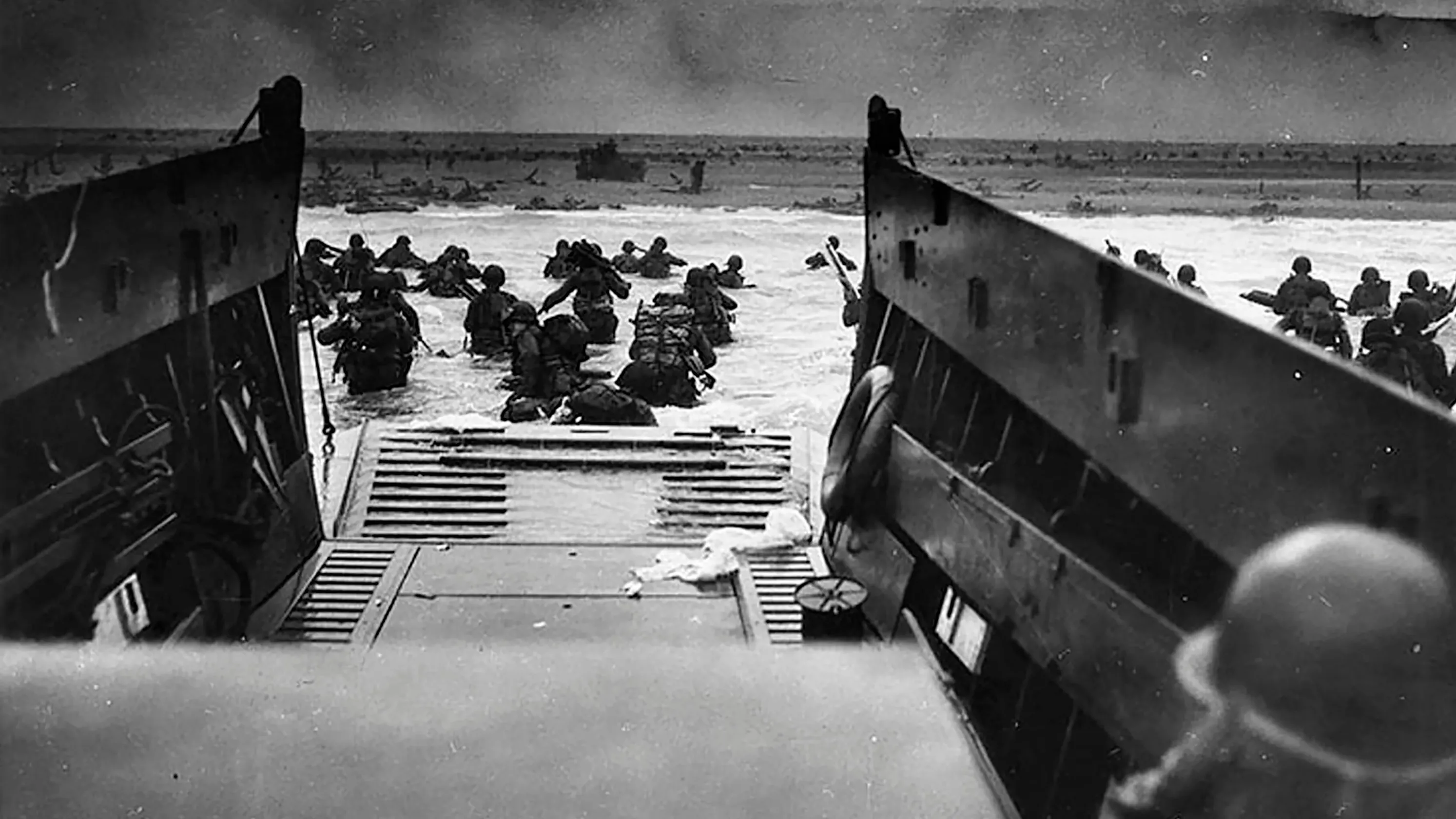
Today (6th June 2024) marks the 80th anniversary of the famous “D-Day landings” which opened up a major European front for the Western Allies in the war against Nazi Germany. The scale and audacity of this military operation were truly extraordinary and deserve recognition, even if we tend to focus on this to the exclusion of other important theatres of the Second World War. But why do we call it “D-Day”?
One common misconception (easily dispelled by Google) is that the “D” stands for “Deliverance” or “Disembarkation”. These misconceptions were helped, somewhat astonishingly, by Eisenhower himself, while US President. Even among those who realise that the “D” stands for “Day”, however, there is a further misconception that it applies uniquely to the Allied landings in Normandy. It does not. There have been many D-Days in military history, before 6th June 1944 and since.
The codename of the operation to invade France was “Overlord” (I am unilaterally deciding to abandon the military practice of capitalising the names of operations because this is my blog, and you deserve better). The amphibious landings were codenamed Operation “Neptune”. More on these operations below.
All military operations start on D-Day
All military operations—at least in Western, English-speaking militaries—start at H-Hour on D-Day. There are no marks going for creativity when it comes to military planning. Why do we use this stilted and confusing language, instead of stating the date and time? Is it just another example of dense military jargon? Not quite. This is a convention which actually makes a great deal of sense. There are three main reasons for using “D-Day” instead of a real date:
- Forward planning
- Secrecy
- Flexibility
The diagram below shows an illustrative operational timeline around H-Hour of D-Day.

Let’s examine, in the context of the Normandy landings, how each of these elements work in practice.
The Normandy landings are a case study in why we use “H-Hour” and “D-Day”
The Western Allies (UK, USA, and Canada) agreed to invade France at the Casablanca Conference of January 1943. From this point on, their military planning staffs could start working on a detailed invasion plan. They didn’t know when exactly this invasion would take place, since there was too much to figure out first, but they were confident of one thing: it would happen on a day, D-Day, to be precise. And it would happen at a time: H-Hour, on D-Day. They would need to keep the details and the dates of the plan a secret, and the plan would need to be flexible, adapting to new realities as the date drew closer. Now the planners were able to build a workable plan, with all of the dependencies. The diagram below illustrates very roughly how the plans were formed around a provisional date, which changed at the last minute. Having an unspecified “D-Day” allowed the Allies to draft the plan in the first place, it gave them secrecy while doing so, and it built flexibility into the plan when things changed.

Forward planning is best achieved with an unspecified date
Planning any operation is a complex task, particularly one as high-stakes as the invasion of France. There are lots of interrelated requirements, such as choosing the best place to land, determining what kind of preliminary bombardments are necessary, training the invasion forces in beach landing tactics, and assembling the ships and landing craft into a single naval force, to name just a few. Each of these steps has to happen at a set time before the operation starts, and in most cases in some sort of sequence. A grossly simplified example from the invasion of France in shown in the figure below.

By using an unspecified D-Day, planners are free to draw up their plans at any time. Moreover, they can draw up many different plans for many different contingencies. It’s a fair bet to assume that the number of actual military operations (in WWII or otherwise) is dwarfed by the number of operational plans which never saw the light of day. Each of these plans would be based around its own D-Day, a D-Day which never came. To quote Eisenhower (again): “Plans are worthless, but planning is everything.”
Unspecified dates and codenames help with secrecy
Secrecy was of the utmost importance to Operation Overlord. Hitler and his generals knew that an invasion of France was coming, but they didn’t know the time and the place. This meant that the German forces needed to cover every potential landing site, which in turn meant that their forces would be spread out when the appointed time came. This would leave troops in the invasion area overwhelmed while those in other sectors would be unable to contribute. Such is the nature of defensive warfare. The Allies created an entirely separate deception operation, named “Bodyguard“, to trick the Germans into believing that the main thrust of the invasion would happen in the Pas-de-Calais.

Using terminology like “D-Day” and “H-Hour”, along with codenames for the operations themselves such as “Overlord” and “Neptune”, allows for a degree of secrecy before the plan is put into action. The planners themselves may not know whether D-Day is planned for a specific date until very close to D-Day itself. In fact, the better the plan, the less requirement there is for them to know.
D-Day and H-Hour build flexibility into the plan
The final plans for Operations Overlord and Neptune were drawn up and D-Day was final given an actual date. The choice of D-Day was dependent on tidal and moon conditions, so there were a narrow range of dates to choose from. The Allies chose the 5th June 1944 as D-Day for both operations. As well as the D-minus stages mentioned above, there were many D-plus objectives as part of these plans. For example, Operation Overlord had the objective of capturing the French city of Caen by 2359 hours (midnight) on D-Day, i.e. the night of the 5th June going into 6th June. However, stormy weather in the English Channel forced the Allies to postpone D-Day by 24 hours, which is why it actually took place on the 6th June. This, of course, meant that the objective of capturing Caen would need to also move back by 24 hours, to midnight on the night of 6th to 7th June.
When the date for D-Day changed, there was no need to re-write this objective, and the many others in the plan. They were already specified in terms of D-Day, so once it changed, everything else would automatically change too. As it happened, it would take a month before Caen was captured.
In conclusion: Let’s appreciate the full complexity of Operation Neptune
What does it matter, you may ask? Who (besides military folks) cares about getting the terminology just right? Surely the fact that everyone calls 6th June 1944 D-Day should just be taken as a given? Well, perhaps. I would be swimming desperately against the tide if I pretended to think otherwise. And there is some justification in the fact that the most famous D-Day of all—the only famous D-Day, really—relates to Operations Overlord and Neptune, which were among the most complex in military history. I do think that knowing a little bit about the meaning of the term “D-Day” helps us to appreciate them even more, and this is what I hope I’ve achieved above. If you are interested in finding out more about “the” D-Day, aka Operation Overlord, aka Operation Neptune, then I suggest some of the excellent sources below.
Thanks for reading! I hope you’ve enjoyed my inaugural post on Military Realism. I really would appreciate your honest feedback, so please email me or leave a comment below. And if you’d like to read more, please subscribe. Future posts will cover:
- Hollywood explosions: where they come from, and why they’re wrong
- Magical bullets and harmless fragments—ammunition which knows good from evil
- “Over and Out”: How not to use a radio
- Or anything else that you’d like! Please let me know
Featured image: Robert F. Sargent, U.S. Coast Guard/National Archives and Records Administration via Wikimedia Commons


Leave a Reply