Introduction
Weapons of Mass Destruction (WMDs) used to be all the rage. You couldn’t throw a stone in a cinema without hitting a supervillian who was running some kind of plan to kill all or most of the world’s population with an ultra-toxic chemical or a deadly engineered virus.
WMDs have fallen out of most popular narratives in recent years, probably due to a combination of factors:
- The resurgence of conventional war in Europe
- The increasing visibility of the cyber domain as a threat vector
- Lingering cynicism from the lies preceding the 2003 Iraq War
With the world on the verge of entering a new era of asymmetric war and international terrorism (as of March 2026, a prediction I hope is quite wrong), I feel like it’s time to remind ourselves of these threats.
The CBRN “quad” consists of Chemical, Biological, Radiological, and Nuclear weapons:

Let’s deal with these in four chapters below.
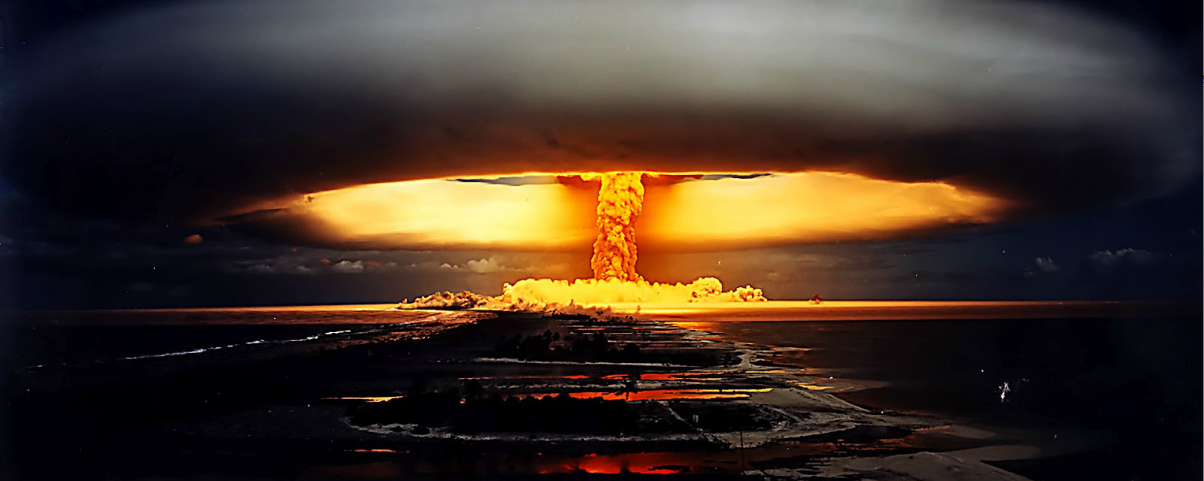
Cover Image: CTBTO, Licorne test 1970, French Polynesia. Available on Flickr.
Chemical weapons
Chemical weapons are nefarious tools which are most beloved of baddies in fiction and, in some cases, real life. We’ll focus first on the Hollywood baddies, and how they use chemical weapons (CW) because of their scary reputation, the effects they have on their enemies, and their strategic effect and utility in their schemes. Then we’ll discuss some real-life users of CW and contrast their experience with that on screen. Finally, we’ll spend a bit of time discussing the importance (or lack thereof) of CW in the modern military context.
The Hollywood view
Chemical weapons, and usually (more specifically), nerve gas, is unquestionably a favourite weapon of on-screen villains, to mention a few examples:

Before we go into detail on nerve agents, let’s take a minute to see where they fit in the grand scheme of CW:

There are three reasons for nerve gas’s popularity with on-screen baddies: fear, rapid lethality, and mass casualty effect.
Chemical weapons have a scary reputation
Let’s start with the fear factor, since this aspect is the closest to the truth. If you’re a supervillain, the mere threat of chemical weapons is enough to make world leaders sit up and take note of your demands.


Of course, this means that they also draw the attention of the world’s best spies, special agents, cops, and all-round good guys. There are real-life parallels here. The US and its allies went to war (and were ultimately defeated) in Iraq based in part on the supposition that Saddam Hussein’s regime had an ongoing CW program1. In fact, the intelligence that the UK’s MI6 intelligence agency obtained about Saddam’s CW program was so dramatic and alarming that it read just like a scene from the aforementioned The Rock:

This is, of course, because it was. The “intel” was lifted straight from the film, and the experts along the way who knew better2 said nothing, or were told to say nothing, because the government wanted to go to war and needed the justification. Another real-life parallel is Syria, where Basher Al-Assad’s use of CW against “rebel” civilian populations drew international ire and was a US red line—at least, until it wasn’t.
Back in Hollywood, screenwriters make good use of this fear factor. CW, like all WMDs, are so universally feared that including them in the storyline automatically raises the stakes for the heroes and makes the villain much worse. They also give the writers space to escalate or at least vary the threat from sequel to sequel or from series to series, e.g. in 24.

Chemical weapons have dramatic effects
Hollywood writers and the baddies they write both love CW for the dramatic, gruesome, and painful effects they have on their enemies. Nerve agents such as Sarin, Tabun, and VX first cause a runny nose, chest tightness, and pinprick pupils. Higher doses cause difficulty breathing, and the loss of control of bodily functions (i.e. vomiting, urination, and defecation). Death occurs from asphyxiation due to loss of control of the breathing muscles. Lethal doses can be as low as 20 milligrams for a fully-grown adult male, and nerve agents can be absorbed through the skin. Chemical weapons are scary and a dramatic way to go. They are not at all like the ballet-style fake deaths/knockouts in Goldfinger:
Bad and all as the above effects are, they are sometimes exaggerated for effect to include Simpsons-style “monsterism”:

Filmmakers take some liberties with these effects to raise the tension. After all, nerve gas is a lot less scary if a simple respirator and skin covering can protect against it. Instead, it’s made corrosive too, and blisters skin. And victims are often shown clutching their throats, although this would be a symptom of choking agents such as chlorine:

Chemical weapons are “super effective”
The biggest reason that CW are beloved of on-screen baddies is their supposedly highly lethal effects. This is also the furthest stretch of the truth, as we’ll see in the next two sections. Let’s summarise some of the ways selected supervillains try to use CW to achieve their strategic aims:
| Film & baddie | CW used and amount | Desired effect | Strategic aim |
|---|---|---|---|
| Hugo Drax, Moonraker | Nerve gas (from orchids), somehow only deadly to humans3. Less than one space-station’s worth | Kill all humans on Earth | Start humanity anew with master race |
| Brig. Gen. Francis Hummel, The Rock | VX nerve gas (15 rockets’ worth) | Kill many people in San Francisco | Extract money from government |
| Auric Goldfinger, Goldfinger | Delta-9 nerve gas (non-lethal and lethal variants). One aerobatic squadron’s worth | Incapacitate soldiers at Fort Knox | Access the gold in Fort Knox vaults and render it worthless |
| Terrorists (or so it seems), 24 | Sentox VX-1 (20 canisters) | Mass casualties in LA | Change US foreign policy (or so it seems) |
In each case, notice how the desired effect involves mass casualties (or all the casualties, in the case of Moonraker). This is the least realistic aspect of CW in film & TV: they work well. As we’ll see in the next section, CW, while scary (and something you don’t want to be on the wrong side of), are not magic. While Hollywood greatly downplays the lethal effects of explosives, as we’ve discussed on this blog before, it exaggerates the lethal effects of CW.
The reality of chemical weapons: terrorists
As I mentioned above, terrorists’ use of CW is unfortunately not confined to the silver screen. The most infamous example is the Tokyo subway attack by the Aum Shinrikyo cult in 1995. The cult manufactured their own sarin gas and released it on five packed subway trains during the morning rush-hour. They killed twelve and hospitalised 5,000. It was a despicable attack, and I wouldn’t want to minimise the suffering of the victims, but it could have been much worse. One way it could have been worse was if the terrorists had used explosives, like the perpetrators of the 7/7 bombings in London (52 killed and 800 injured) or the March 2004 commuter train bombings in Madrid (200 killed and 2,500 injured).
Another notorious terrorist use of CW was the attack on the “Midwest Fur Fest” furry convention in 2014 at a hotel near Chicago. This attack involved chlorine gas released in a stairwell adjacent to the man hall of the venue. Sadly, the perpetrators were never found. The police botched the investigation and most media commentators were dismissive of the attack because it related to the furry fandom4. Once again, however, and not to minimise the trauma caused, but these casualty figures could have been far, far higher if explosives were used instead of CW.
CW have also been used by the Tamil Tigers during the Sri Lankan Civil War in the 1990s (they used commercially available chlorine gas), and by ISIS during their heyday.
The most recent such attack (arguably not terrorist, since it was state-sanctioned) was the poisoning of Sergei Skripal, a British spy, and his daughter Yulia, by agents of the Russian Federation in 2018. The Russian assassins used the “Novichok”5 nerve agent in their attempted killing. The poison claimed its first victim several months later, when an unsuspecting person sprayed the discarded bottle of nerve agent onto their arm, thinking it was perfume, since it was in a perfume bottle.

Chemical weapons, therefore, have been used by various terrorist factions, but never to a great or decisive effect6. Put simply, CW, for all their horrors, are not as good at killing people as high explosives and bullets are. And terrorists are not the only people who’ve come to this realisation, as we’ll see in the next section.
The reality of chemical weapons: modern militaries
Modern armies don’t habitually use chemical weapons, because they’re not very effective. You might argue that it’s actually due to the Chemical Weapons Convention of 19977 which bans the use of CW, as well as the large-scale development, production, stockpiling, or transfer; and also mandates the destruction of existing stockpiles and verification. All UN member states apart from Israel, South Sudan, Egypt, and North Korea are parties to the agreement. Surely this explains it, right? The vast majority of countries are held in check by international norms, otherwise they would develop and maybe even use CW.
There’s one problem with this argument: international opprobrium has not stopped the world’s biggest powers from signing on to treaties banning other “unsavoury” weapons8 if there is a strategic advantage to be gained by keeping said weapons. For example:
- Landmines. The Ottawa Treaty (also of 1997) bans the use, stockpiling, production, and transfer of anti-personnel mines9. Although 164 countries have ratified the treaty, major exceptions include USA, Russia, China, India, Pakistan, Egypt, and Israel. In other words, anyone who feels they might need to use anti-personnel landmines has declined to ban them. Ukraine is a signatory to the treaty but this has not stopped it using anti-personnel mines against the Russians in the ongoing war.
- Cluster munitions. The Convention on Cluster Munitions (adopted in 2008 in Dublin and Oslo) does likewise for cluster munitions10. 124 countries have committed to the goals of the convention, with notable exceptions which will not surprise you one bit. At the time of writing, Lithuania had just announced its intention to withdraw from the treaty.
- Nuclear weapons. Although there is no international agreement banning nuclear weapons, there is the Nuclear Non-Proliferation Treaty (NPT). This is signed by almost every country (let’s come back to the four exceptions), although there’s a catch: any country which already had, or was about to develop nuclear weapons is allowed to keep them. Why? Because nuclear weapons actually are effective, unlike CW, and no sane country would give them up having developed them. And those four exceptions I mentioned above?
- India: Has nukes.
- Pakistan: Has nukes.
- Israel: Is universally assumed to have nukes, but does not confirm or deny.
- South Sudan: You would assume that, as a new country with bigger fish to fry until quite recently, they have simply not gotten around yet to joining.
International treaties won’t stop a country using the weapons it wants to use. The real reason that modern armies don’t use chemical weapons is that they’re not very effective, at least in the context of how modern militaries like to conduct their business. I’m going to summarise an argument made very convincingly by Brett Devereux in his ACOUP blog (if you don’t know it yet, you’re in for a treat). He says:
- Armies which follow the “modern” system are much more effective than those which don’t (for example, look at the US military Vs. Iraqi military in the First Gulf War).
- The modern system relies on lots of manoeuvre at the tactical level, which in turn relies on high levels of training of and trust in junior officers and NCOs. This is hard to achieve, which is why many armies11 are unable to replicate the effectiveness of “Modern System” armies.
- Chemical weapons, by denying the use of large areas for a long duration, can interfere with the ability of modern armies to do what they do best. However, respirators and chemical warfare suits enable modern armies to mitigate against CW, even if a less “modern” adversary uses them.

- Pound for pound12, CW are far less effective on the battlefield than high explosives.
- For these reasons, modern militaries eschew CW. As confirmatory evidence, look at the fact that CW production has stopped in all countries with a modern military.
I buy his argument, with the only caveat being that anyone who thinks that you can do normal military tactics in dress category 4R clearly hasn’t gone through the ritual “degradation” exercise which is part of CBRN training. But that’s a minor quibble. Modern militaries don’t use CW because they don’t have to: high explosives are more effective. If CW were effective on the battlefield, you can bet they would be using them (or at least keeping them in reserve as an option).
There were some reports, around the time I originally wrote this article, that Russia’s was using chloropicrin against Ukrainian fortified positions. Chloropicrin is a tear gas (“lachrymatory agent”, in the parlance) and also induces vomiting. Since we haven’t heard much more about it, it somewhat proves the point above.
Chemical weapons conclusion
Chemical weapons are not (or at least are no longer) effective weapons of war. They are also not hugely effective as terrorist weapons of mass casualty. They are, however, effective at causing fear and perhaps panic. Hollywood writers know this and use CW to impart a greater sense of threat. And all of this is not to play down their danger (which is very real) or the suffering they can and have caused (which is also very real), but to put their threat in perspective when compared to high explosives or other WMDs.
In this sense, chemical weapons might be more accurately described as “weapons of mass distraction” rather than “destruction.” But fear and panic are still very real things and can cause real death and injury as they spread in a population. Hollywood villains are right to consider CW in their master plans, but they should really keep a better eye out for spies who want to spoil their fun. And if they catch the spy, they should just shoot them there and then, no elaborate slow death nonsense. As always, XKCD has a comic for this:

Biological Weapons
I think BWs are the scariest of the four—yes, even more so than nuclear weapons or “dirty bombs” (the “R” in CBRN). And Hollywood seems to agree with me, since BWs are quite popular with supervillains on screen. We’ll discuss their popularity and why they are so scary, distinguishing some fact from fiction along the way. In the second half of the chapter, we’ll explain some reasons why biological weapons are (thankfully) quite rare in modern warfare and terrorism.
The Hollywood view
Biological weapons are the tool of choice for the discerning supervillain, and reflected by my in-depth research13:

The popularity of BWs in films come from the fear they instil in us, and the potential for chaos which they give a would-be terrorist. Before we dive into the why, let’s look at the what. For starters, although viruses get most of the attention (and probably rightly so), there are other vectors which can spread diseases and become weaponised as BW agents:

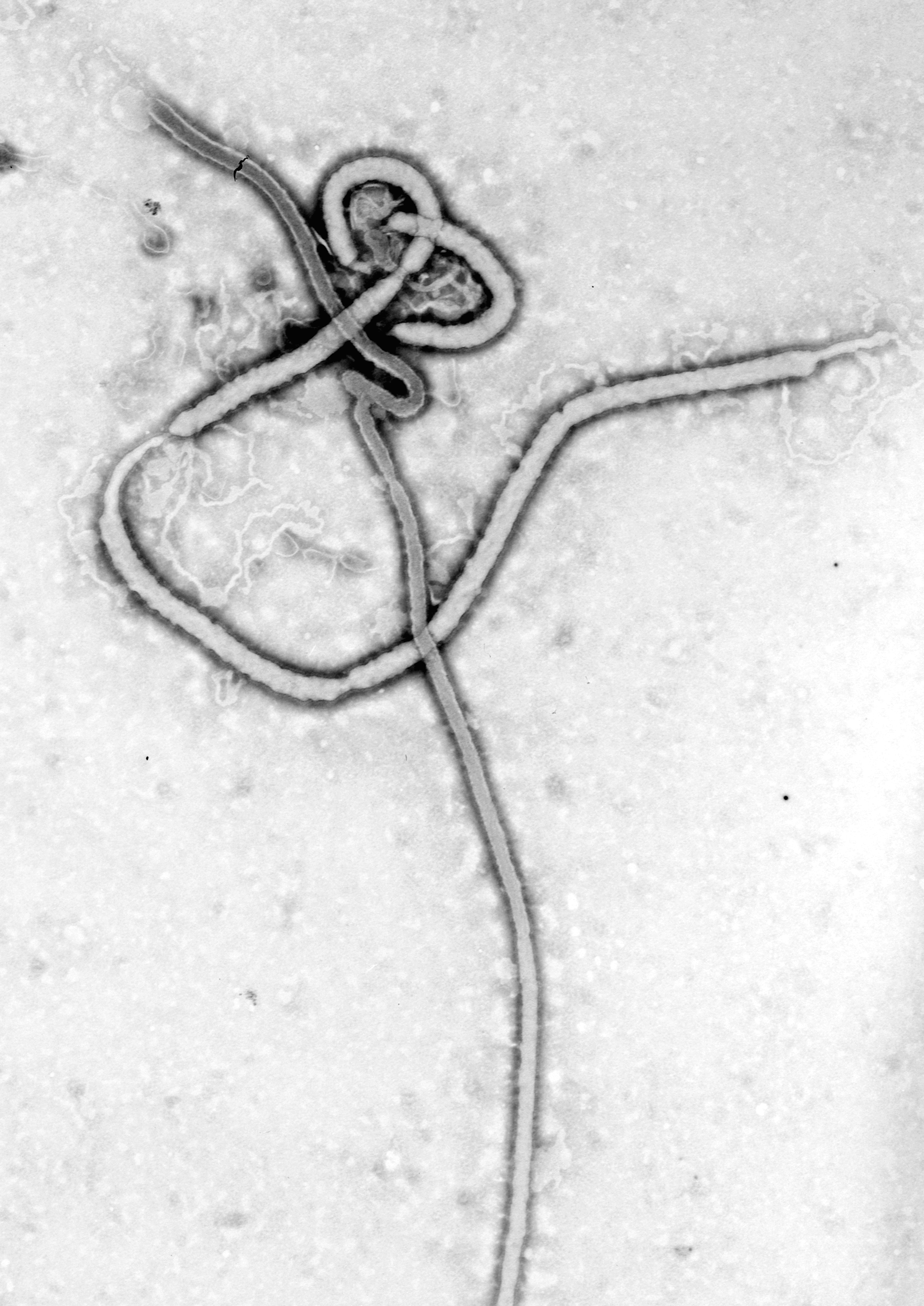

If, like me, you’re wondering what the hell a “Rickettsia” is, it’s a type of bacterium, but smaller and lives inside cells (like a virus), is carried only by insects such as ticks, and so is classified differently.
The US Centers for Disease Control has handily classified biological agents on a three-point scale:

They are arguably the scariest WMD…
Nuclear weapons will vaporise you, chemical weapons will make you soil yourself and die14, and dirty bombs might kill you slowly from radiation poisoning15, but nothing is a scary as an invisible living thing that colonises your body and kills you slowly from the inside. While you’re dying slowly and painfully, you’re also passing on the same lethal death sentence to your family and friends. BWs are scary because they are utterly indiscriminate, hard to protect against, and capable of killing in tiny doses.
Indiscriminate. A bacterium or virus doesn’t care who you are or what your intentions might be; it will infect and kill you regardless. This is why they are so useful as a terror weapon, e.g. Twelve Monkeys, Rise of the Planet of the Apes, The Omega Man / I Am Legend. The indiscriminate nature of BWs also allows plenty of leeway for lab leak disaster scenarios quite aside from terrorism, e.g. 28 Days Later, Outbreak, Contagion.
Hard to protect against. BW agents in film and TV are usually spread through the air and by person-to-person transmission. This isn’t entirely unrealistic, since many weaponised diseases can effectively spreading from person to person, e.g. plague and smallpox. However, many more BW agents cannot spread from person to person and “only” pose a threat to those exposed to the original attack, e.g. tularemia and anthrax. These are less common on screen, for obvious dramatic reasons.
Toxins such as ricin and botulinum are also classed as BW agents but are not actually living organisms, and so also don’t spread from person to person: more on toxins below.
Bang for your buck. It does not take much biological agent to kill someone:

BW agents (at least the live ones, not toxins) get a leg-up from the victim’s own body, when compared with CW. Those BWs which have high person-to-person infectivity get an additional exponential boost from their victim/host before moving on. Highly infective BWs can also enable the attacker to stay under the radar of the authorities.
…and are difficult to trace
Once the evildoers have opened the Pandora’s Box of biological warfare, it is difficult for the heroes to trace the origin. They’ll need to resort to some time-travel to really get the job done, like in 12 Monkeys:
Without giving too much away, it’s safe to say that Bruce Willis doesn’t have an easy job of it in finding the source of the original infection.
The lags (the incubation period) between exposure, infection, and symptoms means that BWs are well-suited to clandestine terror operations (if that’s not a contradiction in terms). These same factors, however, limit BWs’ utility in tactical operations for the military.
The recent COVID-19 pandemic shows how difficult it is to track down the source of a highly infectious disease. Opinions are still divided as to whether the SARS-CoV-2 virus came from animals, was accidentally leaked from a Chinese laboratory (most likely the Wuhan Institute of Virology), was deliberately released by China, and was concocted and released by the US (in descending order of credibility). Most sensible commentators agree that SARS-CoV-2 was not a BW attack (and, if it was a Chinese bioterror attack on the world, then it backfired pretty spectacularly on China). Thankfully, such attacks are much rarer in real life than in the movies.
The reality of biological weapons
It is difficult to be precise about the prevalence of BW attacks as distinct from other WMDs, because there is a significant overlap between the biological and chemical categories:

Within the biological part of the spectrum, Hollywood is more focused on the dramatic world-ending diseases, whereas real-world BW attacks have tended to involve biological toxins and less transmissible diseases.
Terrorism
Despite what Hollywood would have you believe, bioterrorism is quite rare in the real world. There are some examples, let’s start with those which caused the most deaths:
- 2001 anthrax attacks. A series of letters were posted shortly after the September 11th terrorist attacks containing anthrax spores. The attacks killed five and hospitalised 17 people in what remains the worst biological weapons attack in the USA:
- Er, um… that’s it for lethal attacks. The Rajneeshee cult in Oregon infected salad bars with salmonella in 1984, an attack which infected over 750 and hospitalised 45 people. This, among other “wild” activities, is documented in the 2018 documentary Wild Wild Country.
- There have been some attempted bioterrorist attacks: the full list is here, but some highlights are:
- Minnesota Patriots’ Council planned to attack the IRS16 using ricin in 1991: they were penetrated by the FBI.
- Aum Shinrikyo, the Japanese doomsday cult, attempted to use botulinum, anthrax, Q fever, and even the Ebola virus. Their BWs terrorism attempts failed but, as we saw above, they succeeded in killing 12 with their sarin gas CW attack. We haven’t heard the last of these guys yet in this series.
- Larry Wayne Harris, another US “patriot”, obtained anthrax and plague specimens and threatened to use them against US officials, but was apprehended before he could. Apparently he got the BW agents by writing to a supplier and getting them delivered to his home—on the one hand, how was that even possible?? On the other, it’s how the authorities found him, so was not the smartest move.
Two more BWs incidents of note, which I don’t count in the list above, are:
- The Soviet/Bulgarian assassination of Georgi Markov, a dissident living in London, in 1978. Markov was killed with what is presumed to be a pellet of ricin delivered into his leg by a modified umbrella. This doesn’t make the list above because it was state-sponsored. It’s also worth noting that this was a toxin rather than a “classical” BWs agent.
- The anthrax leak in Sverdlovsk, Russia, in 1979 (remember that date, it will be important later). This leak from a BWs factory killed over sixty people. It’s not included above because it was a state-sponsored BW and it was accidental.
What all the above have in common, be they ‘classic’ BWs or toxins, is that they’re much more modest and limited in scope than the world-enders we see in films such as 28 Days Later. Why is this? In my opinion, the issue is threefold:
- Capability. Terrorists will use what they can get their hands on. Creating genetically-engineered viruses is difficult: it requires specialised knowledge and expertise (although recent innovations mean it’s getting easier). It’s easier to obtain ricin, anthrax, or salmonella than Ebola, and a lot easier and safer to handle too. Once they get the BW agent, they need to find a way to disseminate it. Unless they have access to crop-spraying aircraft or can get into the ventilation shafts of large buildings, this will also be difficult, hence the focus on more durable spores and non-living toxins.
- Strategic goal. Terrorists will have a strategic aim to their attacks, and a large-scale mass-casualty BW attack may not serve their aim. After all, they probably want some sort of political concession: far better to do a targeted, highly visible attack rather than a global pandemic of slightly uncertain origin. An exception to this is doomsday cults such as the aforementioned Aum Shinrikyo: they just want to kill as many people as possible. Ebola is good for them.
- Biological limitations. Despite their undeniable scariness, BWs are still subject to the limitations of real biological processes. Diseases take time to incubate, do not spread perfectly, mutate from generation to generation and may get less lethal, and can be mitigated against with some simple (albeit very disruptive) public health measures, as we saw with COVID-19. The more lethal a BW is, the less likely it is to spread far and wide in a population.
Military use
Modern militaries don’t tend to use BWs, for various reasons which we’ll get to below. This wasn’t always the case: there is a surprising wealth of history of pre-modern armies using BWs against their enemies. This 2014 paper by Barras and Greub outlines the historical context in full. Some highlights include Scythian archers in the 4th century BCE dipping arrows into snake venom and/or human blood before firing, and the 1346 Mongol siege of Caffa, in modern-day Ukraine, where they catapulted plague-infected corpses into the city, potentially spreading the disease into the city and further afield. Other examples include the accidental infection of the peoples of the Americas with European diseases during the Columbian exchange, and the deliberate infection of American Indians by the British using smallpox-infected blankets in the 18th century.
In the 20th century, most major powers developed BWs. The most extensive testing and use of BWs during the Second World War was by the Japanese against China, where they carried out experiments on prisoners and tested weapons on Chinese settlements, killing an estimated several thousand. The most recent use that I can find is by Israel against the Palestinian Arabs during the 1948 War. Operation “Cast Thy Bread” involved poisoning wells with typhoid in villages that had been cleared of Arab inhabitants, thus preventing the return of that population. Casualty estimates are unknown, and the programme was never expanded as planned.
It’s hard to say whether BWs were more prevalent in the past and are less so today, since the examples above span a long time. The modern era brings the possibility of terrifying industrial-scale production of BWs, but it also brings the far more lethal innovations of artillery, strategic bombing, and machine guns. Until quite recently, most army casualties were from disease rather than enemy action. The idea of biological warfare becomes somewhat moot when your enemy’s army (as well as your own) is constantly being attrited by dysentery, cholera, and typhoid. In the modern era, advances in medical science and the development of protective equipment such as respirators will go a long way to mitigating the effects of BWs.
With chemical weapons, we discussed above how they are no longer used in great numbers by modern militaries, and this is mainly because they aren’t very effective. We saw how all major countries signed up to the Chemical Weapons Convention of 1997… except for those countries that still might want to use chemical weapons. A similar situation applies for BWs: the Biological Weapons Convention of 1975 has almost universal approval among UN member states17, but it’s a chicken-and-egg problem: did they sign the treaty because they have no use of BWs, or did they forsake BWs because they signed the treaty? It’s worth coming back to the Soviet-era anthrax leak at Sverdlovsk, which I mentioned above. This happened in 1979 which, if my math serves me correctly, is four years after the USSR signed this treaty.
Sneaky treaty-dodging aside, it’s clear that the vast majority of modern militaries don’t use BWs as part of their doctrine. Along with the problems mentioned in the last section for terrorists, there’s also the issue of timing: most BW agents, at least the live ones, will take hours or even days to start affecting the enemy. That’s simply not very useful in modern mobile warfare. As with chemical weapons, you can pack a much better kilo-for-kilo18 punch into high explosives.
Biological Weapons Conclusion
We said above that chemical weapons were really more like “weapons of mass distraction” than “destruction.” Is the same true of biological weapons? Based on historical trends to date, I would argue the same point as forcefully, if not more so. BWs have not been effective in modern warfare, and it’s doubtful that they were particularly decisive in the past either.
The one caveat, and the reason why I still count BWs as the most “scary” of the WMDs, is that a lone terrorist or a small group could still get lucky somehow: despite all the challenges I outlined above, a global pandemic could occur (we saw very recently that one did), and this could be the work of one small group. If we chart terrorist attack methodologies by difficulty of execution vs. effect, we see that BWs occupy a strange place which spans a large portion of the solution space:

The recent pandemic has shown us the horribly disruptive effect that even a low-lethality disease can have on the world. It’s safe to assume that potential terrorists are looking at this and thinking of how they can “copycat” this scenario in the future. Bioterrorism is a real future threat, and so we can expect the films about this topic to keep coming.
Radiological Weapons
“Adding radioactive material to high explosives makes it a bit more dangerous.”
—Radiological Weapons Expert
This chapter deals with the relative newcomer, radiological weapons, also known as “dirty bombs” (absolutely not to be confused with a dirty protest, which arguably was a type of biological warfare).
Elder (military) lemons like myself remember when “CBRN” was the simpler “NBC”, i.e. nuclear, biological, and chemical. What, then, is “radiological” warfare, how does it differ from nuclear warfare, and why was it considered so worthy of inclusion that the military industrial complex forsake a cherished three-letter abbreviation in favour of a more cumbersome four-letter one? Furthermore, how has Hollywood responded to this new threat? Do the film and media depictions of radiological warfare reflect its true level of threat? Read on to find out.
The novel threat
It was around twenty years ago, in the post-September 11th new security paradigm, that “radiological” was added to the pantheon of scary WMDs. The world was waking up to the sheer breadth and depth of possible threats as would-be terrorists were trying everything from liquid bombs to explosive underpants. The dirty bomb, or “radiological dispersion device”, was a new horizon for earnest security experts, over-zealous intelligence agencies, and Hollywood screenwriters alike.
A radiological dispersion device (RDD) is a device which spreads radioactive contaminants over as wide an area as possible, with the aim of inflicting harm through radiation poisoning. It does not cause a nuclear explosion. There is quite a significant difference. Graham Allison, a nuclear terrorism expert, has described the difference as: “If a nuclear explosion is like lightning, a dirty bomb is like a lightning bug.” Here’s what he meant:

Another enabler of RDDs, which also fed into the post-9/11 environment, was the breakup of the USSR a decade previously and the subsequent loss of nuclear materials from previously well-guarded facilities. This was not just theoretical: Chechen rebels had planned and threatened to use RDDs in the mid 1990s as part of their war against Russia. The idea behind an RDD is quite simple:

You don’t need a superpower collapse to get your hands on radioactive material, however. Hospitals have nuclear sources for radiotherapy and imaging, and the security of these sources can sometimes fall short of ideal. The most infamous example of this happened in 1987 in Goiânia, Brazil, when two thieves stole a radiotherapy source containing Caesium-13719 from an abandoned hospital. They dismantled the protective shielding and discovered a glowing blue powder which they started extracting from the source container. The dismantled container and radioactive powder was passed among the neighbours until some displayed signs of radioactive poisoning. Four people died and almost 250 were found in hospital to have radioactive contamination. The cleanup operation involved levelling 85 homes and businesses and even removing soil.
Of course the Goiânia accident was not due to terrorism, rather to plain old criminal opportunism and tragic ignorance. If it had been a terrorist attack, however, the device used would not have been classified as an RDD or dirty bomb, since there was no explosive element. Instead, it would have been called a “RED”: Radiation Explosive Device. The difference between an RED and an RDD is the absence of a “boom”: rather than spreading radioactive material over a wide area, the idea is to silently and stealthily expose people over time.

The most notorious example of RED terrorism (albeit state-sponsored) comes, once again, from our friends in Russia’s security services. In 2006 Alexander Litvinenko, a former Russian security services agent and prominent critic of Vladimir Putin, was admitted to hospital with what would turn out to be severe radiation poisoning. He died three weeks later and Polonium-210 was found to be the substance which killed him. Litvinenko met fellow Russian security men in a hotel bar in London, and this is where the poisoning (or, to be precise, the RED20 attack) took place.

The closest that the USA came to seeing an RDD attack was with José Padilla, an Al-Qaeda member who allegedly spent time in Pakistan researching RDDs and was arrested on arrival at Chicago in 2002. He was detained as an enemy combatant, so never faced trial, which was probably for the best as far as the authorities were concerned, since the evidence seems to have been very thin.
Although radiological warfare has only recently arrived on our threat horizon, Hollywood has made a determined effort to catch up and serve it back to us.
The Hollywood view
The early 2000s saw, as we mentioned above, a focus from law enforcement on the threat from RDDs. This (US) Public Service Broadcasting documentary from 2003 has it all: post-9/11 alarmism, ominous voiceovers, and a surprisingly balanced analysis of the risks:
Hollywood21 wasn’t long getting in on the act. Dirty War, a BBC/HBO production in 2004, tells the story of an Al-Qaeda RDD initiating in Central London. Cue hordes of panicked civilians being held back by scary security forces in gas-tight suits and respirators:

Right at Your Door (Roadside Attractions, 2006) is next on the bandwagon. They love the idea of WMDs so much that they can’t even pick one to go with: what starts as a “dirty bomb” is also somehow a chemical attack and ends up as a virus, i.e. a biological weapon22. The film industry loses interest after this point; they are much more interested in nuclear weapons, for obvious reasons which we’ll nevertheless get into below.
TV takes up the mantle in a big way from here on. In chronological order, we have:
- Numb3rs Season 1 Episode 13, the appropriately named “Dirty Bomb“, from 2005. This contains a textbook example of the trope of nerds writing random mathematical gibberish on a blackboard to reach a bizarrely precise answer to what would be an incredibly complex calculation23:
- Dirty Bomb Diaries, 2007
- 24 Season (Day) 8, 2010
- Castle “Countdown” episode 2011, clip here
- Flashpoint “Keep the Peace” episode, 2012
- Madam Secretary “Right of the Boom” episode 2016
After this, even TV seemed to lose interest in dirty bombs, presumably because by 2016 all was right with the world and we hadn’t yet entered the bad timeline. Or perhaps it’s because filmmakers eventually realised that dirty bombs are, you know, kinda lame.
The mundane reality
I know what you’re probably thinking: radiation is terrifying and there’s no way you’re going to let me tell you it’s not. Okay. Fair enough. I agree: radiation is scary. Alpha particles will bounce off your skin harmlessly enough, but if they get inside your body they will act like battering rams on your soft internal tissues. Beta particles will give you bad burns on any exposed skin. Gamma rays, meanwhile, will shoot right through you like tiny little bullets, chopping your DNA into chaotic little pieces. Your only protection from gamma radiation is metal or concrete shielding, and lots of it:

Radiation is scary, but it isn’t black magic. Let’s reprise and modify the detailed analysis we did previously for explosives:
| How big an effect do you want your dirty bomb to have? | How much radioactive material do you need to achieve this? |
|---|---|
| Small effect | Small amount of radioactive material |
| Medium effect | Medium amount of radioactive material |
| Large effect | Large amount of radioactive material (but you’ll still end up wasting most of it) |
Unless a terrorist got their hands on a truly staggering amount of radioactive material, they would be unlikely to do permanent damage to very many people. Never ones to slouch when it comes to novel threats, Israel conducted testing between 2010 and 2014 in the Negev Desert and concluded that RDDs posed no substantial danger.
The scariest part of any dirty bomb is the high explosives. This is not a flippant dismissal: high explosives really are terrifying, as we’ve covered before. Just ask the survivors of the Oklahoma City bombing in 1995 (about 700 of whom were injured, along with 170 killed), the Omagh bombing in 1998 (220 injuries and 29 deaths), or the Dublin and Monaghan bombings in 1974 (300 injured and 35 killed). When I see a TV dirty bomb like this (from Castle, “Countdown” episode):

I’m not too worried about the big yellow thing with the trefoils on it. After all, the thick metal casing is what’s shielding the source inside from causing me harm. As long as that container isn’t blown open, I’m fine. And if it is blown open, the ~50 kg of explosive will give me a lot more to worry about than the radioactive material.
The real threats from an RDD, which, to be fair, many of the films and TV shows above do acknowledge, are:
- The mass panic it would induce in the populace
- The exorbitant expense of the cleanup operation, especially in a built environment
Radiological Weapons Conclusion
Just because the primary threat from a dirty bomb is psychological, doesn’t mean it isn’t real. Having said that, it’s yet another exaggerated threat we’re faced with, while the quite serious threats from explosions and gunshots get downplayed on screen.
It’s worthwhile at this stage comparing perception with reality for the WMDs which we’ve discussed so far:
| Type of WMD | Perception | Reality |
|---|---|---|
| Chemical weapons | Huge terroristic and military potential kept in check by international agreements and a stern moral code | Of niche military importance at best, and relatively limited effect for terrorists too |
| Biological weapons | Potential world-ending viruses just waiting for a lucky terrorist to set them free on a poor unsuspecting world | Very few terrorists want to end the world (thankfully). Plus, this stuff is hard. Some biological toxins can be effective (e.g. ricin) |
| Radiological weapons | Deadly radiation could be spread in our cities, leading to slow agonising deaths from radiation | Not likely to be effective, besides their conventional (i.e. explosive) elements |
The common theme so far is that these are more like weapons of mass “distraction” rather than destruction. So far, then, you might be thinking that the “CBR” part of “CBRN” is a bit of a damp squib, and you might be worrying/hoping that the same comforting story will apply to nuclear weapons. Well, without giving the game away too much… it will not.
But, as always, far be it from me to dismiss what is very real suffering at the end of the day. Just because terrorists would cause more harm and suffering with a car bomb than with an RDD, doesn’t mean that the eventual victims of the RDD matter any less. Radioactive material can pose a serious hazards to health, and there’s very good reasons why hospitals and other industrial users of radioisotopes keep them under strict lock and key (or at least they should).
Nuclear Weapons
If you’ve been following the chapters above, you’ll know that I’ve been casting a lot of doubt on the Hollywood depictions of the destructiveness of these weapons, hence the “weapons of mass distraction” subtitle above. Does the same apply to nuclear weapons?

In short, no. Their fearsome reputation is entirely deserved, and we’ll discuss how NW achieve such destruction by tearing apart material at a more fundamental level than normal explosives do, and producing several different types of deadly effect.
We’ll also discuss how these weapons are difficult to make, requiring the concerted effort and expertise of a powerful state. This probably puts them beyond the ability of most terrorist groups, which is one of the areas where Hollywood does go outside the bounds of realism when it comes to NW. Finally, we’ll discuss the term “weapons of mass destruction” and where it came from, and see how NW, much more so than radiological, biological, or chemical weapons, deserve to be thought of this way.
Why nuclear weapons are so destructive
Where the energy comes from
We touched on this above when talking about radiological weapons (i.e. dirty bombs), but it bears repeating. A nuclear explosion is a very different beast to a “chemical” (i.e. a high explosive) explosion24, happens many thousands of times faster, and is millions of times more powerful:

By harnessing the energy in the nuclear bonds rather than the chemical bonds, a single piece of nuclear fuel can produce millions of times more energy per unit of mass than conventional explosives. Of course, the energy in these nuclear bonds can be harnessed for good as well as for ill, via a nuclear reactor:
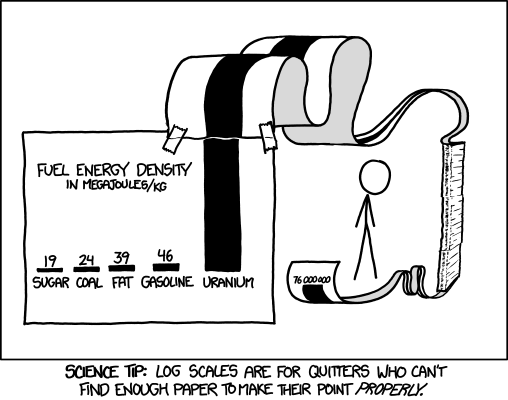
Peaceful nuclear power is a whole other discussion point, however, with its own Hollywood fails which we might get into sometime, but not today.
How the energy gets released
The energy released from the nuclear bonds mentioned above gets expressed in several different forms:

What the graph above is showing is the several distinct events which happen as part of a nuclear explosion.
- The very first thing that hits you is a burst of gamma rays travelling at the speed of light. You won’t see or feel anything. Gamma rays, as we saw above, travel right through your body: it takes thick, dense materials (e.g. lead shielding) to stop them. Because they travel straight through, many of the gamma rays do little or no damage. Unfortunately, in a nuclear explosion, the level of gamma radiation may be high enough to cause radiation sickness, which could cause nasty symptoms within days or even hours. The good news is that you won’t have to worry about this. The bad news is that your life is about to get much worse.
- Shortly after the gamma ray burst is a burst of electromagnetic radiation27: the infamous electromagnetic pulse, or EMP. This has no impact whatsoever on you28, but may damage unshielded electronics you’re using.
- The third thing to hit you is the neutron radiation. This is a much nastier form of ionising radiation, and one that’s rarely seen outside of nuclear physics. It’s travelling roughly a hundred times slower than the gamma radiation, but each unit of energy does about ten times more damage to your body as it passes through. You’re probably dead from this type of radiation in the longer term, but you’ll soon have more pressing problems. Neutron radiation has another nasty result, which is that it makes other materials radioactive, leading to long-term effects such as fallout (see below).
- The next thing to get you is the thermal radiation. This is just like the heat from the sun (infrared light) but as if you were standing much closer to it. Depending on how close you are, this might incinerate you.
- Finally, if the wall of heat didn’t get you, the blast may well. This is a wall of air being pushed forcefully outward, tearing away everything in its path. It’s just like a normal explosive blast, but at a much larger scale. The blast consists of a large positive (i.e. outward) pressure wave followed by a smaller negative (inward) rebound. The negative pulse, although less intense, can do more damage than the initial pulse because 1) it lasts longer and 2) structures have already been weakened and are now being pushed the other way, like bending a piece of metal back and forth until it breaks. The video below shows the blast wave effect, positive and negative, on trees:
The infamous “nuking the fridge” scene from Indiana Jones and the Kingdom of the Crystal Skull does show the thermal pulse before the blast (although it would happen much quicker, in fractions of a second). In all other respects, of course, this scene is ridiculous29:
And what it does to people
A nuclear explosion would undoubtedly be a devastating event. But how devastating? There are many variables, of course, but a chapter (available online) in a 1986 book The Medical Implications of Nuclear War gives an estimate of deaths and casualties in the US if the Soviet Union were to attack them with 100 nuclear weapons, each with a yield (destructive effect) of 1 megaton. It’s worth bearing in mind that such an attack scenario is on the low end of what either superpower is capable of:

There are factors of weather, topography, and building types that can change the destructive effect of a nuclear explosion. For example, the bomb that was dropped on Nagasaki by the US during the Second World War was more powerful than the one which was used to attack Hiroshima days previously, but the steep hills of Nagasaki, the fact that the bomb was dropped off-target, and the fact that a firestorm didn’t break out, all resulted in fewer casualties in the latter attack. The total number of casualties, all rough estimates30 from The Bulletin of the Atomic Scientists and Newsweek, were:
| Attack | Deaths from heat, blast , and fire (immediate) | Deaths from radiation or injuries (within days/months) | Death attributed to radiation (within years/decades) |
|---|---|---|---|
| Hiroshima | 80,000 | 50,000 | 1,000 to 70,000 |
| Nagasaki | 40,000 | 30,000 | 1,000 to ? |
You can see how uncertain the estimate of increased cancers is. The same uncertainly applies to the figure for total casualties (from increased cancer rates) from all nuclear atmospheric testing since 1945. This figure is estimated at anywhere from “tens of thousands” to over 200,000.
Fallout is not the largest contributor to casualties from a nuclear explosion: blast and heat are, with immediate radiation effects also being significant. Films and TV shows tend to focus more on the threat from fallout, however31, with one classic example being Dr. Strangelove:
The explosions in the clip above come from real-life nuclear test footage and depict nuclear and thermonuclear explosions, not the “salted” Cobalt-60 weapons which make up the doomsday machine in the film. The idea behind such a device (or series of devices) is to use the radiation produced by the thermonuclear explosion to turn some normally harmless Cobalt-59 into32 Cobalt-60, which gets vaporised and scattered by the blast. This would contaminate33 a large area (in Dr. Strangelove, the whole world, since the Russians make enough bombs) for a century after the blast. Fortunately, this type of “salted” weapon is only theoretical, and it’s unclear whether such a device would even work: the only time cobalt was used in a nuclear test (in 1957, by the British, and not for the purposes of creating large-scale contamination), it was regarded as a failure.
Since nuclear weapons are (thankfully) no longer tested these days, nuclear superpowers need to rely on test data from the days of unrestricted, devil-may-care blasting. This means they’re (again, thankfully) unlikely to build or use an untested “salted” bomb: a very small mercy in the context of nuclear weapon destructiveness. Nuclear powers will rely on their tried-and-tested designs because nuclear weapons are fiendishly difficult to make, as we’ll discuss next.
The challenge of making nuclear weapons
Obtaining materials
The first barrier to making nuclear weapons is getting the right “fissile” material34. This is hard. For example, in August 1945, the US had one bomb’s worth of enriched uranium, and they used it all in “Little Boy”, the weapon they used against Hiroshima. Plutonium is an alternative weapon material (and it’s what they used for the Nagasaki device, “Fat Man”), but it makes for a more technically challenging weapon (see next section). Besides, creating plutonium is a whole other technical challenge too. So it usually starts with uranium, and there are two challenges here:
- Finding natural uranium. Uranium exists in mineral deposits in the ground35, although these deposits are not uniformly distributed. Kazakhstan, Australia, Namibia, and Canada are some of the world’s largest producers. If you’re looking to make a bomb and you don’t have reserves under your own soil, you can either buy it from a friendly country (which might pose problems if they know what you want to use it for) or extract it from seawater, although this technology is not yet proven at scale.
- Enriching the uranium to weapons-grade material is the next step. Naturally-occuring uranium is about 99% U-238, a non-fissile version of the natural. Enriching can bring the proportion of fissile U-235 from 1% up to the 90% needed to work in a bomb. This is a complex process, however, involving lots of gas centrifuges connected in series, and is difficult and delicate, especially when you’re getting bombed all the time.


It’s important to make a distinction here and reinforce what we discussed above regarding radiological “dirty bombs.” Radioactive sources are not especially hard to come by (e.g. hospitals generally have them), but “radioactive” is very different from “fissionable.” There was a decade or so of panic after the collapse of the Soviet Union, where intelligence agencies worried that “abandoned” nuclear weapons material in places like Ukraine and Belarus would find its way into terrorists’ hands. There were several instances of sting operations where fissile material was bought on the black market, which would obviously raise alarm bells. In each case, though, it later turned out that the buyers were journalists or intelligence agents doing a sting operation and there was no actual terrorist involved.
The Sum of All Fears, a 2002 adaptation of a Tom Clancy novel, expressed these post-Cold War concerns. A neo-Nazi faction36, led by an East German nuclear weapons scientist, obtain an Israeli nuclear bomb which was lost in the Golan Heights during the Yom Kippur War. The terrorists initiate the bomb at the Super Bowl stadium in Baltimore, causing mass casualties:
As you’d expect from Tom Clancy, the novel has some more realistic detail about the technical performance of the weapon (which the terrorists fail to understand before killing the scientist), and its explosion is a “fizzle” (of which more detail in the next section).
Finding an old warhead is probably the most realistic way that terrorists could “improvise” a nuclear weapon, because of the difficulties obtaining material which we’ve outlined above. Even assuming they got the material, however, turning it into a deployable weapon would be another huge leap of engineering. Even repurposing an old intact bomb would pose huge challenges for a terrorist group unless they had significant resources and expertise. We’ll discuss the technical challenges of nuclear weapons in the next section.
Getting the engineering right
Once you obtain the fissile material for a nuclear weapon, your problems have only just begun. The material you have will dictate the type of weapon you can build. In theory, it’s simple: assemble a “critical mass” of uranium or plutonium, and a nuclear chain reaction will happen, releasing devastating amounts of energy. The challenge is that the energy released by a critical mass of fissile material (i.e. the explosion) pushes the material apart, so it stops being a critical mass:

When only a small portion of the nuclear material undergoes fission this is called a “fizzle”, as mentioned in the previous section. A fizzle means a reduced yield (i.e. less destruction). We need to put this in perspective, though: it could still have devastating results. The bomb dropped on Hiroshima (although not considered a fizzle) resulted in “only” 1.4% of the uranium undergoing nuclear fission—the rest was scattered in the explosion. It still killed over 100,000 people. To minimise the effects of fizzle, two different designs are used, depending on the fissile material:


The gun-type design is easier to build (although it would be a mistake to call anything nuclear-related “easy”). As I mentioned above, during WW2 the US only enriched enough uranium for one bomb. They didn’t even test it, because they were so sure that it would work. The implosion type is more difficult to build, and the Americans did test this one (the so-called “Gadget” used in the Trinity Test, as depicted in Oppenheimer). For an implosion device, a whole host of things need to go right at precisely the correct time for it to work:


Even detonating the high explosives, normally an easy thing to do, needs to be meticulously synchronised37 in an implosion device or else the explosive shockwave will be asymmetrical and will lead to a non-nuclear explosion.
The complexity of nuclear devices isn’t always reflected in Hollywood. Season Six of 24 takes the idea of a “suitcase nuke” to extreme levels with a device the size of a large pipe bomb :

A more realistic mini-nuke (and not suitcase size) is shown in The Fourth Protocol. In the clip below, the two Russian agents assemble the gun-type device from disguised parts:
Hollywood aside, the threat from nuclear terrorism, although real, is unlikely, according to nuclear experts. As early as 1953 the White House had issued a memorandum (reproduced in this book) to all US law enforcement agencies listing some of the ‘tell-tale’ characteristics of a nuclear weapon as used by terrorists or enemy agents, including:
- Extremely heavy objects, heavier than lead (i.e. fissionable material)
- Steel cylinders ranging in diameter from five to twelve inches, open or closed at each end (for gun barrel-type weapons)
- High explosives shaped into a segment of a sphere (for implosion-type weapons)
There were rumours in the 1990s that the feared Aum Shinrikyo cult, who we’ve encountered before in the context of chemical and biological weapons, were secretly developing a nuclear weapon in the Australian outback, but these rumours have been debunked.
Nuclear Weapons Conclusion
We previously discussed how chemical and radiological (and, to a lesser extent, biological) weapons get a more dramatic treatment on-screen than is warranted based on the real threat they pose. The same cannot be said about nuclear weapons: the threat on screen reflects the threat in real life (albeit with a bit of dramatic licence given to nuclear terrorists, but we’ll forgive that), and nukes are truly deserving of the WMD label. As to whether the other “CBR” elements deserve this moniker, this is much less clear. So where did this come from, and why do we lump CBRN or NBC into one bucket along with WMDs?
Conclusion: The truth about WMDs
The first use of the term “weapons of mass destruction” has nothing to do with N, B, C, or even R type weapons. The Archbishop of Canterbury used the phrase to describe his horror at the bombing of Guernica during the Spanish Civil War:
Who can think at this present time without a sickening of the heart of the appalling slaughter, the suffering, the manifold misery brought by war to Spain and to China? Who can think without horror of what another widespread war would mean, waged as it would be with all the new weapons of mass destruction?
—Archbishop Lang, 1937

Strategic38 bombing was a new horror which emerged in the 1930s, but it saw a horrific expansion during WW2. Aside from the atomic bomb attacks on Hiroshima and Nagasaki, mentioned above, there were raids with conventional or incendiary39 bombs which killed tens of thousands of civilians at a time (or in the case of Tokyo on 9-10 March 1945, over 100,000, which was more than either atomic bomb).
The emergence of nuclear, and later, thermonuclear40 weapons upped the ante considerably in terms of “mass destruction”. Throughout the Cold War, WMDs were synonymous with nuclear weapons. The first use of the term in relation to chemical weapons came in 1989 by the US as it was preparing the ground for its first invasion of Iraq.
The rest, of course, is recent history: as we’ve seen throughout this article, the threat from CBR weapons was built up during the 1990s and 2000s (whether in good faith or not). So it’s worth bearing the political context in mind when we think about CBRN weapons and WMDs.
The original meaning of “WMD” still stands, however, despite the semantic shift to include CW, BW, and RW. Interestingly, some legal frameworks (notably the US criminal code, and by extension the FBI’s definition) include conventional explosives under the WMD umbrella. The 2013 Boston Marathon bomber was convicted in 2015 under this “weapons of mass destruction” definition and sentenced to death.
I’m going to leave the last word to nuclear scientist Gert G. Harigel, in a 2001 article he wrote for the Nuclear Age Peace Foundation. This quote sums up the main through line of this series, which is that we should look at each element of CBRN in a different way:
The term “Weapons of Mass Destruction” (WMD), used to encompass nuclear, biological, and chemical weapons, is misleading, politically dangerous, and cannot be justified on grounds of military efficiency… Whereas protection with various degrees of efficiency is possible against chemical and biological weapons, however inconvenient it might be for military forces on the battlefield and for civilians at home, it is not feasible at all against nuclear weapons. Chemical weapons have shown to be largely ineffective in warfare, biological weapons have never been deployed on any significant scale. Both types should be better designated as weapons of terror against civilians and weapons of intimidation for soldiers.
—Gert G. Harigel, 2001
- He did undeniably have a CW program in the past: the Iraqis used CW during their 1980-88 war against Iran. ↩︎
- For one thing, nerve gas isn’t kept in glass, which is rather notoriously breakable, and the last material you’d use in a munition of any kind. ↩︎
- And delivered in <sigh> glass globes. ↩︎
- Some examples of contemporaneous reporting are here and here, with a notable lack of mainstream outlets. If you want to know more about this, I would strongly recommend Fur and Loathing, a podcast about this incident and the hunt for justice for the victims. ↩︎
- “Novichok” is Russian for “newbie”, and is not a single substance, but a family of new nerve agents which are binary. This means they are stored and transported as two separate, less or non-toxic substances, which combine to form the deadly CW. ↩︎
- Of course, you could debate at length the meaning of “decisive” in the context of terrorism, but at its simplest, it would involve killing many people. And again, while not minimising the pain and suffering of victims in the examples above, it’s quite clear that CW never came close to matching the horrors of conventional explosive terrorism. ↩︎
- The Convention on the Prohibition of the Development, Production, Stockpiling and Use of Chemical Weapons and on their Destruction, administered by the Office for the Prevention of Chemical Weapons (OPCW). ↩︎
- This supposes, of course, that there are “savoury” types of lethal weapons, but you get my drift. ↩︎
- Anti-tank mines are still “fine”. ↩︎
- Which I’ll cover in more detail sometime. For now, think of cluster munitions as one big bomb which dispenses a whole bunch of small bombs. The problem they pose is that lots of the small bombs don’t explode right away and pose a threat to civilians after the conflict has ended. ↩︎
- Devereux calls them “Static System” armies. ↩︎
- Kilo for kilo, if you hate freedom. ↩︎
- Thirty minutes of Googling and using some key phrases on a movie script database. This is not an exhaustive list; please let me know what examples I missed. ↩︎
- Or melt your face off, if we’re getting very dramatic and taking a few liberties with realism. ↩︎
- “Might” being the operative word: we’ll hopefully come onto this later. ↩︎
- US Internal Revenue Service. ↩︎
- With the usual suspects absent: Chad, Comoros, Djibouti, Eritrea, Israel, and Kiribati; with Egypt, Haiti, Somalia, and Syria being signatories who have not yet ratified. ↩︎
- Plot twist: I’m the one who hates freedom! ↩︎
- The number after the element name (the “137” in “Caesium-137”) means that it’s an isotope, i.e. a version of the atom with a different number of neutrons. Probably the most well-known isotopes are Uranium-235, used in nuclear reactors and weapons (Uranium-238 is the “normal” one) and Carbon-14 used in archaeological dating (Carbon-12 being the more common version found in our bodies). In short, if you see a number after it, it’s probably radioactive. ↩︎
- To be pedantic, the “D” in RED, for “device”, implies a greater level of technology than what occurred in Litvinenko’s case. His tea was poisoned with the radioactive Polonium-210. ↩︎
- As usual, I’m using “Hollywood” in a generic sense to refer to English language film and TV in general. ↩︎
- How a virus is supposed to have survived the high explosive bombs is not explained. ↩︎
- Sorry about the Serbian subtitles (unless you’re a Serbian speaker, in which case, you’re welcome!). ↩︎
- Although, as an aside, it takes a lot of very precise high explosives to initiate a nuclear explosion, by shaping a detonation wave into a collapsing implosion which compresses the nuclear fissile material into a critical mass and causes the nuclear explosion. ↩︎
- Nuclear weapons are so powerful that scientists and engineers came up with an entirely new way of measuring their effects. 27 kt means 27 kilotons, or the same blast effect as 27,000 tonnes of TNT. Remember the 500 tonne stack of TNT we saw a few weeks ago in our lightsabers post? That’s a lot of explosive, and made a very impressive bang. But this bang was “only” 0.5 kilotons TNT equivalent, a tiddler in nuclear weapon terms. They go all the way up into the megaton (millions of tonnes of TNT) range. ↩︎
- Logarithmic: each equal step along the graph is ten times more. If you plotted these effects on a “normal” linear scale, you’d only really see the blast effect between 1 and 10 seconds, everything else would be a scrunched-up spike around zero. ↩︎
- Strictly speaking, gamma radiation is part of the electromagnetic radiation spectrum, along with x-rays, visible light, etc., but the definition excludes these other effects. ↩︎
- Unless you’re a cyborg, android, replicant, or other such transhuman. ↩︎
- There’s plenty to criticise, and I’ll refer you to a real live nuclear weapons expert to break down this scene and many others. One thing he doesn’t mention, which always bothers me, is how Indy somehow manages to avoid being turned into pink goo when the fridge 1) gets kicked out at thousands of miles per hour and 2) lands on the hard dirt of the desert. Even if the fridge is made of a magical adamantium material, the human inside is not, and is subjected to the same accelerations. ↩︎
- Sources vary, and it is impossible to get exact figures. Due to the scale of the destruction, it was not easy for the authorities to compile accurate records. It’s worth quoting in full Col. Stafford Warren, the Chief Medical Officer of the Manhattan Project (testifying to Congress in 1946. and quoted here):
“One very great source of confusion was the fact that the Japanese themselves had no information, no precise data. They did not know what the population of either city was beforehand. They had very little way of telling how many people had survived or had returned to the city.
I am embarrassed by the fact that even though I led a medical party which was supposed to get figures on the mortality, and so on, that we could not come back with any definitive figures that I would be able to say were more than a guess.
The only actual fact that we could get at the end of the second month of study, at the beginning of October, was that at Nagasaki they had recorded the burning and cremation of 40,000 bodies. It is my belief that there must have been 20,000 or 30,000 more in the ruins, buried or consumed by the fire.
The data in Hiroshima was likewise inadequate and I see no way of putting a precise figure on the mortality or how a precise figure can ever be put on the total casualties.” ↩︎ - I was discussing this with a friend, and he made the very valid point that this is because we humans have an understandable tendency to prioritise our own safety and good health. If we are unfortunate victims of a nuclear attack and are (as is likely) incinerated in an instant, well then our capacity to worry has also been incinerated. However, if we survive, then we’ll quite rightly worry about the radiation threat from fallout, and not give as much thought to the poor souls who have been vaporised. ↩︎
- Cobalt-59 is the ordinary non-radioactive version of the metal, and it would surround the weapon. When the weapon detonates, the many neutrons emitted would travel through the cobalt and many would be “captured” by the Cobalt-59, turning it into Cobalt-60 (because it has one more neutron in its atom), which emits gamma radiation. ↩︎
- Cobalt-60 has a half life of about five years, which makes it ideal for fallout (insofar as something so horrendous can be “ideal”). A shorter half life would generate more dangerous radiation, but it would dissipate quicker. A longer half life, the opposite. For Cobalt-60, the initial fallout contamination would give you a lethal dose in 30 minutes. After five years, the radiation is half as powerful and a lethal dose would take one hour (that’s what a half-life means). After about 50 years (ten half-lives), the dose would be low enough that you could spend up to four days walking around without immediate effects (although you’d be increasing your risk of cancer). After 100 years, the dose would be considered within the bounds of normal background radiation, albeit on the high side. After 130 years, the dose would be negligible. The above from the Wikipedia entry. ↩︎
- “Fissile” material just means material whose atoms can “fission” or split in two. Fissile radioactive are different properties of a material. For example, natural uranium (U-238) from the ground is more radioactive than “weapons-grade” uranium which has been enriched to mostly U-235. U-238 won’t fission, but it will poison you. U-235 (and weapons-grade plutonium) is slower to poison you, but God help you if you accidentally make a critical mass of it. U-238 is also called “depleted uranium”, and there’s a whole other post I could write about that. ↩︎
- It undergoes natural radioactive decay and is one of the reasons why geothermal energy works. ↩︎
- The novel had the main antagonists being a radical group of Palestinians, but they were left out of the film screenplay to make it more appealing to an international audience. ↩︎
- To the extent that normal bridgewire electric detonators are no use whatsoever, since they have an uncertainty measured in milliseconds, which is an eternity in a nuclear weapon context. ↩︎
- A euphemistic militarism to describe bombing cities indiscriminately. ↩︎
- Fire-starting. ↩︎
- Also known as “Hydrogen” bombs. Watch this space for a chapter on these (very) bad boys. ↩︎