
Weapons of mass distraction: Part 2.
Hello again to all my subscribers and new followers alike! This week we are going to continue looking at weapons of mass destruction (WMDs) and how they are portrayed in film and television. Last week dealt with chemical weapons, this week we are looking at biological weapons (BWs). Below is a reminder of the “CBRN” fearsome foursome:

I think BWs are the scariest of the four—yes, even more so than nuclear weapons or “dirty bombs” (the “R” in CBRN). And Hollywood seems to agree with me, since BWs are quite popular with supervillains on screen. We’ll discuss their popularity and why they are so scary, distinguishing some fact from fiction along the way. In the second half of the article, we’ll explain some reasons why biological weapons are (thankfully) quite rare in modern warfare and terrorism.
And remember, if you haven’t yet become a subscriber, you can do so with the link below and you’ll never miss a post. If you feel like sharing this on your socials, please do, and of course I always appreciate your comments below. Thanks for reading!
If you enjoy this blog and want to support it, please consider a donation. Keeping this blog going doesn’t cost much, but it isn’t free either, so any help would be very much appreciated👍
Biological weapons are the most popular WMD in Hollywood…
Biological weapons are the tool of choice for the discerning supervillain, and reflected by my in-depth research1:

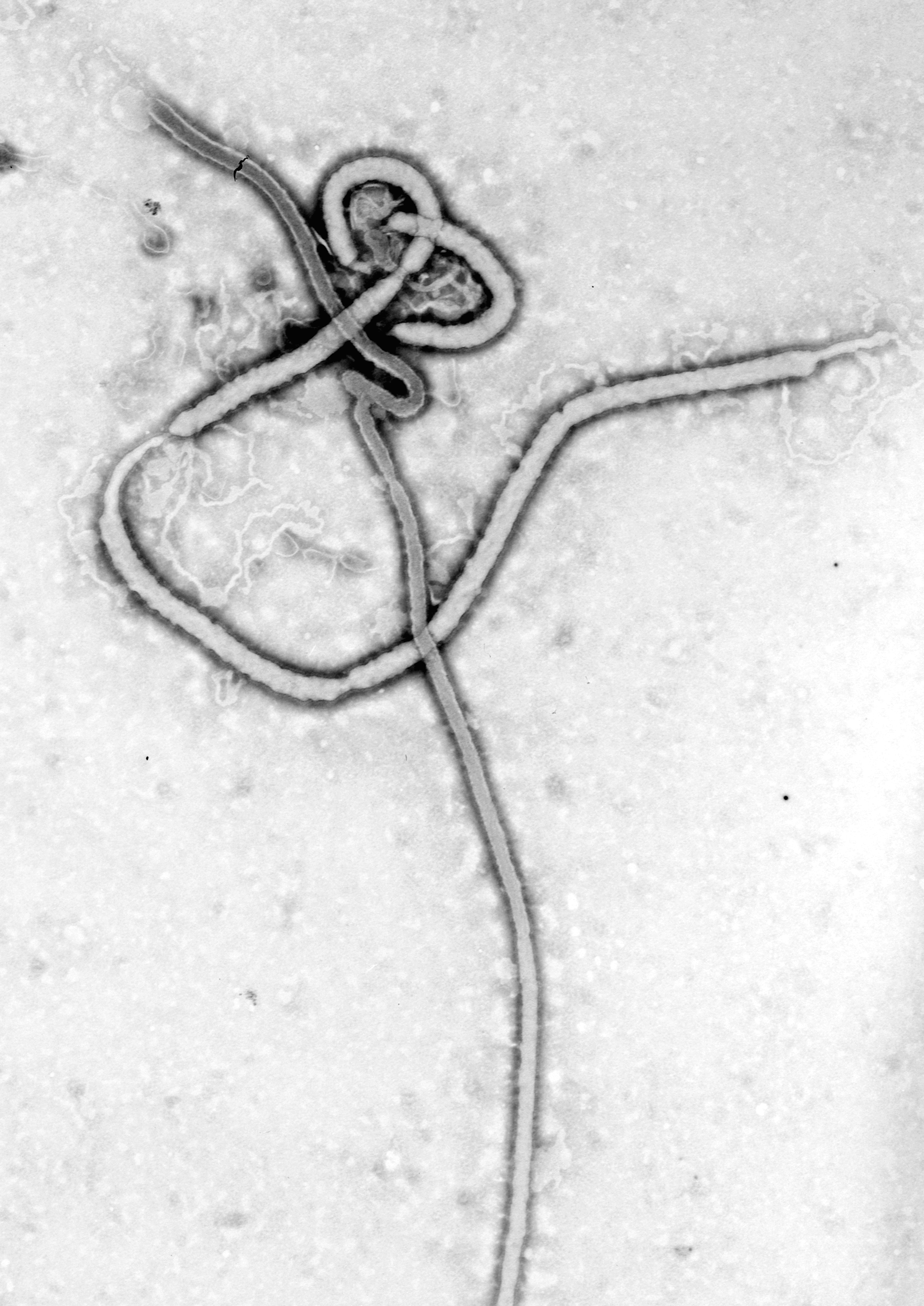
The popularity of BWs in films come from the fear they instil in us, and the potential for chaos which they give a would-be terrorist. Before we dive into the why, let’s look at the what. For starters, although viruses get most of the attention (and probably rightly so), there are other vectors which can spread diseases and become weaponised as BW agents:

If, like me, you’re wondering what the hell a “Rickettsia” is, it’s a type of bacterium, but smaller and lives inside cells (like a virus), is carried only by insects such as ticks, and so is classified differently.
The US Centers for Disease Control has handily classified biological agents on a three-point scale:

They are arguably the scariest WMD…
Nuclear weapons will vaporise you, chemical weapons will make you soil yourself and die2, and dirty bombs might kill you slowly from radiation poisoning3, but nothing is a scary as an invisible living thing that colonises your body and kills you slowly from the inside. While you’re dying slowly and painfully, you’re also passing on the same lethal death sentence to your family and friends. BWs are scary because they are utterly indiscriminate, hard to protect against, and capable of killing in tiny doses.
Indiscriminate. A bacterium or virus doesn’t care who you are or what your intentions might be; it will infect and kill you regardless. This is why they are so useful as a terror weapon, e.g. Twelve Monkeys, Rise of the Planet of the Apes, The Omega Man / I Am Legend. The indiscriminate nature of BWs also allows plenty of leeway for lab leak disaster scenarios quite aside from terrorism, e.g. 28 Days Later, Outbreak, Contagion.
Hard to protect against. BW agents in film and TV are usually spread through the air and by person-to-person transmission. This isn’t entirely unrealistic, since many weaponised diseases can effectively spreading from person to person, e.g. plague and smallpox. However, many more BW agents cannot spread from person to person and “only” pose a threat to those exposed to the original attack, e.g. tularemia and anthrax. These are less common on screen, for obvious dramatic reasons.
Toxins such as ricin and botulinum are also classed as BW agents but are not actually living organisms, and so also don’t spread from person to person: more on toxins below.
Bang for your buck. It does not take much biological agent to kill someone:

BW agents (at least the live ones, not toxins) get a leg-up from the victim’s own body, when compared with CW. Those BWs which have high person-to-person infectivity get an additional exponential boost from their victim/host before moving on. Highly infective BWs can also enable the attacker to stay under the radar of the authorities.
…and are difficult to trace
Once the evildoers have opened the Pandora’s Box of biological warfare, it is difficult for the heroes to trace the origin. They’ll need to resort to some time-travel to really get the job done, like in 12 Monkeys:
Without giving too much away, it’s safe to say that Bruce Willis doesn’t have an easy job of it in finding the source of the original infection.
The lags (the incubation period) between exposure, infection, and symptoms means that BWs are well-suited to clandestine terror operations (if that’s not a contradiction in terms). These same factors, however, limit BWs’ utility in tactical operations for the military.
The recent COVID-19 pandemic shows how difficult it is to track down the source of a highly infectious disease. Opinions are still divided as to whether the SARS-CoV-2 virus came from animals, was accidentally leaked from a Chinese laboratory (most likely the Wuhan Institute of Virology), was deliberately released by China, and was concocted and released by the US (in descending order of credibility). Most sensible commentators agree that SARS-CoV-2 was not a BW attack (and, if it was a Chinese bioterror attack on the world, then it backfired pretty spectacularly on China). Thankfully, such attacks are much rarer in real life than in the movies.
…but their use is much rarer in the real world
It is difficult to be precise about the prevalence of BW attacks as distinct from other WMDs, because there is a significant overlap between the biological and chemical categories:

Within the biological part of the spectrum, Hollywood is more focused on the dramatic world-ending diseases, whereas real-world BW attacks have tended to involve biological toxins and less transmissible diseases.
BWs use among terrorists is mercifully rare
Despite what Hollywood would have you believe, bioterrorism is quite rare in the real world. There are some examples, let’s start with those which caused the most deaths:
- 2001 anthrax attacks. A series of letters were posted shortly after the September 11th terrorist attacks containing anthrax spores. The attacks killed five and hospitalised 17 people in what remains the worst biological weapons attack in the USA:
- Er, um… that’s it for lethal attacks. The Rajneeshee cult in Oregon infected salad bars with salmonella in 1984, an attack which infected over 750 and hospitalised 45 people. This, among other “wild” activities, is documented in the 2018 documentary Wild Wild Country.
- There have been some attempted bioterrorist attacks: the full list is here, but some highlights are:
- Minnesota Patriots’ Council planned to attack the IRS4 using ricin in 1991: they were penetrated by the FBI.
- Aum Shinrikyo, the Japanese doomsday cult, attempted to use botulinum, anthrax, Q fever, and even the Ebola virus. Their BWs terrorism attempts failed but, as we saw last week, they succeeded in killing 12 with their sarin gas CW attack. We haven’t heard the last of these guys yet in this series.
- Larry Wayne Harris, another US “patriot”, obtained anthrax and plague specimens and threatened to use them against US officials, but was apprehended before he could. Apparently he got the BW agents by writing to a supplier and getting them delivered to his home—on the one hand, how was that even possible?? On the other, it’s how the authorities found him, so was not the smartest move.
Two more BWs incidents of note, which I don’t count in the list above, are:
- The Soviet/Bulgarian assassination of Georgi Markov, a dissident living in London, in 1978. Markov was killed with what is presumed to be a pellet of ricin delivered into his leg by a modified umbrella. This doesn’t make the list above because it was state-sponsored. It’s also worth noting that this was a toxin rather than a “classical” BWs agent.
- The anthrax leak in Sverdlovsk, Russia, in 1979 (remember that date, it will be important later). This leak from a BWs factory killed over sixty people. It’s not included above because it was a state-sponsored BW and it was accidental.
What all the above have in common, be they ‘classic’ BWs or toxins, is that they’re much more modest and limited in scope than the world-enders we see in films such as 28 Days Later. Why is this? In my opinion, the issue is threefold:
- Capability. Terrorists will use what they can get their hands on. Creating genetically-engineered viruses is difficult: it requires specialised knowledge and expertise (although recent innovations mean it’s getting easier). It’s easier to obtain ricin, anthrax, or salmonella than Ebola, and a lot easier and safer to handle too. Once they get the BW agent, they need to find a way to disseminate it. Unless they have access to crop-spraying aircraft or can get into the ventilation shafts of large buildings, this will also be difficult, hence the focus on more durable spores and non-living toxins.
- Strategic goal. Terrorists will have a strategic aim to their attacks, and a large-scale mass-casualty BW attack may not serve their aim. After all, they probably want some sort of political concession: far better to do a targeted, highly visible attack rather than a global pandemic of slightly uncertain origin. An exception to this is doomsday cults such as the aforementioned Aum Shinrikyo: they just want to kill as many people as possible. Ebola is good for them.
- Biological limitations. Despite their undeniable scariness, BWs are still subject to the limitations of real biological processes. Diseases take time to incubate, do not spread perfectly, mutate from generation to generation and may get less lethal, and can be mitigated against with some simple (albeit very disruptive) public health measures, as we saw with COVID-19. The more lethal a BW is, the less likely it is to spread far and wide in a population.
As is their use within state militaries… nowadays
Modern militaries don’t tend to use BWs, for various reasons which we’ll get to below. This wasn’t always the case: there is a surprising wealth of history of pre-modern armies using BWs against their enemies. This 2014 paper by Barras and Greub outlines the historical context in full. Some highlights include Scythian archers in the 4th century BCE dipping arrows into snake venom and/or human blood before firing, and the 1346 Mongol siege of Caffa, in modern-day Ukraine, where they catapulted plague-infected corpses into the city, potentially spreading the disease into the city and further afield. Other examples include the accidental infection of the peoples of the Americas with European diseases during the Columbian exchange, and the deliberate infection of American Indians by the British using smallpox-infected blankets in the 18th century.
In the 20th century, most major powers developed BWs. The most extensive testing and use of BWs during the Second World War was by the Japanese against China, where they carried out experiments on prisoners and tested weapons on Chinese settlements, killing an estimated several thousand. The most recent use that I can find is by Israel against the Palestinian Arabs during the 1948 War. Operation “Cast Thy Bread” involved poisoning wells with typhoid in villages that had been cleared of Arab inhabitants, thus preventing the return of that population. Casualty estimates are unknown, and the programme was never expanded as planned.
It’s hard to say whether BWs were more prevalent in the past and are less so today, since the examples above span a long time. The modern era brings the possibility of terrifying industrial-scale production of BWs, but it also brings the far more lethal innovations of artillery, strategic bombing, and machine guns. Until quite recently, most army casualties were from disease rather than enemy action. The idea of biological warfare becomes somewhat moot when your enemy’s army (as well as your own) is constantly being attrited by dysentery, cholera, and typhoid. In the modern era, advances in medical science and the development of protective equipment such as respirators will go a long way to mitigating the effects of BWs.
Last week we discussed how chemical weapons are no longer used in great numbers by modern militaries, and this is mainly because they aren’t very effective. We saw how all major countries signed up to the Chemical Weapons Convention of 1997… except for those countries that still might want to use chemical weapons. A similar situation applies for BWs: the Biological Weapons Convention of 1975 has almost universal approval among UN member states5, but it’s a chicken-and-egg problem: did they sign the treaty because they have no use of BWs, or did they forsake BWs because they signed the treaty? It’s worth coming back to the Soviet-era anthrax leak at Sverdlovsk, which I mentioned above. This happened in 1979 which, if my math serves me correctly, is four years after the USSR signed this treaty.
Sneaky treaty-dodging aside, it’s clear that the vast majority of modern militaries don’t use BWs as part of their doctrine. Along with the problems mentioned in the last section for terrorists, there’s also the issue of timing: most BW agents, at least the live ones, will take hours or even days to start affecting the enemy. That’s simply not very useful in modern mobile warfare. As with chemical weapons, you can pack a much better kilo-for-kilo6 punch into high explosives.
Conclusion: Biological weapons are really hard work, but there’s a chance of disaster
Last week we said that chemical weapons were really more like “weapons of mass distraction” than “destruction.” Is the same true of biological weapons? Based on historical trends to date, I would argue the same point as forcefully, if not more so. BWs have not been effective in modern warfare, and it’s doubtful that they were particularly decisive in the past either.
The one caveat, and the reason why I still count BWs as the most “scary” of the WMDs, is that a lone terrorist or a small group could still get lucky somehow: despite all the challenges I outlined above, a global pandemic could occur (we saw very recently that one did), and this could be the work of one small group. If we chart terrorist attack methodologies by difficulty of execution vs. effect, we see that BWs occupy a strange place which spans a large portion of the solution space:

The recent pandemic has shown us the horribly disruptive effect that even a low-lethality disease can have on the world. It’s safe to assume that potential terrorists are looking at this and thinking of how they can “copycat” this scenario in the future. Bioterrorism is a real future threat, and so we can expect the films about this topic to keep coming.
Oh, and a complete aside which I forgot to include last week: here’s another awful, awful beret, courtesy of The Rock:

Thanks, as always, for reading! Please let me know what you think in the comments below, especially if there are films I missed out on which offer a new insight. If you enjoyed reading this, please share it with other like-minded folks. And if you haven’t done so already, please subscribe with the link below so you’ll never miss an article. Thanks, and see you next week!
Featured Image: 2001 anthrax postal attacks, via FBI
- Thirty minutes of Googling and using some key phrases on a movie script database. This is not an exhaustive list; please let me know what examples I missed. ↩︎
- Or melt your face off, if we’re getting very dramatic and taking a few liberties with realism. ↩︎
- “Might” being the operative word: we’ll hopefully come onto this next week. ↩︎
- US Internal Revenue Service. ↩︎
- With the usual suspects absent: Chad, Comoros, Djibouti, Eritrea, Israel, and Kiribati; with Egypt, Haiti, Somalia, and Syria being signatories who have not yet ratified. ↩︎
- Plot twist: I’m the one who hates freedom! ↩︎


Leave a Reply