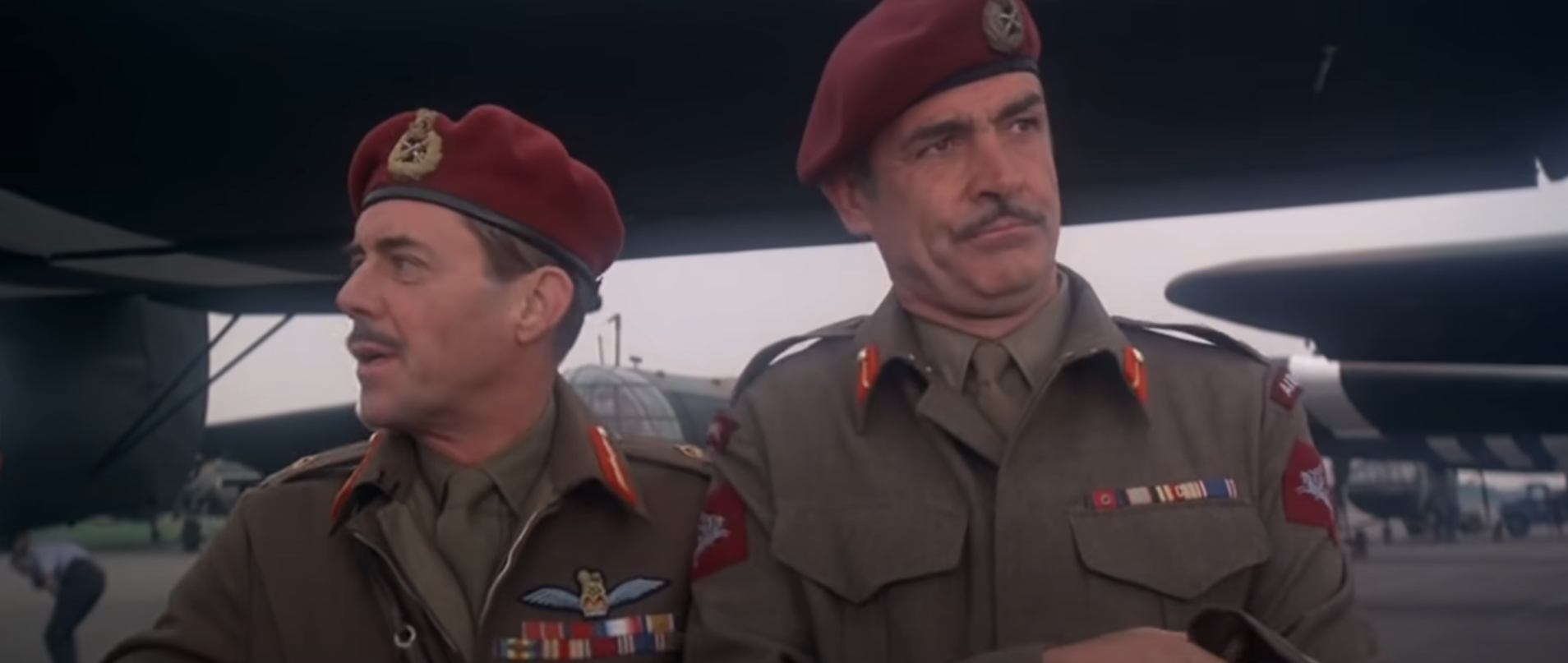
The importance of the beret in the military.
This week I wanted to take a break from the frivolous stuff I normally write about, such as explosions, to look at a really important part of military life and culture, one which Hollywood pays little or no heed to. I’m talking, of course, about the beret.
The humble beret gets a raw deal in film and TV for something so central to military life. They are a strong part of a soldier’s identity as part of a unit, and they are also a way to induct new recruits into the bizarre and arcane ways of the military. If you want to learn way more than you ever thought you need to know about soft headdress, then read on!
Thanks, as always, for reading and for supporting me. I appreciate your feedback and comments, either by email or in the thread below. I’d like to spread the reach of this blog, so if you like what you see, please share it with others who may be interested.
If you enjoy this blog and want to support it, please consider a donation. Keeping this blog going doesn’t cost much, but it isn’t free either, so any help would be very much appreciated👍
Berets are really important…
“An officer is judged by his1 soldiers on two things: his beret and his webbing,” was the informal advice when we were officer cadets. The web belt was a collection of pouches on a belt with shoulder straps, which carried your “fighting order” in the field, such as ammunition, rifle cleaning kit, respirator, water, maps, TAMs2, and whatever else one felt one needed in a fight:

Webbing was easy to assemble but very hard to perfect, since pouches had a habit of jiggling and bouncing and even falling open or off altogether in bad mud and trees and crawling. So you can appreciate how getting it right would be a useful shorthand for soldiers that “this guy/girl is good, I’ll listen to him/her.”
But a beret? Surely not! Well, the advice was right, and, since you wear your beret more than your webbing, it was even more important to get right. You are judged on the quality of your beret. I should know: I changed beret mid-career, because I changed corps3. This put me back at square one, headdress-wise, and my career never recovered from it. And I’m only half joking about that last bit.
Every new recruit and cadet gets a brand new beret in plastic wrapping from stores. So, you just put in on your head, right? Wrong! You need to shave it4, then soak it in hot water, then shave it again, then put it (still wet) on your head and stand by a mirror, shaping it on your head just so, getting it perfectly asymmetrical and just jaunty enough without taking the piss. Then you find a way to fold it that preserves the shape you want, then you put it under your mattress for about a week until the new (hopefully ideal) shape has been ingrained into the fabric’s molecular structure.

This sounds silly. To any sane observer, it is silly. Grown men and women sleeping with a beret under their beds is not normal behaviour. At least, it wouldn’t be in normal polite society. You spend so much time maintaining your beret at the start that a classmate of mine, while being berated for some petty issue, addressed the angry corporal thus: “Yes beret.” He was mortified, but it did actually take the sting out of the Corporal’s admonishment, thus lowering the collective punishment for us all.
…but you wouldn’t know from how Hollywood depicts them
Hollywood pays absolutely no heed to the importance of this versatile hat. Heroes strut about the set with impunity, utterly oblivious to the scorn in which their (imaginary) soldiers hold them because of their sub-par headdress.
What makes a bad beret? It’s hard to say definitively, because every beret is unique5. What I think looks perfect, you might think looks a bit too flat, for example. And different countries, or even different units within the same militaries, will have different standards. Nevertheless, we can draw some lines in the sand and dole out some judgement, with some Hollywood examples included. Brace yourselves, this is what “bad” looks like:
Beret is too fluffy (hasn’t been shaved)
I wasn’t joking when I said that berets need to be shaved as well as shaped, and here’s why:

Honourable mentions for Nick Nolte’s beret, apart from its fluffiness, include the fact that there isn’t enough of a slant to it. This beret is a war crime in and of itself.
Beret is too big
A very basic mistake, since the beret should sit snugly on the head, not envelop it or overhang down to the shoulder, as in these examples:


Beret is too small
This usually manifests itself in the beret not having enough of the signature overhang on the right hand side which defines a military beret:


Beret is too flat
This is one of the big ones. If it looks like it could double as a landing pad for a drone, then your beret is too flat:


I’m half-willing to forgive the beret from A Bridge Too Far above, because it was looking alright in the close-up shot just before the poor unfortunate paratrooper runs out to pick up the parachute-dropped supplies (SPOILER ALERT). So you could excuse the state of his beret now as being caused by the wind rushing through it. The reason I’ve still included it, though, is because of what’s in the supply drum: nothing but maroon berets. Thanks to The Beret Project (yes, a blog all about berets!), where I was reminded of the above clip.
In the film, this is supposed to symbolise the (real-life) hubris of Field Marshal Montgomery (more on him below), who expected little or no German resistance against his air-dropped forces: look, he’s sending them berets, instead of food or ammunition! In real life, I don’t think berets were among the supplies dropped, but other useless things were. Besides, as you’ll know from earlier in this post, a beret is useless until it’s shaved and shaped—not something these guys will be doing in the thick of combat.
Beret is too angular
You can go too far in the other direction and show a beret that’s too wavy, folded, or shapely:


Yes, I found an excuse to bring my bête noire, The Expendables, back into this. For once, though, it’s not entirely negative: Jason Statham’s beret is okay. Now. Take note. I’ve said something nice about The Expendables. This can never happen again.
Beret is too clean
In all the examples above, there’s one more common mistake, and it’s the most damning of all: the berets are too clean and new-looking. Even in the examples below, which are okay shape-wise, the berets are in far too good condition:


You only get issued one beret, and you wear it and fold it countless times per day to get its shape just right, so it’s going to absorb quite a bit of punishment over the years. You’re never going to put it in a washing machine—just think of what that would do to its shape! So it gets more and more threadbare, stained, and ratty-looking as time goes on. And this, of course, only adds to its aura as a “great” beret, and, by extension, to its wearer as a “great” officer or soldier.
General officers and their berets
There’s an important exception to the rule of beret quality mentioned above, and that’s for colonels and above, who display a massive dip in beret quality. Below is an indicative beret quality journey for an officer blessed with a good beret:

Why the decline? It may be because (at least in my forces) colonels got new cap badges, which may just have come pre-sewn onto new berets. Or perhaps all Lt Cols reach a Damascene moment where they realise that the fetid, threadbare piece of cloth in their uniform pocket is no longer an asset to them, especially now that they need to spend more time impressing civilians than impressing troops.
Whatever the reason, very senior officers have awful berets. Just look at the travesty sported by Monty during WW2:

This is a particular travesty: not only is it twice the size of his head, it also sports two cap badges. When you’re a Field Marshal, after all, nobody is going to question you.
The beret is a strong part of a unit’s identity…
I hope I’ve impressed upon you the importance of berets. Did I mention that they’re important? You may reasonably be wondering why. I won’t go over the history of the beret in the military (Bare Arms Blog does a great summary), suffice to say that the increased reliance on armoured cars and tanks moved most units, regiments, and corps away from peaked caps or otherwise impractical headdress to the versatile beret.
The beret provides a tiny modicum of head warmth but folds up neatly into a cargo pocket or under an epaulette when not being worn. More importantly, though, it allows individual units or corps to express their identity through the style and colour of their beret. The British army is the best for this, in my opinion, with a huge diversity in headdress colours and styles:

The beret is more important than most elements of uniform, since you’ll probably only have one (recall all the effort it takes to make it look good). Some of my greatest traumas when serving were those times I left my beret at home, or in another barracks. Any other part of my uniform, I can replace, but not my beret. Without it, a soldier is improperly dressed. The beret, therefore, is an integral part of military fashion. So what does your beret say about you?

…and it’s also a way to traumatise socialise new soldiers
Regardless of what your beret says about you, there’s another reason it’s important, and that’s in how it’s used as part of the “military socialisation” process. This euphemism describes how armies6 de-program a new recruit of many of the cultural norms of civvy street and re-program them with a new set of rules appropriate7 to the military.
One of these rules is uniformity, which in turn is part of emphasising the new recruit’s identity as part of a much greater whole rather than as an individual. Obviously dressing people in the same headdress and asking them to do absurd things like shave it help break down any lingering individual pride, but more so than that, the wearing of the beret comes with so many rules that it’s easy to keep recruits and cadets in a state of perpetual agitation as they struggle to never stand out to the baleful eye of their training staff:

To put it very bluntly, a beret is a wonderful excuse to bottle8 soldiers, since, even if nothing else, they can always have it looking jildier9.
For an organisation so traditional and (if we’re being honest) homophobic10, it’s somewhat ironic that inordinate amounts of time and energy go into the care and appearance of one’s uniform. Furthermore, one’s worth is measured as a function of how shiny and colourful one’s uniform is. Generals can get away with having bad berets because they have red badges on their collars, a chestful of medals, and all-round blingier and shinier clothes (see picture above). Any inter-service or especially international military formal function is a golden opportunity for stern military professionals to compare their various bells and whistles.
The remark below was overhead by a friend of mine at the Vienna Officers’ Ball: [On seeing my friend] “They have spurs on their uniform? Why don’t we have spurs?”
Conclusion: getting berets wrong is a symptom of a the art form
The examples shown above, and any Hollywood depiction of mediocre berets, all serve to undermine the credibility of the heroes or villains in question. This is indicative of bigger problems translating military culture to Hollywood. It may well be that screenwriters understand all about military socialisation and de-emphasising individuality in military contexts, but are constrained by the art form. Films tell a story, and a story needs characters. For the characters to be memorable, relatable, and even watchable, they need to be identifiable and stand out from the “extras”. None of this is incompatible with having a good beret, but a good beret takes time (up to years, for a truly great one), and filmmakers certainly don’t have that kind of time.
As a result, the same thing happens to berets as happens to boots and combat trousers, or shirt collars, or saluting, or voice procedure on a radio: characters put together a simulacrum of what’s right, but anyone with experience can see through it straight away. But this is understandable, and somewhat unavoidable, unless a film’s director is going to teach every actor and extra how to shape and fold their beret (a service I would happily do for a modest fee, if any filmmakers are still reading after all this nitpicking).
But maybe, just maybe, if filmmakers could take away just one thing, it would greatly improve the depictions of berets in films. That one thing is the understanding that a beret is one of the most important parts of a soldier’s uniform and, by extension, their identity. If actors were briefed on this, they could make it part of their method acting. Then, just like learning an accent or growing a beard for a role, they could carefully assemble their own uniform for their character, including shaping their own beret. Who knows: perhaps wearing a beret like a badge of identity and not like another wardrobe item would imbue actors with a greater sense of the character and help them play it better.
Or maybe not! Perhaps this is all seafóid11, and bad berets are the miniscule price we pay for entertaining film and TV. What do you think? Please let me know in the comments below. What did you think of this post? Would you like to see more along these lines, or should I stick closer to guns and explosions? Again, let me know! Thanks, as always, for reading, and please remember to Like, Subscribe, and Share with like-minded friends.
Featured image: A Bridge Too Far, United Artists (1977)
- Yes, “his”, I’m reporting verbatim. This tells you a bit about most armies’ gender balances. I suspect things have gotten a little (but only a little) better since then. ↩︎
- Tactical Aide Memoires, basically a little waterproof filofax which had little instruction cards for every tactical situation, from reacting to a chemical attack to giving an impromptu interview to the media (the latter obviously being the scarier prospect for any junior officer). ↩︎
- From Cavalry, where I mucked about in armoured cars doing reconnaissance, to Ordnance, where I tinkered with bombs and bullets. ↩︎
- Yes, with a razor. ↩︎
- Like how birds recognise their own chicks among hundreds or thousands, a soldier will recognise their own beret from a selection of identical ones on a coatrack or shelf or table. ↩︎
- Speaking from my own army experience here. I’m sure navies do the same and also call it military socialisation. I’m sure air forces wouldn’t know what you were talking about. ↩︎
- You could make a whole argument around how appropriate these rules, many of which come from long ago, are to a modern military force. It’s an interesting debate, and we might discuss it sometime, but not here. Today we’ll work off the assumption that military socialisation is a necessary and desirable thing, albeit with some absurd implications. ↩︎
- Berate, chown, admonish, administer, discipline, tear strips off, finger-wag, or upbraid. ↩︎
- There’s no synonym for this wonderful word, which means “neat and tidy dress and actions undertaken in a smart, soldierlike manner”. The fact that I originally mis-spelled it tells you all you need to know about my relationship with jildiness when I was a cadet and an officer. ↩︎
- At least until quite recently, even in Western countries. ↩︎
- Nonsense. ↩︎


Leave a Reply