How a peacetime army spends its time
🎧 Available in audio
Hello again. This week I’ve decided to tackle one of those questions I spent my fifteen years of service trying (and usually failing) to answer satisfactorily. The question “what do you do?” had many variations, such as “what’s a typical day in the army?” and “what do you do when you’re not overseas?” Sometimes the question had a critical undertone, e.g. “What do you even do in the army?” Questions like this point to the fundamental one, which is “Why do we even need an army?”

Usually, however, the question was asked in good faith and in a spirit of curiosity. Civilians often don’t know what an army does when it’s not at war, and the media aren’t great at telling them. This applies to the news media, of course, but also to film and TV. Not because it’s uninteresting, but because it’s a lot less interesting than the alternative, which is a military at war. Film-makers would much rather write about (and you’d much rather watch) a busy doctor, a tough detective, or a rich person behaving badly. On the other hand, though, a peacetime army is not quite boring enough to be a topic for its own sake (e.g. The Office, Office Space).
I was never great at answering this “what do you do” question, either getting straight into the nitty-gritty (e.g. the course I was on or a particular problem I had in the job I was currently doing) or being far too general (e.g. reeling off the force’s mission statement which, while important, is not very enlightening1). What the questioner really wanted to know was “How is your job different from my job, and from every other job I know about?”
That is what I hope to tell you today. With the benefit of my military experience plus a few years on civvy street, I’ll explain what we “do” from day to day. In an attempt to give a bite-size answer and avoid the snoozefest I’ve previously subjected people to, I decided to break “what we do” into three separate categories: operations, training, and administration:

I’ll start with operations (“stuff”), then talk about training (“practice stuff”), and wrap up with our old favourite, administration (“enabling stuff”). Throughout, I’ll relate this to some of Hollywood’s tropes so that we can see this trifecta in action in some of our favourite films and TV shows.
A final note: although overseas peacekeeping operations were a significant part of my military experience, I’m not going to dwell on this part today. I want today’s article to focus on the home side of the “what do you do” question; there’s a whole other article I could write on “what’s overseas like.”
As always, if you like my weekly articles, then please subscribe using the link below. Feel free to share this on all your socials, and also weigh in on the comments section below, especially if there’s anything you disagree with. Enjoy!
If you enjoy this blog and want to support it, please consider a donation. Keeping this blog going doesn’t cost much, but it isn’t free either, so any help would be very much appreciated👍
Operations: stuff
When someone asks you “what do you do,” then operations, fundamentally, are those things you “do”. Operations are the raison d’être of any military force: you exist to carry these out in support of a greater strategy. In wartime, this is easy to grasp:
| Strategy (wartime) | Corresponding operation(s) and examples |
|---|---|
| Starve the enemy of oil reserves and gain reserves for your own use | Advance into and take control of oilfields and surrounding territory (e.g. Case Blue) |
| Recapture enemy-held territory | Launch a seaborne invasion (Operation Neptune); Take and hold a beachhead as a base for future operations (Operation Overlord) |
| Strengthen your own position in advance of anticipated peace negotiations | Invade and capture enemy territory; Hold enemy territory against counter-attacks (Kursk Offensive) |
In peacetime, it’s a bit harder to understand, but armies still carry out operations in support of strategies. Here’s a non-exhaustive list:
| Strategy (peacetime) | Corresponding operation(s) |
|---|---|
| Maintain armed reserve to support police in the event of sudden unrest | Roster a body of troops on 24/7 immediate notice to move |
| Further state interests through diplomacy | Provide ceremonial guards of honour, etc. for visiting dignitaries |
| Support citizens affected by natural disasters (e.g. flooding) | Provide troops to build sandbag walls, evacuate stranded citizens; Build and maintain temporary accommodation for displaced persons |
| Uphold rule of law | Support police and prison services in guarding and escorting high-risk prisoners |
| Prevent damage to life and property from explosive threats | Maintain a stand-by explosive ordnance disposal capability |
Operations normally take precedence over any other tasks (e.g. training, see next section), since carrying them out uncomplainingly and for free is one of the reasons that governments keep armies hanging around even when there’s no war going on. Soldiers can’t go on strike and they can’t refuse a lawful order, so they are the national backstop.
Most civilian companies and organisations do “operations” of one type or another. A big difference with the military, however, is that the military’s operations don’t raise revenue (or, at least, they really shouldn’t. If they do, that’s a big problem). Furthermore, even when comparing to other non-revenue public service operations, an army’s ones are hard to quantify and evaluate with key performance indicators (KPIs). It’s not hugely meaningful to talk about the percent of riots which were successfully suppressed, or the average time taken for a prisoner to escape, or the number of soldiers who fainted on the parade square.
The operational lens lets us see the first big difference between the military and civvy street:
Big Difference 1: Army operations are much more diverse than most civilian ones
Most workers in most companies will specialise in a particular area, then spend most of their time doing this one thing. If they change jobs or move to a different company, they might re-skill and learn to do something else. The output is fairly constant and predictable. Armies are different: soldiers will train almost continuously (see the next section) to do a wide variety of operations. By way of example, here’s a three-minute whirlwind of different operations (at home and overseas):
Granted, it’s a recruitment ad, but the tagline sums up the allure of armies the world over: “A life less ordinary.” It worked on this impressionable youth, at least.
So, how much of a soldier’s time is spent doing operations? I’ll pull myself away from the dreaded “it depends” answer and instead talk about three archetypes of soldier:

Each of the three archetypes above spends a different amount of time on operations3. What’s significant, however, is that operations take up such a modest share of time, even in the role which is the most operational. This is another key differentiator of armies from civilian employers:
Big Difference 2: Peacetime armies spend much less time on operations than most companies
With so little time being spent on operations, therefore, how do soldiers spend the bulk of their time?
Training: practice stuff
Armies train a lot. This might not seem like the most profound statement in the world, but that’s because either:
- You’re a military person reading this who takes it for granted or,
- You’re a civilian reading this who doesn’t realise quite how heavy the training burden is
For those of you in the second camp, let me lay it out for you. I spent fifteen years in the army, of which about six in aggregate were spent on full-time training courses. This does not include four academic years spent in undergraduate studies or further postgraduate studies (which were mainly in my own time, but with a few study days here and there). I’m focusing here on training, not education.
Training happens at all levels of the army, so everyone gets plenty of chances both to be a student and to teach students:
- Dedicated schools and colleges train students from across the army or the whole military in specialised skillsets, e.g. military police procedures, minefield clearance, command and staff appointments
- Brigades/formations have training units which run recruit training, preliminary training for NCOs, and support weapons4 courses
- Individual units, if they have time and sufficient instructors, will run their own courses in things like driving, smaller support weapons, and recruit training
Now, my example of six years out of fifteen (40%) might seem like a lot, and I certainly leaned heavily into the long career courses5, but I doubt my experience is too far off the norm. Armies train a lot, for two big reasons:
- They don’t spend all their time on operations (see previous section), but,
- Military operations are complex and need lots of practice to get right
We’re now getting to the heart of the training imperative, and another big difference between the army and civvy street:
Big Difference 3: Armies train a lot, because military operations are complex
You can’t “move fast and break things” in the army6. Civilian companies, for the most part, don’t spend nearly as much time devoted to training. I’ve spent 6% of my time on courses in my current job, and this is with an organisation that is well-known for its culture of training. Civilian companies can get away with this for two reasons which mirror the ones above:
- Time spent in training is time not spent on operations, and time not spent on operations is revenue lost, and,
- Employees can do much more “on the job” learning without running the risk of shooting someone or blowing something up.
Getting back to our three archetypes, how much time does each one spend in training?

This devotion to training, incidentally, is something which Hollywood and other media actually “gets”. Even when depicting full-on warfighting, we still see plenty of “troops in training”, such as the first episode of Band of Brothers or the entire first half of Full Metal Jacket. We don’t see this with other professions in film and TV: The Firm doesn’t spend its first act showing us Tom Cruise’s trials and tribulations at law school.
With between 40 and 75 percent of their time taken up with operations and training, what do our archetype soldiers spend the rest of their time on?
Administration: enabling stuff
This isn’t my first foray into the wonderful world of military administration: I wrote about it a few weeks back. What I want to talk about here, however, is not just the paperwork, but all of the necessary parts of the job. I’m talking about the time spent greasing the metaphorical wheels of the organisation. Typical activities (not at all exhaustive) are:
- Convening, running, and reporting on interview panels for promotions
- Assembling boards of investigation for alleged wrongdoing, and writing the subsequent reports
- Holding inter-unit and inter-formation sports competitions
- Auditing mess accounts
- Rehearsing and carrying out ceremonial parades to mark the retirements of prominent officers and NCOs
- Writing and delivering annual performance reports and course reports
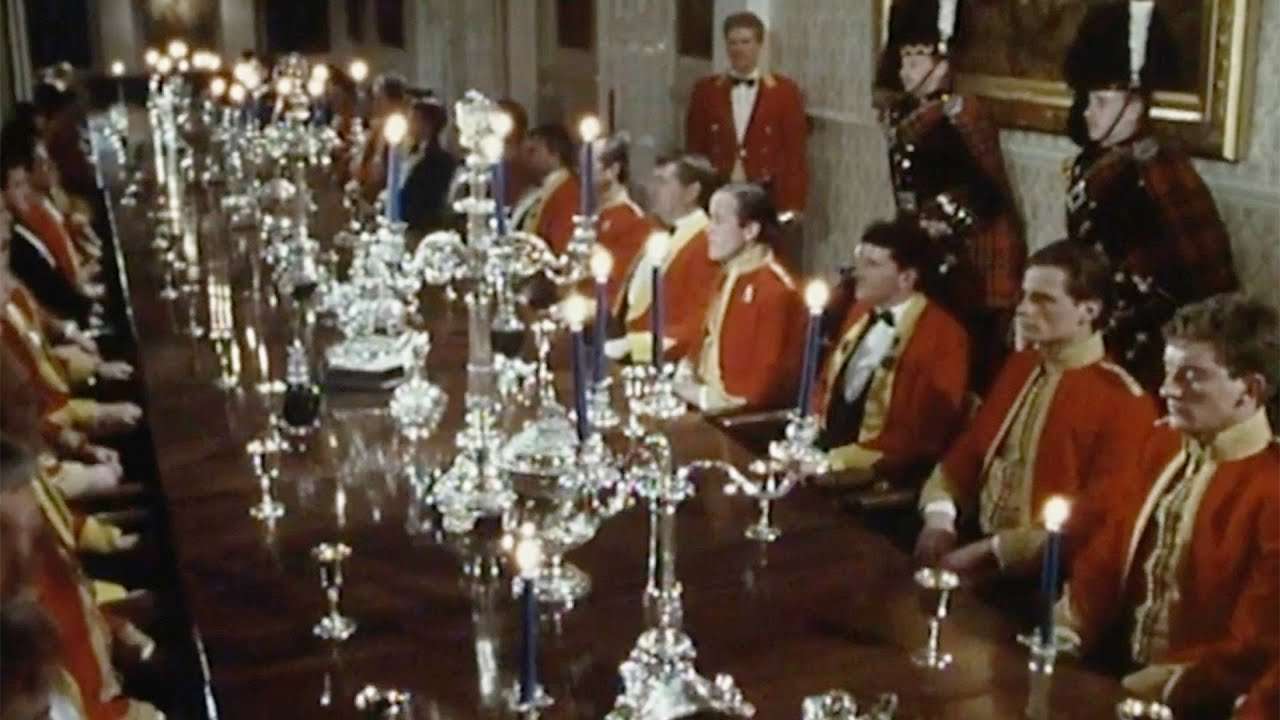
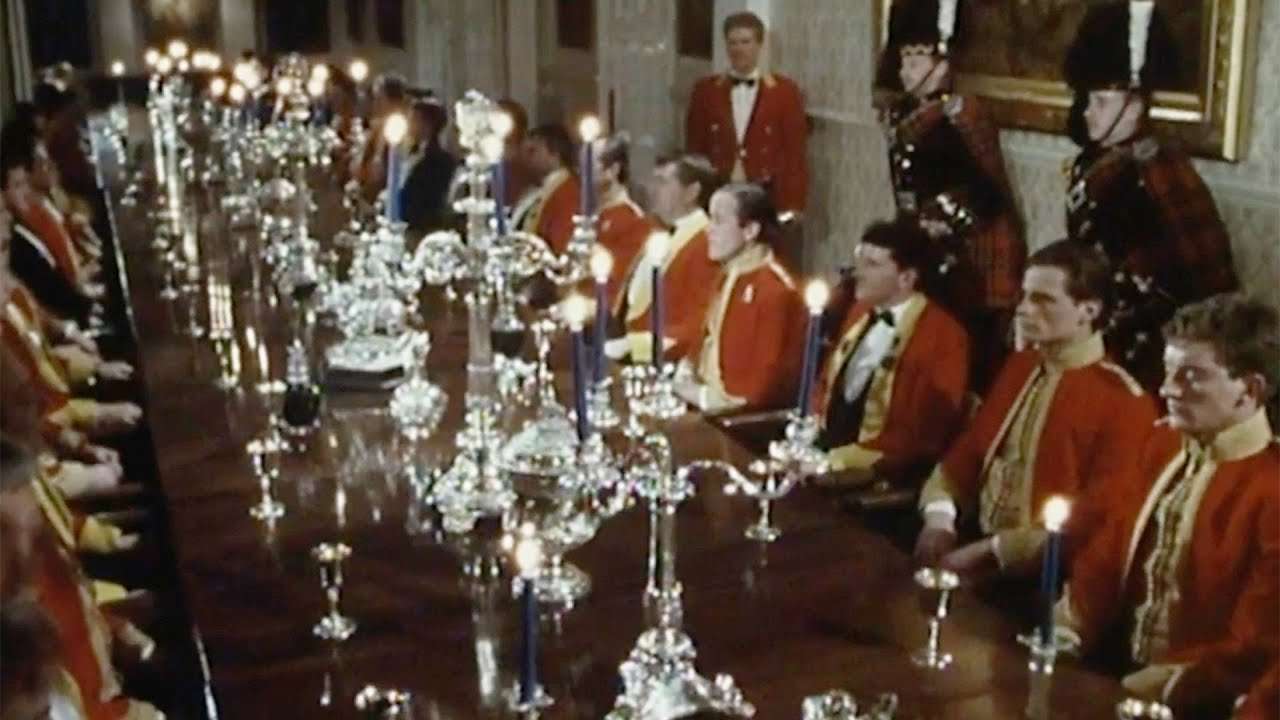
In most respects, this sort of “internal plumbing” in most military units is just like in civilian companies. The daily admin doesn’t look like this in most of them, however:
If you have time to watch the whole video, hell, the whole series, you should: it’s a fascinating insight into the very particular (and peculiar) world of British regimental traditions. It’s a bit old, but I would assume that many of those traditions are still going strong.
Don’t assume that this admin is an afterthought, however. Keeping up the morale of the soldiers is absolutely crucial, and commanders quite rightly care deeply about getting it right. Some films and TV shows which get this are:
- Catch-22: Milo Minderbinder the Mess Officer
- Apocalypse Now: The ill-fated USO show
- Blackadder Goes Forth: The mission to write a story for King and Country magazine
Sometimes it’s taken a bit far: I read a story years ago7 about an Indian commander during the Sino-Indian War. This commander was holding a tenuous position against vastly superior Chinese forces some 5,000 metres or so above sea level. He badly needed reinforcements and sent message after message to his divisional headquarters. After days of receiving no reply from them, and with his forces hanging on by a thread, he finally got a message. It was a terse letter asking him to explain why he had failed to send a representative body to the divisional sports games. It makes you roll your eyes, but this is exactly how any bureaucracy works, and the military is no different. It gives people an opportunity to get a firm grip on the non-essentials.
By process of elimination, we can see how our three archetypes are doing on the administration front:

The staff officer, as you might expect, has the heaviest burden of administration, but everyone has to do at least some as part of their daily routine. There’s also a mix between admin tasks which are mandatory, such as paperwork, and discretionary, such as internal events and sports. Both are important for soldiers, however, and this is one key similarity between the army and civvy street:
Big Similarity 1: Armies, just like companies, spend a lot of time and effort looking after themselves
A significant part of what any soldier does would be quite familiar to someone in a civilian organisation. The differences are in the operations and the training.
Conclusion: Peacetime is preparation for wartime
Now that we’ve answered the question of “what” an army does, at least in broad brush-strokes, we come to the next question: “why?” Military people are sick of answering this and trying to justify their existence to their civilian friends, but the question is a legitimate one. Taxpayers are quite entitled to ask where their money is going and why it needs to go there.
So, why do we need an army? In short, it’s to give the strategic decision-makers an all-purpose always-ready tool to respond to any situation. As my <cough> rigorous and scientific analysis above shows, soldiers spend:
- ~20% of their time on operations (stuff)
- ~40% of their time in training (practice stuff)
- ~40% of their time on admin (enabling stuff)
It might seem like a pretty poor return on investment to get only a fifth of person-hours devoted to operations which are, after all, the only productive output of an army. As I explained above, however, training occupies a special place in the military, and the 40% of time soldiers spend training is an investment in potential future vital operations, should they ever be called upon. The remainder of the time which is spent on admin is also an investment. It enables a professional military force of the highest standards, while also cementing the bonds of loyalty and camaraderie which would prove vital on a future battlefield. When you pay for a peacetime army you’re not paying for the daily operational output per se, but for the ability to scale up for future operations—that’s the “why”.
That’s all for this week. Thanks for reading, and I hope you’ve enjoyed my take on what army life is like. If you’re a military person, maybe try out this trifecta framework of operations, training, and administration the next time that someone asks you what you do all day. If you’re a civilian, then you use this same trifecta to ask more pointed questions of your military friends and get a better understanding of their lives.
Please give me your feedback, either by email, or in the comments section below. Share this article if you’ve enjoyed it and can think of others who will too. And if you haven’t already, please subscribe to the blog using the button below. Thanks, and see you all next week.
Featured Image: Still from In the Highest Tradition, Episode 1, BBC.
- Some examples would be “defending the state against armed aggression,” or “supporting the government in providing vital functions.” Yawn. ↩︎
- Prompts: 1) Draw a simple clipart/icon style drawing of a grizzled soldier with stubble, a cigar, and an unfastened helmet, 2) In the same style, please draw a clipart picture of a younger soldier wearing a beret and clean shaven, 3) Draw a similar image of a soldier in a khaki shirt with captain rank markings on his shoulder, no headdress, and glasses. ↩︎
- I should note that these figures I’ve given are a very rough estimate. They will vary hugely from unit to unit, even from person to person. Don’t take any of this to the bank. ↩︎
- “Support” is army-speak for “big”, at least when it comes to weapons. ↩︎
- Such as explosive ordnance disposal which, you’ll be glad to hear, takes quite a while to train up in. ↩︎
- Nor, it must be said, can you in plenty of other jobs, as XKCD reminds us. ↩︎
- And have been unable to verify or track down the details since, so please help me if you know some more details. It’s also possible I’ve dreamt or otherwise fabricated this. ↩︎


Leave a Reply to Custard bombs – Military Realism ReportCancel reply