A review of The Fort Bragg Cartel
🎧 Available in audio
Hello there. This week I’m reviewing a fascinating book I got recently as a gift: The Fort Bragg Cartel: Drug Trafficking and Murder in the Special Forces by Seth Harp:

The book is a riveting blow-by-blow account of dirty deeds done by the best and brightest of America’s warrior class throughout the last quarter of a century. The titular fort is one of the largest military bases in the world, and its sheer scale would naturally provide the canvas for many lurid tales. Seth Harp lifts the rock and shows us a corrupt culture and utterly inadequate governance structure. It’s a page turner.
Fort Bragg is home to some of the USA’s most elite special operations forces (SOF). Seth Harp takes us through the history of these forces and shows how they used and abused their positions of power and trust to enrich themselves through graft, drug smuggling, and worse. He threads a deeper theme throughout the book, which is the moral stain caused by how these troops were used in the war on terror following the September 11th attacks.
Harp knows something of this world, having served as a foot soldier in the “war on terror” himself. He does have a particular agenda, however, which surfaces especially toward the end of the book.
Ultimately this is a story about how power corrupts, and absolute power, which the most elite special forces units wield, corrupts absolutely. The author’s main subject (you could say “target”) in this story is the US Army’s Delta Force, arguably the world’s most elite collection of warriors. If nothing else, this makes him a remarkably brave man.
Before we start, let me encourage you to subscribe to the blog using the link below. As always, I’d love to see your comments below, or you can contact me via webform here or email here. Finally, if you’ve enjoyed this post, please share it with a friend.
If you enjoy this blog and want to support it, please consider a donation. Keeping this blog going doesn’t cost much, but it isn’t free either, so any help would be very much appreciated👍
Special operators got special leeway… and abused it
Special operations forces (SOF), as I’ve written recently, are the gleaming tip of a nation’s spear. 1st Special Forces Operational Detachment—Delta (commonly known as “Delta Force”) are the pinnacle of that select1 group of warriors:

Delta Force have their home base at Fort Bragg, North Carolina, although they are physically and socially removed from the regular grunts and other, lesser special forces at the same camp. They enjoy privileges and freedoms which your regular soldier could only dream of: beards, wearing whatever you want, customising your kit, and even being able to come and go from work as you please, provided you do your training.

This dynamic is typical of SOF anywhere. In the case of Delta Force, however, it extends beyond Fort Bragg to the overseas bases in Iraq, Afghanistan, and elsewhere where this elite unit has sent its operators over the years.
The author contends, with quite a lot of evidence, that these special freedoms enabled and emboldened special operators to smuggle and distribute large quantities of illegal narcotics from the likes of Afghanistan (for heroin) or Colombia (cocaine) back to their home base, conveniently located on the Interstate 95, the spine of the USA’s East coast:

Drug dealing and drug taking among tooled-up trained killers inevitably had tragic consequences. Harp describes a suicide and drug overdose epidemic during the early 2020s, a cluster of wife murders during the early 2000s, bodies falling from planes, a severed head, and a memorable scene where two buddies go on a three-day drug and drink fuelled bender in Disney World followed by a descent into paranoia and one shooting the other… all in front of their young daughters.
As these elite warriors dealt and used and partied hard and let off steam, they inevitably had collateral effects on the local population of civilians and regular military folk. Harp shows us many examples (including the incident above) where local civilian law enforcement turned a blind eye to misdeeds by their local SOF. When they did decide to investigate, or their hand was forced, these attempts at justice were usually stymied by the Army’s own Criminal Investigations Division (CID), who took the inquiries in-house and killed them. On the rare occasions that the CID took a stand, then the offender’s own chain of command often stepped in to deflect or bury it.
Harp documents multiple layers of protection which enabled Delta Force operators to get away with not just drug running but rape and murder.
The fact that the SOF operators were particularly susceptible to drug addiction and violence in the first place is something which Harp attributed to the decades-long “Global War on Terrorism,” or GWOT for short. Let’s see why next.
The author blames the moral injury of the “GWOT”
Seth Harp takes us on a tour of American SOF from the days of Operation Eagle Claw, the 1980 botched attempt to rescue US embassy staff after the Iranian Revolution. His contention, which is well-argued but still controversial, is that military special operations grew out of a desire by the Executive branch of government (i.e. the President) to maintain and magnify its intelligence-gathering and covert action capabilities after the Legislative branch (Congress) imposed stricter controls on the CIA.
Harp paints a picture of the GWOT devolving from a conventional military operation into a SOF-led effort which was characterised by extrajudicial killings on an industrial scale. First in Iraq, and later, Afghanistan, senior SOF officers perfected an intelligence and action cycle known by the abbreviation “F3EAD,” for “Find, Fix, Finish, Exploit, Analyse, Disseminate.”
If you read some of the military-academic literature on F3EAD it can seem very sterile and procedural. Harp bursts the euphemisms and paints a grim picture of roving murder squads systematically killing “suspects” without any shred of due process. Here’s how it works, officially, and according to Seth Harp:

The author argues that operators who returned from the GWOT (where, remember, SOF were doing most of the dirty work) were physically and mentally scarred. When they were prescribed narcotics and stimulants to help them do their job effectively, they naturally transitioned into dependence on illegal drugs and these, along with their disillusionment and PTSD, created the conditions for illegal drug dealing and violence.
Harp deftly rebuts claims that the observed violence was simply the result of a clustering illusion. For sure, any settlement of 50,000 people will see a certain amount of murder, drug-taking, and suicide. Harp shows us how the observed figures are far above national average, showing just how bad the problems were in Fort Bragg and Fayetteville.
Although his work has been largely praised, there were some critics of The Fort Bragg Cartel. Let’s discuss some of the problems in the narrative in the next section.
His agenda sometimes shines through
Seth Harp, for the most part, comes across as a fair and impartial chronicler. He tells a story about abuse of power, blatant wrongdoing, and institutional cover-ups whose jaw-dropping audacity speaks for itself. He doesn’t need to over-egg the drama, and he doesn’t. For the most part.
There are the occasional exceptions, though, like the extract below:
He also introduced her to his dog, a tautly poised, hyper-alert Belgian Malinois named Rocky that had been one of the unit’s working animals. Nicole wanted to know why it had no teeth. Lavigne told her that its titanium dentures had been surgically removed on retirement because the dog had been trained to attack and had grown accustomed to feeding on the flesh of people killed in special operations raids, including being allowed, “as a treat”, to eat human brains.
This is a bit much. Military working dogs don’t have titanium teeth so they can bite their targets harder. In fact, they get these as replacements when their teeth break in the course of their work (which, to be fair, is still biting people). I have a titanium tooth in my head (it’s got an artificial enamel crown) to replace one I lost many years ago. This doesn’t make me a monster… I hope. One detects in this Lavigne the natural urge of any socially awkward man to exaggerate for effect in the hope of impressing a girl2.
Another flaw is Harp’s tendency to present outré opinions as if they were accepted fact. Apparently, COVID-19 “escaped from a U.S.-funded biolab in Wuhan, China.” The lab-leak theory, as it’s known, is highly controversial. Although it’s been deservedly and belatedly given a fair hearing, it’s far from being the settled consensus on the origins of the disease.
He makes the same authoritative statements about the origins of the Russo-Ukrainian War, calling the 2014 Euromaidan protests a “US-backed coup” of the democratically elected Viktor Yanukovych. This might have some basis in fact but omits crucial context such as Yanukovych’s unpopularity with Ukrainians and the very legitimate desire (as expressed by their parliament) to pursue closer ties with the European Union.
Finally, his analysis of Afghanistan’s Taliban does come across as one-sided at times. Yes, the US-backed proxy forces allowed both the opium trade and the horrendous “practice” of bacha bazi (child sex abuse) to flourish in the absence of the Taliban. And yes, the return of the Taliban saw a welcome end to these. But there’s plenty to find objectionable about the Taliban. It’s good that Harp pushes back on the simplistic narratives we in the West were fed by our leaders. But he should do so with a critical eye, and that sense is sometimes missing from the book.
The Taliban are not teddy bears. They are a group of powerful people who subjugate their own citizens, just like the American government—in both its Republican and Democrat guises—controls and oppresses people for its own ends. Power and corruption are really the central themes of The Fort Bragg Cartel, so let’s finish on that.
Conclusion: Power corrupts
Notwithstanding the mild criticisms I made of this book in the last section, I have no hesitation in recommending it as a must-read. Seth Harp shows how the USA has turbocharged special operations to become the main effector of its military ends. This is unprecedented and has resulted in an accumulation of power to people who are unaccountable.
Power tends to corrupt, and absolute power corrupts absolutely
Anyone who is given power, an elevated status over others, and impunity for their actions is liable to use those advantages in undesirable ways. No matter if the people in question are of the noblest sort and their purpose is a great national endeavour: the ignoble expression of their privilege will eventually manifest itself.
When the cause itself is tainted, as with the USA’s war on terror, then it’s no surprise that some within this cohort of all-powerful warriors bring the war home to the very places and people they are sworn to protect.
Seth Harp has done the USA and even its military no small service through his dogged investigative work. He’s shone a light on corners many would have preferred remain in shadow. The USA’s strength has always come from the freedoms it affords its people. If those freedoms become subservient to a warrior class, then the fabric which holds the country together is compromised.
Thanks for reading and please remember, if you haven’t already, to subscribe using the link below. Please also share this article with a friend and help me broaden my reach. Every little helps! See you next week.
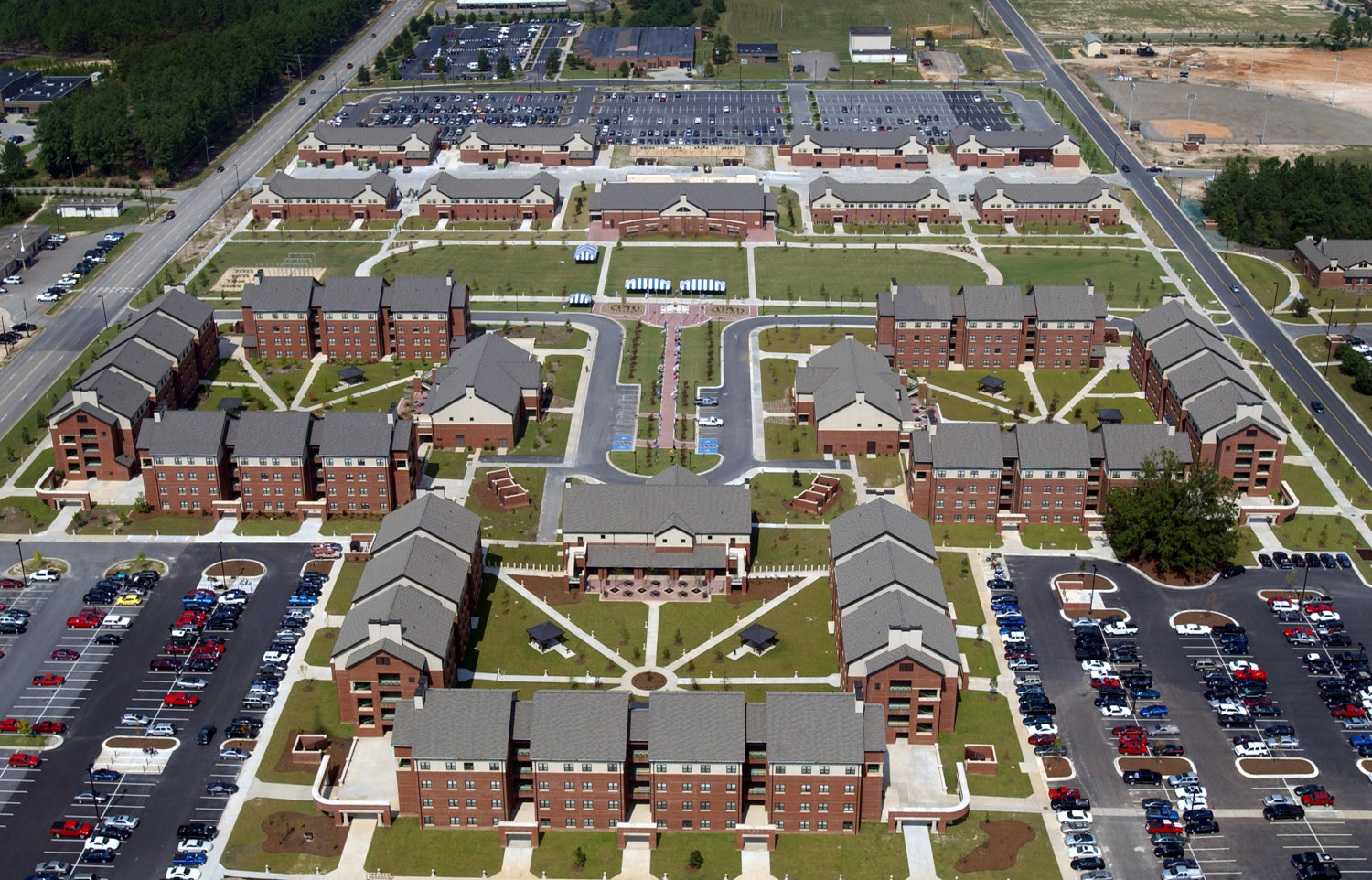
Cover picture: Fort Bragg 1st Brigade HQ. Jonas N. Jordan, U.S. Army Corps of Engineers, Public domain, via Wikimedia Commons
- This is the American military, so we need to be clear what we mean about “select.” There are about 70,000 soldiers underneath the banner of US Special Operations Command (that number can be found inside a 2020 factbook which is available as a .pdf.). That’s approximately one British Army’s worth of special forces. Interestingly, the same factbook mentioned above says that “SOF cannot be mass produced.” Anyway, Delta Force number about a thousand (exact number classified), with no more than about 300 operators within that number, so they truly are a select group within the SOF community. ↩︎
- Something that I’m sure none of us can relate to… ↩︎


.jpg)

Leave a Reply