A new Realism Report on real vs. movie ballistics.
| << False economy: Part 2 | TBC >> |
Hello and Happy Thursday all. This week I’ve been busy collating my ballistics articles into a single Realism Report. I’ll share the introduction to this long-form article below along with a link to the full piece. If you haven’t seen these blogs before, then this is your chance to get to know why firearms and ammunition are the way they are.
If you’ve read them already, then please excuse the lack of fresh content this week, but it takes a surprising amount of work to put this together onto one page. Hopefully it’s a useful format to have everything in one place.
Before we start, let me encourage you to subscribe to the blog using the link below. As always, I’d love to see your comments below, or you can contact me via webform here or email here. Finally, if you’ve enjoyed this post, please share it with a friend.
If you enjoy this blog and want to support it, please consider a donation. Keeping this blog going doesn’t cost much, but it isn’t free either, so any help would be very much appreciated👍
Introduction
Ballistics: what’s it all about?
We’ve all heard about ballistic missiles, particularly in the context of the Iran / Third Gulf War (at the time of writing, July 2026) but also from the ever-present threat of nuclear Armageddon.
Or perhaps your exposure to the term comes from crime dramas, where “ballistics” are the nerds who can recreate crime scenes and get the most extraordinary information from a bullet fragment or even a bullet hole. Sometimes these nerds are also billionaires:
Or maybe you think of “ballistics gel,” that stuff which makes for excellent slow-motion videos and gifs (don’t worry, there are plenty more of these below):

Ballistics, at least in the military sense, is the collection of separate but interrelated disciplines which underpin our understanding of the “hot” end of firearms and ammunition. I say “hot” end to distinguish ballistics from the study of weapons themselves, which is armoury, and which we talked about in a separate Realism Report: How Guns Work.
There are three big areas of ballistics: internal, external, and terminal. Then there are two minor ones: intermediate and wound ballistics:

The interesting thing about ballistics is that the sub-disciplines are quite different. As you can see below, each domain has its own set of scientific and engineering tools which we use to design and evaluate. This makes ballistics a real treat for someone who likes putting classroom theory into practice with concrete examples. Or, indeed, with concrete-shattering examples. Because, as we all know, mechanical engineers build weapons, and civil engineers build targets.
As well as the five ballistics domains listed here, I’ve included two interludes which relate but provide a break from the heavier theory. The first is on silencers, and the second is on hitscan mechanics in video games, a.k.a. magical instant bullets.
Without further ado, let’s get into internal ballistics. Follow this link to read the full article…
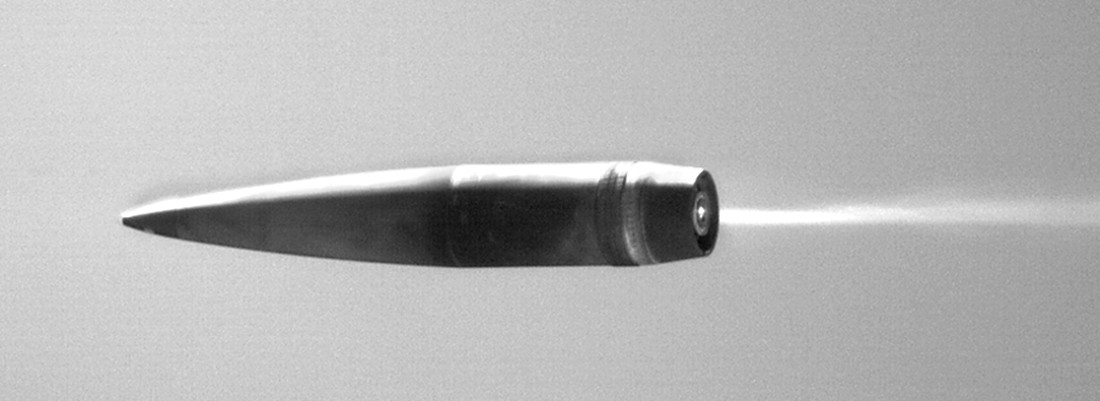
Cover picture: XM1113 rocket assisted projectile, US Army, Public domain, via Wikimedia Commons


Leave a Reply