Launching a new story series: the Dublin Occupation Diaries.
Hi there. I’m delighted to present a new face of Military Realism this morning: the Dublin Occupation Diaries, a.k.a. Sometimes bad things happen to drunk people (thank my wife for the alternative title).
I was inspired by a conversation I had recently with a friend and former comrade-in-arms. We’re both civilians now but no less interested in matters of national security. Perhaps even more so.
There’s been a lot of commentary in recent months and years about Ireland having to step up and take its own national defence seriously. And yet there’s plenty of public and political opposition to Ireland taking the basic steps needed to invest in its defence.
My personal view is that this comes from a place of complacency. Irish people can’t imagine what it might be like to face a real security threat in their own country. Wars are something that happen “over there,” in places like Iran or Ukraine or Gaza.
So I decided to do something about this. The Dublin Occupation Diaries are my attempt to describe what Ireland occupation might look like. Obviously this is in no way prophetic or predictive. I’ve no insight beyond my military knowledge and experience. The scary thing is, one doesn’t need to be a superforecaster to imagine what might happen to Ireland if a hostile power invaded.
I have a layman’s interest in politics and in history, as readers of this blog will know, and there are enough grim lessons in our own past and other people’s present to see what might happen in our country. Sure, this stuff might be far-fetched, but don’t make the mistake of assuming it’s far fetched because it’s unpleasant.
If I can convince one additional reader to start taking Irish defence more seriously as a priority, then it’s been a worthwhile investment of my time.
All views are my own and all characters are fictional. I hope you enjoy it, and I look forward to your feedback.
Before you start, please subscribe to Military Realism if you haven’t already. You can use the link below. If you’ve enjoyed this story, please share it with a friend.
If you enjoy this blog and want to support it, please consider a contribution. Keeping this blog going doesn’t cost much, but it isn’t free either, so any help would be very much appreciated👍
And yet we had plenty of warnings, if we had only made use of them. The danger did not come on us unawares. It burst on us suddenly, ’tis true; but its coming was foreshadowed plainly enough to open our eyes, if we had not been wilfully blind.
—The Battle of Dorking, George Tomkyns Chesney
Chapter 1 | Sean
Thursday 5th November 2026.
The sound of shots woke me at 3am. I can ignore it by now, but then it woke Izzie. I can’t ignore her, so I got to listen to their intermittent cracks in the distance as I soothed her back to sleep.
I live in the Northside of Dublin. The nice part of the Northside, as I always joke with my Southsider friends. “What nice part?” is the inevitable rejoinder. I’m near Croke Park, though, so they have a point. Especially now that it’s an internment camp for resistors. Hundreds of them are rotting in there. Or worse, judging by the sounds.
They could kill prisoners at any time, but doing it in the small hours sends a message. The same message they’re sending by occupying the cultural heart of the city, when any of the myriad abandoned buildings would serve as prisons.
I got back to sleep for another hour before my alarm, but I was still bleary-eyed getting ready for work. The sky outside was a a heavy grey. It wasn’t so much raining as misting, and I hoped to get into the office before it turned heavy.
Mags insisted that I broach one of the few remaining Nespresso pods. I was glad she had, because I just couldn’t face the gritty instant stuff today.
“Go on,” she said. “It’s a special occasion.”
“Our little girl is two.” I turned to Izzie in her highchair. She was concentrating intently on her spoon. “It’s Izzie’s birthday today!”
She looked up one hearing her name, giving the spoon a little victory wave and sending some food flying. No words, but a big smile.
“Will you be back in time for cake?” Mags asked.
I made a face. “I should be, but you know how things are these days…”
“Please try,” she said. “If you can. I’ve a bag of flour on order. I’m going to make a birthday cake.”
“Flour?” I whistled. “How did you manage that?”
“Never you mind!” she grinned. “Just don’t be too late.”
“I’ll do my best.”
Her coy smile and obliqueness came back to me later as I walked through the sheets of mist. How had she managed to get real flour? That’s the kind of thing you needed connections for. Connections to the occupation forces, for example. One hears the most awful things about certain types of women, but I was sure there was an innocent explanation. Ever since the Emergency was declared, Mags had become rather obsessive about our supplies of everyday staples and goods, so it wouldn’t surprise me in the slightest if she’d found a fresh source among her local contacts.
Losing her job in the Central Bank forced her to re-orient her proclivity for spreadsheets and quantities. Which was a good thing, given the circumstances. She’d never loved the job at the time, but it supplemented my salary nicely. I know she’d rather have kept it, but Mags isn’t Irish-Irish, and her accent attracts the wrong kind of attention these days. She didn’t think any of her colleagues would shop her to the security services of the IAI, the Interim Administration of Ireland, but also didn’t feel like it was a risk worth taking.
At least we were saving a tonne on childcare now. And her days were free to forage for things like flour. However she managed that.
I forced these unworthy thoughts from my head as I joined the queue at the O’Connell Bridge checkpoint. I wouldn’t go this way by choice, but the other bridges are blocked now. The bridge is famously as wide as it is long, but they’ve taken a full half of it out of commission with a giant drab tent, like a two-storey marquee. I’ve never seen the inside of that tent and have no desire to do so.
The rest of the road is open to traffic. Two road lanes, one in each direction, with concrete barriers offset along them to force cars into tight zigzags. The tram line is still running, but it stops on the bridge so they can search every carriage at once. Very efficient. That leaves a pathway a few meters wide for pedestrians.
The setup isn’t fancy. That’s no airport-style millimetric wave scanner, just a couple of lanes made by gaps between trestle tables. Each lane has a soldier checking papers while his comrade watches, rifle at the ready. They’re supposed to be checking your EirID app with its verified green tick, but they ask for driving licences, passports, work IDs, whatever they feel like. And they go through bags on the tables looking for God knows what. Weapons? Subversive literature? Given that most of us carry laptops for work and therefore have a ready source of literature, even the subversive type, and a tool for cyberattacks, the whole thing feels theatrical.
“ID please.” I made it to the top of the queue and handed over my driving licence. The soldier scanned it and looked me up and down.
“What’s that on your tie?” He pointed a stubby finger at my chest. Whether it was his accent, my tiredness, or the incongruity of the question, it took me a second to respond appropriately. I didn’t even look down, being bizarrely taken back to the schoolyard. You never look down when someone points, unless you want a flick in the face.
“You a moron, Paddy? I asked you a question.”
“Oh, right. Sorry.” I looked down. It took me a second to focus but then I saw it. “It’s just porridge. My daughter…”
“I don’t want your life story!” He cut me off and shared a grin with his companion. “Dirtbag Irish.” The other soldier laughed, but the barrel of his rifle never left its point of aim. Which was pretty much where the porridge stain was. “Go on, just clean yourself up.” He was beckoning the next in line. I hurried away.
I got to Kildare Street without incident. There are more checkpoints for government buildings, and Agriculture House is no exception. It’s always smooth by comparison. A bit of a queue and two surly soldiers. Clones, for all I know. It’s a functional setup. They’re just checking we are who we’re supposed to be, and their desire to inconvenience us is only minimal.
I was first in the office, as planned, and started on my to-do list before the inevitable distractions of colleagues. I was in the zone, listening to music, and didn’t notice the big room filling up until Bill Harris walked in, shaking his umbrella and raincoat, something he could easily have done in the lobby or corridor. He grimaced and shook his head in the manner of a dog. The rain had obviously intensified.
“Remember remote working?” Harris asked, rhetorically, as he arranged his desk. “Weather like this, I’d be in my bed for the day. I might even have opened the laptop if I felt like it. God be with the days.”
I smiled. “Remember the unions? God be with those days.” He made no response so I looked up from my screen. Ross Moran, the head of division, was standing in the doorway. Fuck, I said to myself.
“You always say the wrong thing at the wrong time, don’t you Sean?” It was another rhetorical question, and I made no response. “Anyone get the rubber glove treatment this morning?” Ross mimed a finger jabbing upwards and the four of gave a polite laugh.
This wasn’t just an attempt at managerial banter, but a subtle reminder that, as a Principal Officer, he had a designated parking space and a pass to get him through the checkpoints without a search. He took another beat to look around the room, no doubt trying to recall if any of us owed him work today. We were all in the clear.
“Got some news,” he said. “Sully’s gone to the Castle first thing.”
“Jesus. What for?” asked Gallagher, our resident office Northie.
“The fuck do you think I know? The Secretary General doesn’t need to give me an account of her movements.”
He was right, but I could sense an edge in his voice. Getting summoned to Dublin Castle was a big deal. It had tighter security than Fort Knox. Normally the IAI sent their minions out, so a gathering like this must be inter-departmental. Behind the nonchalant act, Moran hated being frozen out like this, even if it was just for a few hours.
Still, he could exert his control on us in the meantime. “We’ll have an all-hands after lunch, if she’s back by then,” he said. “Don’t go making any plans for tonight.”
I was about to open my mouth but Moran was already gone out the door. Our division was spread across the whole corridor and he had five other offices to badger before his day could properly start.

I seethed quietly after Moran left. That brown-nosing prick was going to ruin my evening. And Mags’s too. Izzie wouldn’t mind, of course: it was just another day to her. But Mags had made an effort. After the year we’d had, and everything we went through with Izzie, and her being stuck with the poor girl all day, every day, she needed a reason to celebrate.
I couldn’t text Mags. Not because she’d be disappointed (although she would be), but because we were under strict instructions never to divulge office information to people outside the Administration. Even, or especially, to our spouses.
They called it “opsec,” which is a word I’d never even heard of before the Emergency. I don’t think anyone had. Maybe that’s why we got our arses handed to us so comprehensively, but that’s another story. I knew it wasn’t an empty threat either. They monitored our phones. I played it safe and never texted a thing to Mags, or anyone, from the office network.
I couldn’t seethe for very long. My colleagues were more interested in chatting than working. Harris was the worst, as usual. I haven’t seen the man do a hand’s turn in my twenty years here, but he holds down the job. In fact, he’s a grade ahead of me. He’s unapologetic about his work avoidance strategies. He actually works quite hard to avoid being given work. It must be exhausting.
Sometimes, when he’s absolutely sure no-one senior is listening, he whispers something about “passive resistance” with a wink. That’s bullshit, though, and we all know it: he didn’t do a tap for the nineteen years before the Emergency either.
“Do you think they’ll let them use Lansdowne Road?” He asked me. As usual, it was apropos of nothing. I’d seen the headline, though, and was prepared.
“Is the vote today? It seems only right they would,” I said. “It’s the best stadium in the country after Croker.”
“Yeah,” he said, “but the GAA didn’t build it. Why should they get a free venue?”
“I’m sure it’s not free. And the GAA let them play football and rugby matches in Croke Park when they needed.”
Harris grunted non-committally. “I still don’t think it’ll pass. Eaten bread is soon forgotten. And the other crowd—” he made a gesture toward the ceiling which I knew meant the occupiers rather than someone in our building, “—I don’t think they’d like it either. They took over Croke Park for a reason.”
Moran came in then. For once I wasn’t the one talking out of turn, but he didn’t seem to mind when it was Harris.
“You know,” Moran said, “75 years Mayo waited to win back the Sam Maguire. This was to be our year. We had the team and all.”
“Oh, he’s off now,” said Gallagher, from the corner. “Who put a pound in that lad?”
“I saw them,” Moran continued, “back at the pre-season games. Jaysus lads, it was theirs for the taking, but that’s just when all this nonsense started. It’s that fecking curse.”
“Here we go,” said Gallagher. “The curse again, and not the fact that Mayo are fuckin’ shite. If you think they’re that good, then throw down a wager for next year.”
“Ah no,” said Moran. “Half the team are on the run, or God knows where.”
“Aye.” said Gallagher. “And it won’t be Antrim either.”
He was being characteristically understated. Belfast was still an active warzone, but no-one wanted to open that particular can of worms. There were lines you didn’t cross nowadays, even among fellow Irishmen.
We didn’t see Moran again until the staff meeting after lunch. Sitting to his right at the conference table was a small, sharp looking man in a crisp staff officer’s uniform. He was one of them. Moran made no introductions. He didn’t need to. We all knew who the newcomer was, even if we didn’t know his name. And we knew why he was there. Moran did the talking.
“The Sec Gen, along with all the Sec Gens, met with the Commanding General this morning. There was a discussion of, eh, how to accelerate NIEPA.”
The New Ireland Economic Prosperity Agenda was the occupiers’ plan for the country. The name was a real doublespeak, since the plan was all about finding ways to move wealth out of the country and into the wider war effort. So far, they’d focused on the big semiconductor plants, pharma manufacturing, and data centres.
Ireland was doing its bit to keep the war economy going. Not that it had much choice. The downside was the immediate loss of multinational tax revenues, which led to dramatic Administration spending cuts. That, and the “solidarity” tax which we sent back. My own salary was half of what it had been a year ago, and I was one of the lucky ones. A civil servant was un-fireable, even during an enemy occupation. Sorry, an “interim administration.” The politicians weren’t so lucky. Most were in detention in Croke Park, apart from the handful who had turned Quisling. There were probably enough in detention to field two half-decent football teams. Moran went on.
“Big news for our Department. NIEPA is turning to Agriculture. We’re the biggest sector of the economy now, and it’s about time we pulled our weight. The Sec Gen is delighted to get us on the pitch for this, and she’s agreed some ambitious targets with the General. Obviously, Economics and Planning will be central to this, and I’m sure you’re all excited to get on board for the big win.”
“Starting right now, we’re going to lay out our strategy. I want every one of us to focus on this. I’m reporting to the Sec Gen again at six, and I’d like us to have made progress. The General’s representative—” he nodded to the man beside him “—will observe proceedings and report back.”
“Ladies and gents, the exam question here is simple. How can we move as many calories, as quickly as possible, to distribution hubs for external supply?”
The meeting broke up into small groups of nonplussed civil servants. This was a new departure for us, and obviously everyone was wondering what they and their teams had to do to keep Moran and the Sec Gen happy.
But I already knew. I rushed back to my workstation and combed through old folders looking for one particular file. I spent half an hour trawling multiple drives, clouds, backups, and email attachments. I was still getting over the loss of AI in the office. War is hell, I suppose. Sorry, “Emergency”. Not war. I was just about to give up and attempt to build the damn thing again when I found it.
I held my breath as the old file wheezed into life again. Everything was on a shoestring, software support included, and crashes were to be expected. But it held, and I beheld it in all its glory. An old spreadsheet model I’d built a few years before, as part of a food security initiative. It had tabs for crops, dry cattle, dairy, sheep, and a dozen more categories. I just needed to update the population projections at the front end, which was easy data to get, and change a few signs in the equations.
An optimised food-export model, complete with total calorie estimates and a sensitivity table. The “exam question” which Moran wanted answered. A glimmer of hope kindled that I might, in fact, make it home for my daughter’s birthday.

“I don’t get it.” Moran eyed my laptop suspiciously, as if the spreadsheet formulas would fall off the screen and infect his simple world.
Let me show it to the Sec Gen now. I know she’ll get it. I resisted the urge to say that. I have some sense of self-preservation. It’s hard to be conciliatory when you’re hovering over someone at their desk, shoving your laptop screen in their face. I tried anyway. “Look. I’ve probably overcomplicated it on the presentation.”
“You think?”
“Sorry Ross,” I said. “It’s just that I think this could be the way to get the information you’re looking for without reinventing the wheel.”
“You know, Sean, there’s a reason I want to get everyone together on this. Thrash it out and bring it to herself as a departmental effort.
“All for one and one for all?” I don’t know where that came from, at was as if I heard myself saying it. I was losing patience though. We had the answers already. I had the answers, and Moran was still trying to play the part of the busy manager. He needed his machine to come up with the solution. The bloated, broken, bureaucratic Administration machine, which was effectively indistinguishable from the pre-occupation civil service machine.
Moran looked at me sideways. “Not quite, Sean. We have to be careful here. Manage the message. It’s just that… this looks like…”
He paused. I felt he was on the verge of saying more, but he gave a quick glance around first. Then he shuffled his chair around to my side of the desk and began squinting in earnest at the screen. While he stared, I tried another tack.
“To be honest with you Ross, I was sort of hoping I could take an early evening. Not stay here late, I mean.”
“You were what?”
“The thing is, I’ve made some plans for my daughter’s birthday, and…”
Moran slapped the table. “Forget about your fucking child’s birthday, man. If I need to bring this… thing to the Sec Gen, I need you in the room to make it work. End of.”
I was about to reply but a voice from behind made us both jump.
“Please let me see.” No mistaking that accent.
Moran pushed his chair back deferentially and the staff officer walked into the gap. He bent a precise 45 degrees at his waist to get closer to the screen.
“Explain this,” he said to me.
I repeated what I’d already told Moran. The staff officer waved his hand to skip past a lot of the basic mechanics of the model, things I’d had to slow-walk Moran through. He was extremely interested in the outputs, especially the second and third order ones and the sensitivity analysis.
Occasionally Moran would chime in to explain something I’d already covered, but in his own words.
“Please stop interrupting,” said the staff officer.
I went on. The staff officer asked me to change a few inputs and examined the output charts. The first was a forecast for calories produced over the next five years, by type, by region, and by unit cost.
The second showed forecast food exports by calorie, type, and unit logistics cost. The changes we’d made had increased this second chart’s values by an obviously unrealistic amount.
The third chart showed net calories forecast against national demand. The first bar was obviously supposed to be bigger than the second, but the changes in the model inputs were now showing an ugly deficit in calories for the population versus nutritional requirements.
I explained this, but the staff officer seemed unconcerned. I glanced across at Moran, who had a blank look on his face.
“I overheard you say that you had an engagement this evening, is that right?” Precise and clipped, interchangeable with any of the occupiers from the professional classes whom I’d had any interactions with.
“Yes sir.” I replied. I don’t know where that ‘sir’ came from. It was like I was on autopilot.
“Well,” he said. “We shall see what we can do. Shan’t we, Mr. Moran?”
“Yes sir,” said Moran. “If you say.”
Gallagher came in then and Moran asked him to take a look.
“Just make sure there are no broken formulas, typos, any of that. This is going to the Sec Gen and we need it to be watertight. Even if we need to rebuild the thing.”
Moran was obviously hoping Gallagher would find fault in my work, but it was good. I knew it was. He was just being a prick, exercising what little power he had after our minder had overridden his instructions to me.
“Well?” he asked, once Gallagher had spent sufficient time playing with it.
“Aye, Ross, it’s grand so it is. But…”
He paused, choosing his words. Moran started intently at him while he did.
“It’s just,” Gallagher said, “The farmers won’t like it.”
“No,” agreed Moran. “Not one fucking bit.”
Now it was the staff officer’s turn to speak. “With the greatest of respect to your farmers: fuck them.”
No-one said anything for a moment. Even Moran was quiet. I silently willed Gallagher to just shut up and leave it, but he couldn’t.
“I get that, but these people won’t be happy. And…” Gallagher paused, weighing his words. “…they might not take it lying down. That’s all I’m saying.”
“Jesus, Gally,” said Moran, but the staff officer stilled him with a raised palm.
“I appreciate your candour,” he told Gallagher. Then he smirked. “and I’ll pass it up to my superiors. Until your farmers can mobilise an armoured division, I think we will be okay.”
That shut him up, and Moran had no choice then but to ask me to share the model with him. He told the staff officer he’d send it straight across to him.
“I’ll be in my office,” he told us. “I guess you’re off the hook for this evening, Sean. You too, Aidan,” he said to Gallagher. “And any of the rest of the team you see.”
He walked out without a backward glance.
Later, I made sure I wasn’t the first one to leave, but as soon as I decently could, I packed away my laptop and bustled to the lift. Moran was coming out holding a tray of coffees.
“See you tomorrow, Ross,” I said. Clearly, he still had plans to stay late, even though we’d—I’d—solved his problem.
“Good work today,” he said, without making eye contact.
“Thanks. See you tomorrow.”
He grunted and the doors closed. I should have felt good about my day, what I’d achieved, all the time and work I’d saved the whole division. But Moran didn’t seem happy. Perhaps it was because I’d undermined his authority in front of them. That hardly seemed fair, though. There was no question but that they owned us, and it wasn’t like I’d gone behind his back to the evil overlords.
Then a horrible thought entered my head. Do they blame me for this whole thing? Surely, they could see that this agricultural policy was going to happen one way or another. One civil servant making life easier for himself—and his colleagues, more importantly—shouldn’t have any bearing on the rights and wrongs of the situation. Shouldn’t it? I didn’t think so, but then I thought about my sister, and what she’d said to me the last time we spoke.
I tried putting it from my head, but the steady drumbeat of rain on my head, heavy now, kept bringing it back. It had been pouring rain then, too, before she turned away from my doorstep and disappeared into the night.
“What kind of father do you want to be to your daughter, Sean?”
“One that isn’t dead.”
I was lost in my own world and barely noticed whatever indignity the soldiers on at O’Connell Bridge were directing at us this evening. I think my lack of reaction was a blow to their morale. Well, that and the beating rain.
I got through the bottleneck in only twenty minutes and was soon beating a quick path back to my own quiet redbrick terrace.
Mags came out of the kitchen when I walked in.
“There you are!” she said. “We were wondering when we’d see you.”
“Is that right?” I asked, directing my question at the smiling little girl in her arms. I kissed Mags and then took Izzie off her.
“I kept her awake just a little bit longer,” Mags said. “It is her special day, after all.”
I lifted my child high, spinning around and getting a squeal of pleasure as my reward. I brought her down to my chest again and kissed her head.
“Happy birthday Izzie.” I gave her another kiss and dropped my briefcase by the door. “I heard you were a great girl. Now let’s have some of Mama’s famous cake.”
To be continued…
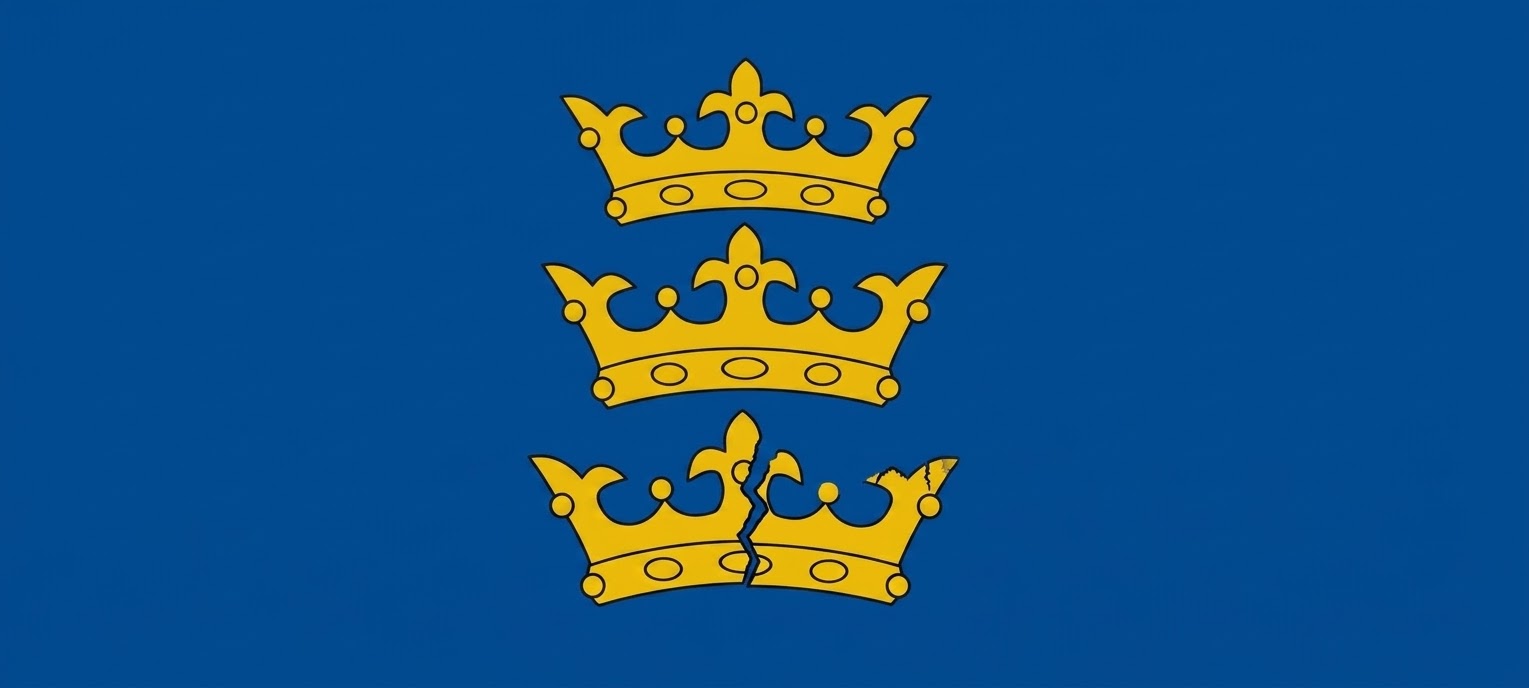
Cover picture: Adapted from: The banner of the Lordship of Ireland, NsMn, CC BY 3.0, via Wikimedia Commons


Leave a Reply