Explaining Ireland’s “triple lock” on defence
Hi there. I hope you’re all gearing up for the Christmas/Holidays and taking some well-earned time off with loved ones. If you’re not, then I hope you stay safe wherever you are.
I’m going to take a break over the holidays, but I’ll leave you with something short and whimsical and pre-loaded. In the meantime, this week there’s another aspect of the Irish defence discourse that I wanted to talk about: the “triple lock” on the deployment of Irish troops overseas.
This is topical because the current government have committed to getting rid of it, which has triggered protest from most of the opposition. To give one example, The Labour Party’s Duncan Smith says:
The Triple Lock has served Ireland well for decades, ensuring that any deployment of our Defence Forces has the backing of both international legitimacy and democratic accountability. However, it is clear that this Government—and the last—has been intent on eroding this key safeguard of our neutrality.
Is the triple lock a “key safeguard of [Ireland’s] neutrality”? What are advantages and risks of getting rid of it? Let’s start with a run-down on what the triple lock is, and then talk about where it came from. Then we’ll look at the legitimate concerns around its scrapping and offer some rebuttal to these. We’ll conclude with the question as to whether this really matters.
Before we start, let me encourage you to subscribe to the blog using the link below. As always, I’d love to see your comments below, or you can contact me via webform here or email here. Finally, if you’ve enjoyed this post, please share it with a friend.
If you enjoy this blog and want to support it, please consider a donation. Keeping this blog going doesn’t cost much, but it isn’t free either, so any help would be very much appreciated👍
The triple lock is really just 1.5 locks
My British readers are probably confused at this point, because for them, the triple lock is a government commitment to keep raising pensions. Whereas the UK’s triple lock is part of their nation’s fantasy economics, Ireland’s one is part of its nation’s fantasy geopolitics.
Simply put, the triple lock means that Ireland cannot deploy its Defence Forces overseas without three things:
- Government (cabinet) approval;
- The approval of Dáil Éireann (the lower house of parliament);
- A mandate from either the UN Security Council (UNSC) or the UN General Assembly
The name obviously implies independent and equivalent levels of security, like three locks on a door. In reality, it’s more like a “one-and-a-half” lock:
- Government approval is not a lock, since the government are the people who make the decisions. Calling this a “lock” is like calling the trigger on a gun a “lock” preventing the firer from using it.
- Parliamentary approval is a sorta/kinda lock, since it doesn’t happen automatically. But Ireland is a parliamentary democracy, so the government has to command a majority in parliament. Otherwise, it wouldn’t be the government. To extend my metaphor from above, this “lock” is more like the safety catch on a rifle. You need to know how to use it but it’s really not a challenge, unless you’ve lost control of your muscles.
- A UN mandate is a proper lock. The government has little or no control over the UNSC’s decisions, so it really does actually as a brake on their ambitions. Following our metaphor above, this is like leaving the ammunition for your weapon with the local police. Without their say-so, you can’t shoot anything.

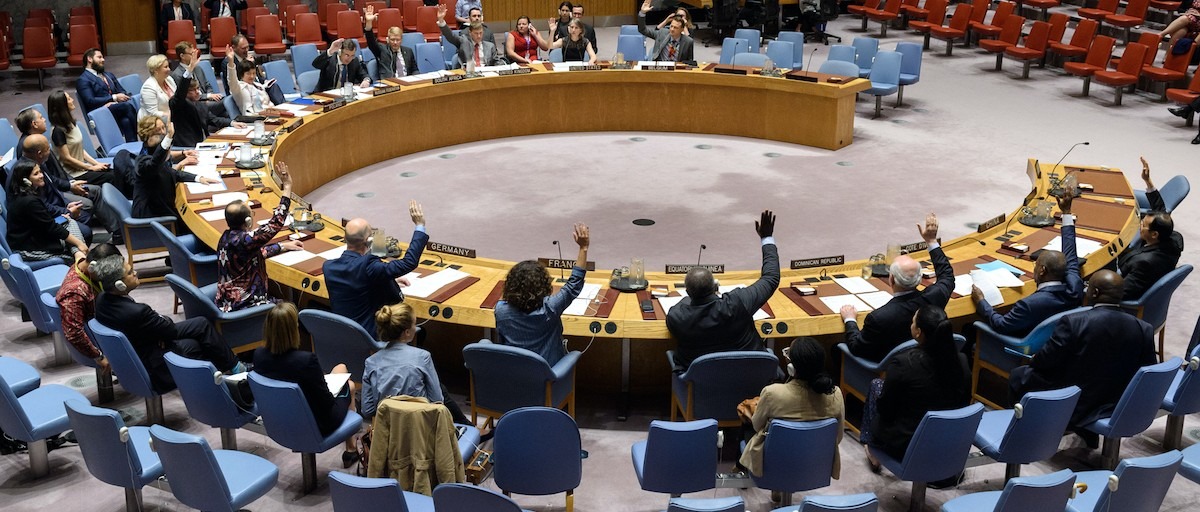
“Proper order”, you might say. External oversight is surely a good thing. The big problem with this “third” lock is the veto power wielded by the permanent five (P5) members of the Security Council:

This was less of a problem in the 1980s and 90s, when new peacekeeping missions were being approved at a furious clip. Since 2000, however, this became a bottleneck as fewer new missions were authorised. The bulk of the UNSC’s output now is in extending or redefining existing missions. By some counts, there have been no new peacekeeping missions authorised since 2014.
If this “triple lock” doesn’t seem like much of a “lock,” then there’s a very good reason for that: it was designed to enable, rather than to restrict the deployment of Irish troops abroad.
The triple lock was forged in The Congo
The Irish constitution says that war can’t be declared without the assent of the Dáil. That’s where our first and second not-very-effective locks come from. The third lock, the UN part, arose when Ireland finally joined the UN in 1955. Within a few years it was asked, and agreed, to send a battalion of soldiers on peacekeeping duties in the Congo as part of ONUC, one of the largest UN peacekeeping missions ever authorised.

The government had a problem: there was no legislative basis for sending these troops overseas. The constitution talked about “war,” but this was clearly something different. So they amended the Defence Act in 1960 to allow contingents of the Defence Forces to serve overseas with “United Nations Emergency Forces.” So was born the third “lock.”
This fascinating history of the triple lock is outlined in full in a paper published by the Institute of Irish and European Affairs and authored by a former senior civil servant in the Department of Defence.
Nobody actually called it the “triple lock” (rightly so: it’s a dumb name) until the early 2000s and the Irish public’s rejection of the EU Nice Treaty in 2001. This act of brazen disobedience by the people shocked and embarrassed the Irish political, media, and academic classes in front of their European peers (who had the good sense not to ask their own people their opinions). Ireland successfully re-ran the treaty vote in 2002, but not before agreeing carve-outs to European mutual defence clauses which were seen by some as being instrumental to the first treaty defeat.
The same story happened with the Lisbon Treaty in 2008 and 2009: the Irish public (the only ones in Europe allowed to vote on it) rejected the treaty, the government did some horse-trading in Brussels and secured more defence carve-outs and caveats and put the referendum to the people a second time, successfully this time.
I was coming of age and political consciousness at the time of these treaties and remember the “triple lock” being a rhetorical flourish that pro-treaty sides used to allay any concerns about Ireland’s youth being conscripted into a European army. As a rhetorical device, it’s about as nonsensical as the current Taoiseach’s line about Ireland being “not politically neutral but militarily neutral,” but seemingly and disappointingly just as effective.
Speaking of neutrality…
…and has nothing to do with neutrality
The so-called triple lock has nothing to do with neutrality. When the UN was first formed in the aftermath of WW2, enthusiasm among Irish parliamentarians was low because of the veto power of the P5 (see above)1. It was seen as fatally incompatible with the concept of neutrality. The ostensible reason which the Soviet Union gave for vetoing Irish membership for ten years was that it had been neutral during WW2 (although the real reason was that Western powers were vetoing countries in Russia’s sphere of influence).
I’ve argued here before against the modern idea of neutrality as being something that has intrinsic moral value. Neutrality and pacifism are two very different things, and international law puts obligations on neutral countries to protect and defend their own lands and waters: something which Ireland is manifestly incapable of doing, as evidenced by recent events.
The triple lock was an idea built on a shaky foundation 20 years ago to reassure the public and get them to vote the way the government wanted them to vote. It became a “thing” in opposition to a straw man. Now, depending on your perspective, either:
- The security context has changed and the concerns we may once have had about EU militarisation are moot in the face of Russian aggression. We must get rid of this anachronistic triple lock.
or…
- The militaristic EU is using the war in Ukraine as an excuse to create the army its leaders always dreamed of. We must retain this vital triple lock.
I won’t pretend to be neutral here: I lean more toward the first option. As a former military professional, I can’t be otherwise. However, I do have some sympathy for the second view: the UN, for all its flaws, is an important institution, and the political classes are most certainly going back on commitments they made not very long ago.
On balance, the biggest issue I have with the triple lock is that it implicitly says that we don’t trust our government and parliament to make decisions of national importance. I get not trusting either one in isolation, but both? That smacks of desperation at the entire democratic process. At that rate, you might as well hand the keys of the country over to the UN altogether, since you don’t trust your elected representatives to make decisions.
Conclusion: This isn’t the fix Ireland needs
For all the debate about the triple lock in Irish politics, it’s easy to lose sight of some basic facts:
- We managed ‘fine’ without the triple lock for nearly the first four decades of our independence, including the only time our neutrality was ever really expressed on the world stage.
- The triple lock, by its presence or absence, has nothing whatsoever to do with the defence of the state against armed aggression, which is the primary purpose of the Defence Forces. To push our earlier metaphor to breaking point: the local policeman has the ammunition for our rifle for when we want to go to the firing range, but we have a shed full of ammo and grenades out the back for use in our own back garden.
- That noble institution which we trust as the third and most secure lock is the notoriously dysfunctional UN. For every person out there who decries the “colonial powers” of Britain and France, there’s someone who objects to the American “world police” or the “autocrats” in Russia and China.
This discourse around the triple lock is like musicians on the Titanic arguing over who gets to play to lead solos as the ship goes down. Yes, it would be nice for governments of the day if they could win kudos with their international peers by committing Irish troops to adventures overseas. The troops in question would like this too, since overseas service is one of the main draws for young men and women who join up.
But the Defence Forces of Ireland are in a parlous state due to decades of under-investment. It cannot achieve its primary aim without significant expansion in numbers and capabilities. It has sustained an expeditionary force in Lebanon for the last 20 years, but at the cost of dramatically limiting its operational and training activities at home. Even this mission is set to finish soon with the ending of UNIFIL’s mandate in December 2026. This is a perfect encapsulation of the absurdity of the triple lock: Ireland’s sovereign decision to support an important peacekeeping mission can be overturned by the fiat of the US President, along with any of the other P5 members.
It also illustrates the insignificance of the debate, since Ireland’s contribution was dependent on UN (read: American) money, not just its assent at the Security Council, and was arguably a detractor from its primary defensive mission.
So, sure, get rid of the triple lock. It’s a pointless piece of legislation which limits the government where it was designed to enable it. It does nothing for neutrality and arguably militates against it. But understand that it’s a side-show and does nothing to solve the main problem of rebuilding and re-arming Ireland’s Defence Forces to carry out their primary purpose.
Thanks for reading and please remember, if you haven’t already, to subscribe using the link below. Please also share this article with a friend. See you next week.
Cover picture: Russia’s war in Ukraine revives calls for Security Council expansion, electthecouncil.org.
- This obvious problem was recognised in the parliament debates of the time. There was a general sense (and I’m paraphrasing here) that it was better for Ireland to be inside the tent and pissing out and, perhaps, we could influence a change in the undemocratic power of the P5 (ha!). ↩︎

Leave a Reply