Episode 2 of the Dublin Occupation Diaries
Hello again and welcome back for another week of the Dublin Occupation Diaries, a.k.a. Sometimes Bad Things Happen to Drunk People.
In case you missed last week, let’s bring you up to speed. This is the second episode in a serialised story about life in Ireland under occupation by an ambiguous foreign military power.
My aim is to get a few more people thinking and talking about national defence. Even if it’s just to say: “Not a chance. It would never happen this way.” Even that is better than the most common response, i.e. “It could never happen here.”
Before you start, please subscribe to Military Realism if you haven’t already. You can use the link below. If you’ve enjoyed this story, please share it with a friend.
If you enjoy this blog and want to support it, please consider a contribution. Keeping this blog going doesn’t cost much, but it isn’t free either, so any help would be very much appreciated👍
Chapter 2 | Ciara
Thursday 12th November 2026.
It was time. At least, I couldn’t wait any longer. I checked my watch for the umpteenth time. The battered little G-Shock had put up with twenty years of military abuse and was still going strong. Not like my old Apple watch. Naturally, we’d been forced to abandon our smart devices a long time ago.
I put on my smock and moved my grass-covered helmet from its fir hatstand to my head, mangling my hair into some kind of bun first. I should have cut it all off months ago, but there are certain trappings of civilisation I refuse to let go of. Not that I’m under any illusions: it looks and smells repellent.
I fastened the the chinstrap as I stepped out from under the hessian roof into the morning drizzle. I paused a moment at the entrance, letting my tired eyes adjust. What little light was in the morning was obscured by the cloud of mist and damp, leaving a blue-black contrast of tree and sky in all directions.
You’d wonder how anyone finds their way, I thought. Not that I had any doubts about where I was going.
“Fionn, hold the fort”, I said to the young man who appeared by my side. “You’re the adjutant now. I presume the thought had crossed your mind? A meteoric rise.”
Lt. Breathnach, saying nothing, nodded slowly, once, then once more firmly, and set his face in a grim and world-weary expression which could so easily have been comical on his young face, barely a man’s face at all.
“Let’s make a virtue of necessity,” I said. “The men are in a sorry state. The rain is driving the will right out of them. Like Brown’s cows, and sure look at the state of the place. Bring in the platoon and section commanders. Crack the whip for me. Get the troops up out of the sack and get the place looking halfway right.”
“Yes Ma’am.” He was taken aback for a split second but seemed then to almost transform into a different sort of being, something with a purpose and an aim and a role in life, if even just for the next few hours.
“Any orders?”
I put on my gloves.
“Not yet, just get some life going here. I’m going to OP 29 now. I’ll be a while. Have the NCOs in for an ‘O’ Group at 1100 hrs, if we hear nothing before then.”
“Will we?” Breathnach asked. “Hear something, I mean? Is there an op happening?”
I shrugged. “Depends on the enemy, as always.”
He gave a small nod. We’d lost count of the number of times we’d set an ambush on an enemy who never appeared. There were rumours they had some kind of AI patrol matrix planner who helped them break patterns. Still, we lived in hope.
“Do you want an escort?” he asked.
“No. I’ll grab two of Fitzy’s boys when I get there. Are you happy now, with what you have to do?”
Breathnach nodded, almost impatiently. I smiled inwardly mused. The lad needs to do ten things at once and just wants me to be on my way so he can crack on with it.
“Grand. 1100. Good lad.”
I trudged across the defensive forest position to find the observation post. I needed to have eyes on the ambush, if there was to be an ambush. Jim Conneely, my one-time battalion commander and direct superior, had asked me to observe the operation and do a post-ambush damage assessment. I was his intelligence officer as well as being commander of one of his “wings.” Uprooted and on the run, we were no longer an infantry battalion. Instead, he’d given us the moniker of “Céad Colún,” or “1st Flying Column.” It was a grandiose name for what was, in reality, the skeleton of a military unit lived off the land and travelled constantly. I didn’t even know whether we were, in fact, the first. Or the only one.
I was glad I’d left Breathnach with a list of tasks. There’s nothing worse than idle hopelessness, and some work would take their minds off what was going on out there, off the mountain, beyond the forest, back in the fields and farms and towns and streets which were their homes. And no harm in it either, I added to myself, we do need to tighten up around here. We were still supposed to be a fucking fighting force. Not a collection of wet and miserable animals.
For it was all animal sounds which greeted my ears as I strode towards the edge of the forest, confidently threading my way around the holes and bivvies which were still just shadows and amorphous shapes on the ground. Grunts, snores, rustlings of canvas and clinking of metal, coughing, snuffling, muted cursing and low grumbling.
I wound my way through this maze for fifteen minutes to get to the observation post. It wasn’t far as crow flies, but not many crows were flying in plantation forest this thick. Not many drones either, which was the whole purpose. I found I was making good progress by recognising landmarks in the battalion’s patrol harbour. That was usually a sign that we were starting to linger too long in one spot. I suspected we’d be on the move again soon, but that was Big Jim’s call to make.
I stooped to enter the OP, a narrow tunnel cut in a thicket of gorse. Branches reached out to jibe me mercilessly, grabbing onto my smock, pulling my helmet and poking at my face. Slowly, shuffling, on my hands and knees, I reached the two watchkeepers at the front.
“Make a hole lads. Have ye room for a small one,” I gasped as they pushed aside.
“Tight enough in here ma’am,” said the first.
“I’d say you’ve been in tighter,” I said. The response was hard-wired in me and was almost unconscious. Still, the young lad went bright red, which I could even see under his camouflage cream. His companion stifled a snort and I felt bad for taking the piss.
I shuffled in some more on my elbows until my face was looking out of the aperture and down on the valley below. I reached out an open hand and took a pair of binoculars off the embarrassed soldier. I scanned the valley, road, and town below. I was slow, careful, methodical.
At first, all I could see was the slowly rolling fog making its way over the green slope of the mountain and nearly obscuring the buildings of the town, far below. I steadied the viewfinder and found the main road on the near side of the town. I slowly scanned the motorway as it ran away to the north and toward Dublin.
I was looking for a particular point on the road. At first I couldn’t see it. This worried me. The valley looked so much different this morning than it had during the recce the day before. With time and patience (although the latter is not my strong suit), I found the spot. The motorway ran over a two-lane road with a deep shoulder on the underpass, right underneath the motorway’s road deck.
It used to be a spot where people would leave their own cars and pool the driving into Cork or even all the way to Dublin. Or sometimes not even into the cities, but to the pharma and medtech and semiconductor factories scattered throughout the country. This was back when people worked hard and made money and kept this little country humming along. We were the envy of Europe, with our gargantuan revenues from American corporations. That didn’t last long post-occupation. The factories are still busy, and they’re making lots of goods for export, but they’re not making money for the country anymore.
I couldn’t see underneath the motorway overpass but I looked for and found the agreed-upon marker. A single bale of silage shrink-wrapped in green, ordered among a score of black plastic wrapped bales. Good, I thought. The bomb’s still there.
Now I had to wait again. I kept my eyes fixed to the binos, looking north, but exchanged small talk with the two watchkeepers. This was mainly for my benefit, to stay awake, but I learned that one was a pre-occupation soldier like myself, and the other was not.
The young chap whose face had gone red was a raw recruit. He’d joined up after the occupation and had spent most of the time since then on the run with the Céad Colún. No wonder he’d been embarrassed: he wasn’t used to army talk. He’d probably worked in a nice, bright open-plan office in Limerick or Galway before all this, with table tennis and arcade games and free beers in the fridges. A bona fide snowflake. And yet here he was, by his own choice, lying on wet pine needles halfway up a hill in Tipperary.
I noticed movement in the distance. There’d been a few cars passing. Not many, nothing like the old days, but a few evidently well-connected folks who could get their hands on some petrol. What I saw now was different. It was slower, the vehicles were bigger, and they all had their lights on. They were here. The operation was on.
“Time”. I asked the words mechanically.
“Zero-six-fifty-five”, answered the first man.
Right as expected. Their AI wizard finally dropped the ball. If it ever existed in the first place. The convoy was bigger than we’d expected and hoped for. Good. I watched it trundle toward the overpass. They wouldn’t realise there was a road running underneath them until they were literally on top of it, such was the lie of the land. The exact timing wasn’t in my hands. There was an ambush team stationed close by.
The seconds seemed to stretch as the trucks moved closer. I willed the convoy to keep going, not to stop, not to have a miraculous breakdown. But they came, and the first trucks crossed onto the overpass. I waited. The first truck rolled through, and the second one was halfway across.
Just when I was starting to worry, I saw the flash and the sudden enveloping cloud of sooty black smoke. I saw bits of metal that, until milliseconds ago, were parts of sturdy lorries, go flying into the air on long graceful arcs. I saw smaller figures thrown like ragdolls and tried not to think too hard about what they were.
The flash was gone and the smoke was starting to drift. There was a pause, a sudden, eerie, silent pregnancy, and then a wall of sound rolled up the hill and over us. I was starting to see smaller flashes now, and noticed some tiny figures who’d emerged from the high embankments at the motorway’s level. Our lads, opening up on the rest of the convoy.
They let rip with a few anti-tank rockets and I saw the lead armoured car, the one which had escaped the first blast, get a direct hit. It was a lucky shot, and the rest went wide or punched through the soft canvas of trucks with minimal effect.
The unmistakable crack-crack-crack of the heavy weapon barrage drowned out the snaps and pops of rifle and machine gun fire. They were firing in longer bursts.
I couldn’t fault their enthusiasm, but their movement drills and fire discipline left much to be desired. It wasn’t their fault, this was simply an outcome of being post-occupation recruits.
The ambush commander moved toward the burning head of the enemy column, beckoning his men to follow him. They focused their attentions to the front, lacking that essential rear and flank observation.
Because what I could see, and they couldn’t, was the enemy duo alighting from the back of the rear truck in the convoy. From my perch on the side of the hill, I could see their “should we stay or should we go” moment. They evidently thought better of running, instead turning to catch our ambush party unawares.
I was completely powerless. Had we been closer I might have attempted turning my own weapon on the enemy duo, but it was pointless at this range. They wouldn’t even hear my shots in time to be warned. I had no comms link to the ambushers. Even my radio to the battalion commander only worked intermittently. I was on my own. And so were they.
The enemy survivors opened fire on our men and I saw two go down instantly. Shit. A firefight ensued: a very one-sided one. A veteran group of soldiers would have responded to the contact instantly and effectively, suppressing the attackers and manoeuvring to outflank and neutralise them. These poor lads might have figured it out after a few seconds, but they weren’t given that opportunity. I watched in horror as they fell one by one.
I dropped the binos and cursed. The operation had been on the verge of success. We’d hit them hard but snatched defeat from the jaws of victory through inexperience and ill-discipline. We couldn’t sustain losses like that indefinitely. The enemy could.
“I can still see some movement down there.” It was the first watchkeeper.
I said nothing, not grasping what he was saying.
“Ma’am? It’s our lads.”
Maybe, I thought, if I ignore him, he’ll stop.
“Ma’am? We need to go down there and get them out.”
“No we don’t,” I snapped. “We need to do what we’re fucking told.”
“But Ma’am…”
“No buts.” It was like talking to a child. I knew by rights I shouldn’t have let him talk to me like that, but you had to give these raw recruits some leeway. They didn’t have the corners knocked off themselves yet.
I’d been scribbling some notes as I spoke to the watchkeeper. I fished out my radio. I was still sandwiched between the two men in the low-ceilinged OP, but managed to get it to my ear.
“Hello zero, this is two zero, ambush report, over.”
“This is zero,” came a breathless voice which I recognised as Conneely’s. “Where the hell are you?”
I told him. Then I added: “Two zero, do you want my ambush report, over?”
“Negative. Never mind that. I’m hearing reports we have survivors. Can you investigate and medevac if necessary? Over.”
That was highly unusual. “Two zero, say again your last, over.”
He did, and it was the same message. I was on the verge of radioing in the ask him to confirm again, or to object at the stupidity of it, but then I thought about the watchkeeper next to me and the irony of doing to the boss what he’d been trying to do to me.
I sighed. I’m really about to do this, I thought. I turned back to my callow companion.
“Right,” I said. “What’s your name?”
“’26 Jackson, Ma’am. And this is ’58 Walsh.”
“Alright,” I said, trying to inject determination into my voice. I really didn’t feel it. “Jackson, Walsh, I want you both to drop all non-essential kit. But bring your weapon, a spare magazine, and a medical kit. And a stretcher. Understood?”
“Yes ma’am.”
After they got the needful we took off, following the edge of the forest down the steep slope. There was no semblance of tactics, we just moved at full tilt, gravity assisting us.
It must have only taken us ten or fifteen minutes to cover the distance, but it felt much longer. I was acutely aware of how vulnerable we were in the open. The enemy would be mobilising a response. Our window could probably be measured in minutes.
Although instinct told me to run in and drag out the casualties, I forced myself and the two lads to stop short of the overpass. We were all gasping for breath and I could hear the blood pounding in my ears, but I took a minute to scan for threats.
The deck of the bridge was buckled upward, a great tear in its middle where the blast had sent its energy upward. A 20-tonne armoured eight-wheeler was on its side and another one had careened down the embankment. A third was upright but already succumbing to flames. Thick black smoke rose from the burning car. All that remained of the trailer with the bomb was charred skeleton. I smelled the sharp tang of ammonium nitrate. It was mixed with something else. Something burning.
I was looking for the two soldiers who had caused all the trouble. I heard them first. A man was screaming in pain. One of them. I brought us laterally up the embankment, the three of us moving in bounds with two covering while one moved. We reached the top and saw the casualties on the road.
“Oh Jesus,” I heard Jackson mutter.
About a dozen bodies were scattered around the wrecks of the cars. Some were barely recognisable as human. I realised that we’d been smelling burned flesh. I found the two who’d escaped the blast. One of them was clearly dead, a large pool of blood spreading slowly on the asphalt from multiple holes in his chest. The other was the noisy one. He’d been shot in the leg, obviously a bad one, because there was a trail of blood from where his companion lay to where he’d managed to drag himself. It was about twenty metres. He was heading back toward his truck. He might have made it if we hadn’t arrived. There was a tourniquet on his leg and blood on his hands. Perhaps there were more medical supplies in the truck. That, or a radio.
He’d been watching us as we came on the scene. “Please,” he said, between groans. “Help.”
His weapon was back where he’d been shot, so he was no threat.
“Ma’am?” asked Walsh.
I pointed up the road to where our guys were. “Check them out,” I said. “See if anyone’s breathing. Start first aid. Then we move. Five minutes tops.”
“And him?” He pointed at the groaning, bleeding man.
“We can’t take him with us,” I said. “We’re not able to look after prisoners.”
He paused, and Jackson waited too, watching him.
“Ma’am,” he said, after a beat.
“Private Walsh, time’s ticking.”
“What will happen to him?”
“Don’t ask questions you already know the answer to.”
“But ma’am…”
“No buts,” I said. “Go! I’ll take care of this.”
They both turned and ran ahead. I turned back to our wounded companion, who had presumably heard the exchange.
“Please,” he said. “Just leave me.”
I didn’t say anything. There was no point. This was unpleasant enough. I circled until my back was to Jackson and Walsh. However unlikely, I didn’t want a ricochet hitting one of them. Then I brought up my rifle.
“Please,” he said again. Between contortions of pain his face looked unlined. He was no older than Jackson.
I said nothing. I pointed, aimed carefully despite the close range, and shot him in the head. I turned back to my own. Jackson and Walsh were bent over different bodies on the ground. They hadn’t looked up at my rifle’s report. I walked close.
“Well?”
“Nothing, ma’am.”
“All dead?”
“Yes ma’am.”
“Right. Take their tags, ammo, weapons, and let’s get out of here.”
If either man was harbouring a further objection about leaving the bodies of our comrades they kept it to themselves. They worked quickly and soon we were back down the embankment and climbing toward the trees again.
We puffed and wheezed our way back up the hill, laden with some extra kit and weapons. I tried to make light of the situation.
“At least we’re not dragging a stretcher,” I said, between breaths.
My comment was in poor taste and neither man responded. I didn’t blame them.

We didn’t wait for the briefing at 1100hrs. As soon as I made my verbal report to the battalion commander, he ordered us to move on. A battalion clear out. The trees would protect us from individual drones, but they could still take out the whole forest with napalm. We needed to be in a different forest. If not a different county.
My company were predictably unimpressed when I told them to abandon the positions they’d spent the last few hours improving. Breathnach had motivated them with the promise of hot rations. That promise, like so many military promises, evaporated when exposed to harsh reality. But they did what they were told.
I never ceased to be gratified by this. No matter how uncomfortable, unreasonable, or unsafe the demands, the men would swing up their arms and just do it. Sure, they might grumble a bit, and I’m sure they said much worse behind my back, but they did it.
“Where are we going now?” One of the sergeants asked me.
We used codewords in the flying column to denote pre-reconnoitred patrol harbours. “LIATHRÓID MÓR” wouldn’t mean much to him, nor would the grid coordinates. Nor, for that matter, would the townland: we had moved so far from our home unit’s permanent base in the last six months that I doubted any of the troops knew the countryside here.
“Another one of these,” I said, “but ten clicks march away.”
“Very droll, ma’am.”
“Thank you sarge.”
We stuck camp in a matter of minutes and were soon on the move. We split the column to travel to the rendezvous, three groups taking separate routes. My “wing” constituted a shuffling column of thirty-five mud- and grass-coloured zombies. We tottered under 50-kilo backpacks and slung extra rifles over our shoulders from fallen comrades. We picked our way in drab autumn half-light over tree stumps and deer fences and tried not to collapse under the weight and futility of it all.
The morning’s stress and exertion caught up with me. The adrenaline was long gone and I felt myself zoning in and out as we tramped along narrow forest trails. When I was alert, I was acutely aware of the persistent spatter of the rain coming down through the trees and all the places my heavy, sodden trousers were chafing me.
“Well done down there, Ciara,” Big Jim had said to me before our hasty departure. I know he hadn’t been talking about the damage report I’d quickly scrawled or the friendly casualties we’d failed to reach in time. He would have heard the single shot, along with everyone else.
We lost half a dozen men and got about twenty of theirs. Plus a few armoured cars. Was that good? I thought back to lectures in the Military College, a lifetime ago and world away.
“Asymmetrical Warfare,” the instructor said, “describes conflict situations where the material resources of each side are not evenly matched. Therefore, each must attempt to exploit the relative weaknesses of the other.”
He talked about the Chinese Communists, the Viet Cong, the Taliban, and even the IRA. When the bigger, nominally stronger side has an aversion to taking casualties, when the war isn’t existential for them, then bleeding them slowly is an effective strategy. It’s not pleasant to have to watch your back all the time, never sure if the people all around you are innocent civilians or terrorists who want you dead. It’s demoralising to have flag-draped coffins landing at home every week. And it’s unpleasant to know that everyone is rooting for the underdog, the hidden enemy who wants you dead.
What they never mentioned in the lectures, but what I was starting to see now was that it sure as hell wasn’t pleasant for the weaker side either.
By any logical measure, this was our most successful military operation in weeks. If this was what victory felt like, then I sure as hell didn’t want to taste defeat. I can’t say I hadn’t been warned. When I left Dublin for the last time, after that blazing row with Sean, he warned me that I’d die in a forest somewhere. He was trying to be cruel, I thought at the time, and hit back where I knew it would hurt.
“Declan tell you that? Is that what he has in store for us?” The comparison with our older brother had been callous. We hadn’t spoken to him in months, and for good reason.
Since that conversation I’d made my peace with the fact that I was losing Sean and perhaps never seeing my niece again. Was it worth it?
Lost in my thoughts, I nearly lost my footing going across a firebreak in the forest. I cleared my head, shivered and sped up.
Lt. Breathnach was near the front of the column and I made my way up there gradually.
“How are you doing, Fionn?” I asked, a bit out of breath, once I’d come parallel.
“Grand, ma’am.” He had a folded section of map in one hand. “Do you want to take a look at the route?”
“God, no,” I said. I trusted he knew where he was bringing us and had no desire to weigh in. “Just checking you’re all good after the quick bug-out.”
“Hundred per cent ma’am.” He spoke absently, with one eye on the map. I slipped back to let him keep navigating undisturbed.
Five soldiers back, I matched pace with Jackson. He wasn’t normally in my wing, but he and Walsh had accompanied me back to Battalion HQ, and their own wing was already on the move by the time the boss released me.
“How are you doing, Private Jackson?”
“Grand, ma’am.”
“What’s your first name?”
“Aidan, ma’am.”
“You did well earlier, Aidan.”
“Thanks ma’am.”
“Very cool under pressure.” God, I was babbling now. I couldn’t stop myself. “What I’d expect from a trained and experienced soldier.”
“Thanks ma’am,” he said again, but looked at me and smiled.
“Of course.” I paused, then asked. “And you’re sure you’re okay?”
“Aye, I’m sure.” He looked at me funny. “Are you?”
I looked away quickly, fixating on the helmet of the soldier in front.
“Yes of course,” I said. “I’m absolutely fine.”
To be continued…
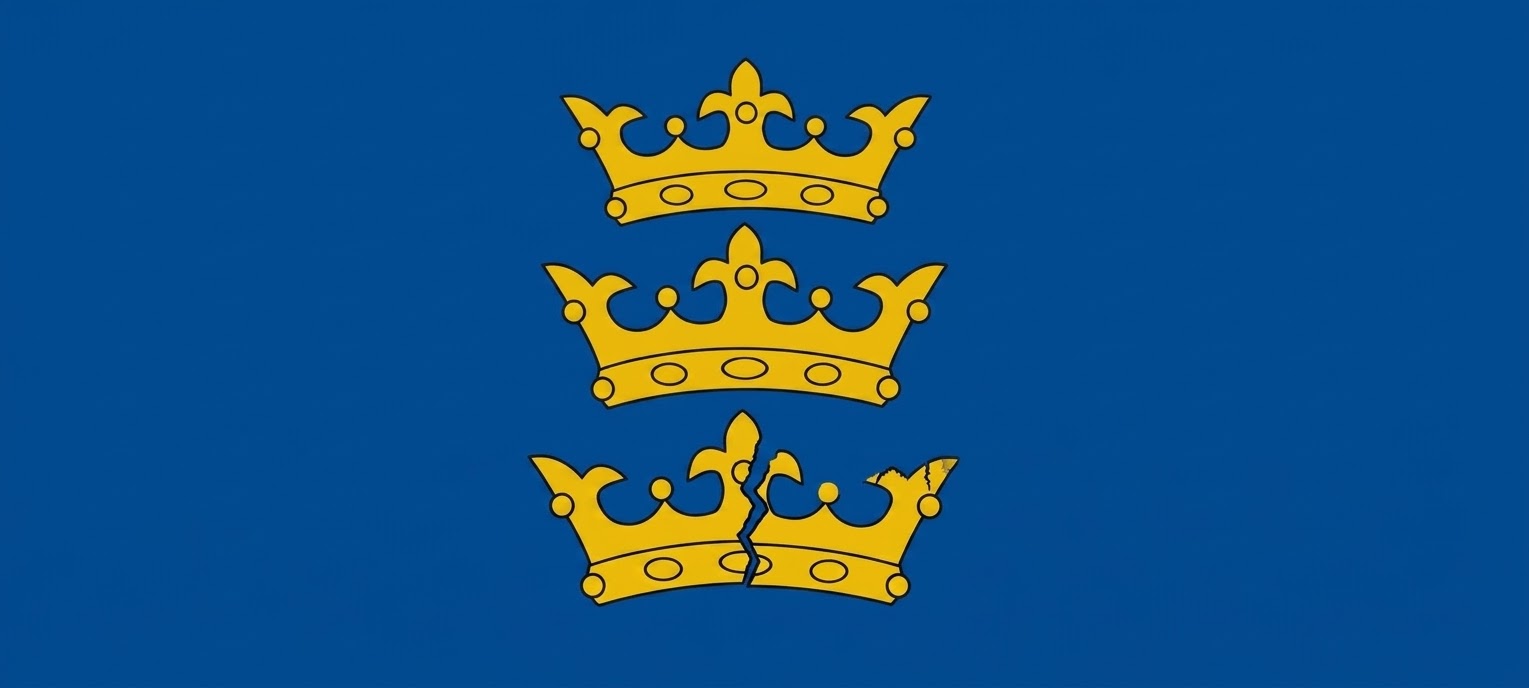
Cover picture: Adapted from: The banner of the Lordship of Ireland, NsMn, CC BY 3.0, via Wikimedia Commons


Leave a Reply