How effective are military forces in tackling civil unrest?
Hello again. This week I’m jumping back a fortnight to go a little deeper on our discussion about using soldiers as proxy police forces. You’ll recall that we talked about the differences between police and soldiers, then looked at some of the historical/legal basis for a government using its troops in support of law enforcement at home. We concluded that, although militaries were not primarily designed with law enforcement in mind, using them as such is a rational choice by governments since they represent a ready supply of obedient and versatile physical enforcers. We also saw that there was plenty of historical precedent for using militaries to support law enforcement, at least in Common Law countries.
This week I want to move beyond the question of “can” governments use their militaries in law enforcement and onto the question of “should.” Using soldiers as cops is fraught with dangers, not least of which is putting much more firepower into a volatile area of operations1. I’ll start with a quick discussion of why the interests of the nation or the people don’t always align with those of the government. Then I’ll talk about military discipline and how, although it’s a very useful thing in many situations, does not always work in a law enforcement one. Then we’ll look at some historical (and Hollywood!) examples of how soldiers can make an already bad situation worse. Finally, we’ll sum up by asking whether it actually works.
As usual, I ask that you please support this work by liking, subscribing (there’s a link below), and sharing this post. It really helps. Please also comment below if you want to join in the conversation. Alternatively you can contact me via webform here or email here.
If you enjoy this blog and want to support it, please consider a donation. Keeping this blog going doesn’t cost much, but it isn’t free either, so any help would be very much appreciated👍
What’s good for the government is not always good for the nation
At the risk of stating the obvious, the interests of people and their rulers often diverge. I’m making this point to highlight the differences between using the military in an external-facing role and an internal one.
When nations go to war, its people (mostly) put aside their internal differences and (mostly) band together to face the common enemy. The military, in this situation, is a sharp knife wielded by the nation to strike at its foes.
On the other hand, when governments face significant internal opposition, they might deploy their military against their own people. In this situation, the military is an all-purpose tool: police, paramilitaries, or a full-scale counter-insurgent fighting force.

This is why the interests of “government” and “nation” are not always aligned. The dynamic is present in every kind of government, not just totalitarian dictatorships. Every democratic government has an opposition, just like every autocrat has a loyal cadre of supporters. Because the people who write constitutions know this, they put up guardrails, at least in more democratic countries. And because rulers are only human, they use every trick in the book to get around the limits on their power.
It’s important to understand this (admittedly rather obvious) point because it ties into what we’ll discuss in the next section: what “military discipline” actually means in practice. A key part of this will be understanding that soldiers are people too. Let’s discuss.
Discipline ≠ law enforcement effectiveness
In Part 1 we spoke about the differences between police and the military. I pointed out that soldiers have a default obedience that other parts of society simply don’t. They can’t say “no.” We shouldn’t take this to mean that they are a perfect expression of the will of the ruler, however. Underneath all the military socialisation and swinging up the arms are flawed and imperfect human beings, mostly young men. Getting these guys to do messy police work is going to be much more difficult than getting them to assault an enemy position.

Soldiers get good at the death and destruction stuff because that’s what they train to do. Moreover, they prepare for bouts of death and destruction with formal orders and rehearsals. These orders will include preparing for every contingency2 the commander can think of. When something happens which hasn’t been covered in the orders, the result is confusion and inertia:
Look at how confused these poor soldiers are to see a baby3You can see the relief on their faces as they go back to what they know: pouring hot lead into an enemy-held building.
The pre-operation orders will cover soldiers’ rules of engagement (ROEs). This, of course, is extremely important when they are interacting with civilians. When things change quickly on the ground, you want your troops to respond appropriately. But the dynamic and unpredictable nature of a civilian environment (at least from a soldier’s point of view) means that you won’t cover every contingency in advance. To solve this problem, some theorists came up with a radical idea: soldiers should think.
This, in a nutshell, is the “strategic corporal” doctrine. It’s the idea that the actions of the most junior commander on the battlefield can affect the entire campaign because they are visible and shareable by anyone with a camera4. By contrast, in a “traditional” battlefield, a corporal’s impact would be limited to a handful of people.
The strategic corporal idea is part of the “three block war” concept which was devised by US Marine Corps General Charles Krulak in the late 1990s. Born of and popularised during an era of low-intensity warfare dominated by insurgencies, the idea is that soldiers must be able to do three different types of mission in very constrained space and time horizons, i.e. within three city blocks. The typical example is:
- On one block, soldiers are giving out humanitarian aid and helping friendly civilians. Meanwhile…
- The next block over, they are carrying out peacekeeping or counterinsurgency5 operations alongside an ambivalent or hostile population, while…
- On the third block, they are engaged in full-scale, high-intensity warfighting operations.
As a theory, the three-block war faced serious criticism almost as soon as it was popularised, and it looks positively antiquated now in an era of full-scale war in Europe. But it gave rise to the idea of the strategic corporal, since he or she is an indispensable part of it. You can’t switch your behaviour to suit the context (bullets one minute, aid packages the next) unless you have strong, smart, and empowered junior leaders.
To be effective law enforcers, soldiers need to consist of strategic corporals, strategic privates, strategic lieutenants etc. This would enable them to operate in chaotic and unpredictable environments such as a civil disturbance. The problem is that instilling that level of autonomy in junior leaders is very difficult. Higher ups love it in theory, but hate dealing with its inevitable adverse consequences. Furthermore, it involves giving up a degree of control which is anathema to most senior leaders, not just in the military.
The alternative is to forgo all that strategic corporal fluff and just use your troops like the well-oiled killing machine that they are. Depending on what you’re trying to achieve, this might not be a problem:
So long as the military are on-side, the rulers can sleep at night. People power can be impressive, but until they get guns and ammunition and soldiers of their own, it will always break against cold hard steel. That’s why I had to include this scene from The Hunger Games Mockingjay Part 1 for its beautiful idealism… and utter fantasy:
Troops behaving horribly toward civilians is not (necessarily) due to ill discipline. They might be carrying out cruel orders with lots of discipline, or they might be using every ounce of their discipline and training in trying to carry out ambiguous orders or orders which are simply not suitable for the complexity of the law enforcement situation.
Let’s talk in the next section about how this theory of discipline translates itself into behaviours that can either pacify or aggravate a situation.
Why do things escalate to shooting?
Let’s assume that a government doesn’t want to massacre people, but does want to use their military for law and order. How can they make sure the situation doesn’t get out of hand? Let’s answer this by looking at three different contributors to violence: fear, hate, and violent people.
Fear can lead to violence…
Just like with spiders and snakes, the soldier manning the barricade is more afraid of you than you are of him: especially when he’s essentially unarmed, as with the Pentagon protest below:

The soldier isn’t just afraid of bodily injury, pain, and death. He also has to worry about being reamed out by his superiors. As any soldier will tell you, fear of failure is much, much stronger than any other kind. And as Master Yoda will tell you, fear leads to suffering:

Fear can combine with the fog of war—the noise, confusion, and visual clutter of combat—to leave soldiers feeling isolated. Without strong, clear leadership, each one will worry about what’s happening to the left and right. After all, when a comrade runs, you’d better run so as not to be left alone. By the same token, when a comrade starts shooting, you’d better shoot too, before the “enemy” overwhelm you. A single confused shot can lead to the whole line erupting in fire. Again, strong leadership can solve this problem.
…hate gives a short cut…
Fear is not the only motivating factor: hate can be a powerful inducement to violence, and the emotion can be reached via a shortcut, bypassing Yoda’s Jedi escalation ladder above. Specifically, by “othering” a group, soldiers can be made to hate a group whom they are ostensibly there to protect or, at the very least, police. There are countless historical examples of this, but a good on-screen depiction is the French paratroopers shooting at fleeing civilians in The Battle of Algiers.
A cycle of dehumanisation and reprisals and counter-reprisals can lead soldiers to treat an “other” group as less than human and deserving of violent punishment.
I have experienced this personally, albeit in a very mild and limited way. During a riot control exercise, my unit was radicalised by our instructors against another unit. This was preparation for a riot training scenario, where they were to be the riot police and we the mob. We perpetrated mild attacks on them, and they on us, with our instructors magnifying every planned training event to the point that we took them as personal affronts. By the evening of the riot, we had been transformed from a group of educated, respectable young men and women into a frenzied mob. We threw ourselves with gusto onto the shields and batons of our erstwhile comrades, suffering cuts, bruises, and worse.
They, meanwhile, were dog-tired after an exhausting few days6 and barely able to hold the line against our frenzy. Their discipline began to crack, and we suffered even more as they lashed out in fury with batons rather than holding a strong and resolute line. The lesson was clear: hate, driven by emotion and stress, can push “normal” people into carrying out the type of violence they would normally abhor.
…but some people find their own way
Notwithstanding all of the above, violence is often concentrated among a few perpetrators. Soldiers, like the rest of us, are individuals with differing tendencies toward violence. On Bloody Sunday (the 1972 one), a British Army unit shot 26 unarmed civilians during a protest march in Derry, killing 13. Using a unit like the Parachute Regiment against civilians was never going to end well.

The scene below is from the 2002 film about the massacre, and is supposedly an accurate representation of what happened, based on the subsequent Saville Enquiry:
It’s hard to tell who is who in all the chaos, but it’s clear that, once the shooting started, some soldiers are giving it everything they have, whereas others are holding back, unsure what the actual target is (a fair concern, since there wasn’t one). Let’s compare this to the actual facts of the day, from the official inquiry:
- 71 soldiers from three platoons of 1 Para were involved in the shootings
- 21 soldiers fired their weapons, discharging 108 rounds between them. A third of these rounds were fired by two soldiers:
- Private H fired 22 rounds
- Lance Corporal F fired 12 rounds
- Of the 13 fatalities, 7 were attributed to two soldiers:
- Lance Corporal F killed four or five
- Private G killed two or three
The violence of that day was unevenly distributed. Although bad strategy and poor operational planning laid the groundwork for this tragedy, and the culture of the unit further contributed, it was the actions of a few individuals which accounted for the bulk (but not all) of the violence that day.
The fraudulent and deeply unethical Stanford Prison Experiment is another, albeit much less serious example of violence being distributed unevenly. In 1971, the psychology lecturer Philip Zimbardo carried out a mock prison experiment on campus. He claimed that the experiment led to the “guards” becoming violent and sadistic towards the “prisoners,” and the experiment ended early due to safety concerns.
In fact, of the nine prison guards, three showed sadistic tendencies, one of whom did most of the infamous examples7. Furthermore, the guards did not develop this behaviour organically, but were acting on Zimbardo’s express instructions.
The above examples are not to say that people aren’t violent: clearly, they can be. But they are usually in a minority. Of course, with the additional aggravating factors of fear and hate, the actions of a few individuals can spread to the whole group, leading to an escalation of violence.
Conclusion: Does military intervention work?
The question of whether or not it all works is too big to answer in a short article, but like any real expert, I’ll instead use it to ask more questions and leave you even less sure. Let’s start with:
Question 1: What are you trying to achieve?
1. Kill people. In this case, your question becomes “Can I trust my troops to kill effectively?” and the answer, unfortunately, is usually “yes.”
We need only look at the horrors of the Holocaust or any other large-scale killing of innocents to see this. Provided you have your troops on side (i.e. you’re not killing their own kin or comrades), then they’ll do it. They probably won’t love it, but they will grit their teeth and do it.
2. Stamp out a movement. Now your question is “Can my soldiers kill or discourage more enemies than their actions create?” This is more nuanced.
There are arguments and historical examples on both sides:
The case in favour
A brutal display of state military power can nip an insurrection in the bud or end it swiftly by discouraging supporters.
The 1968 Prague Spring saw Russians regain influence over Czechoslovakia.
In 1989, the Chinese Communist Party cracked down on student protestors in Tiananmen Square so effectively that the incident has been erased from Chinese public discourse (at least officially).
The case against
Violently suppressing protest can backfire, leading to more converts to the cause and a wider audience of supporters.
The violent repression of opposition groups by the Colombian military, especially in the 1980s, led to an escalating cycle of killing.
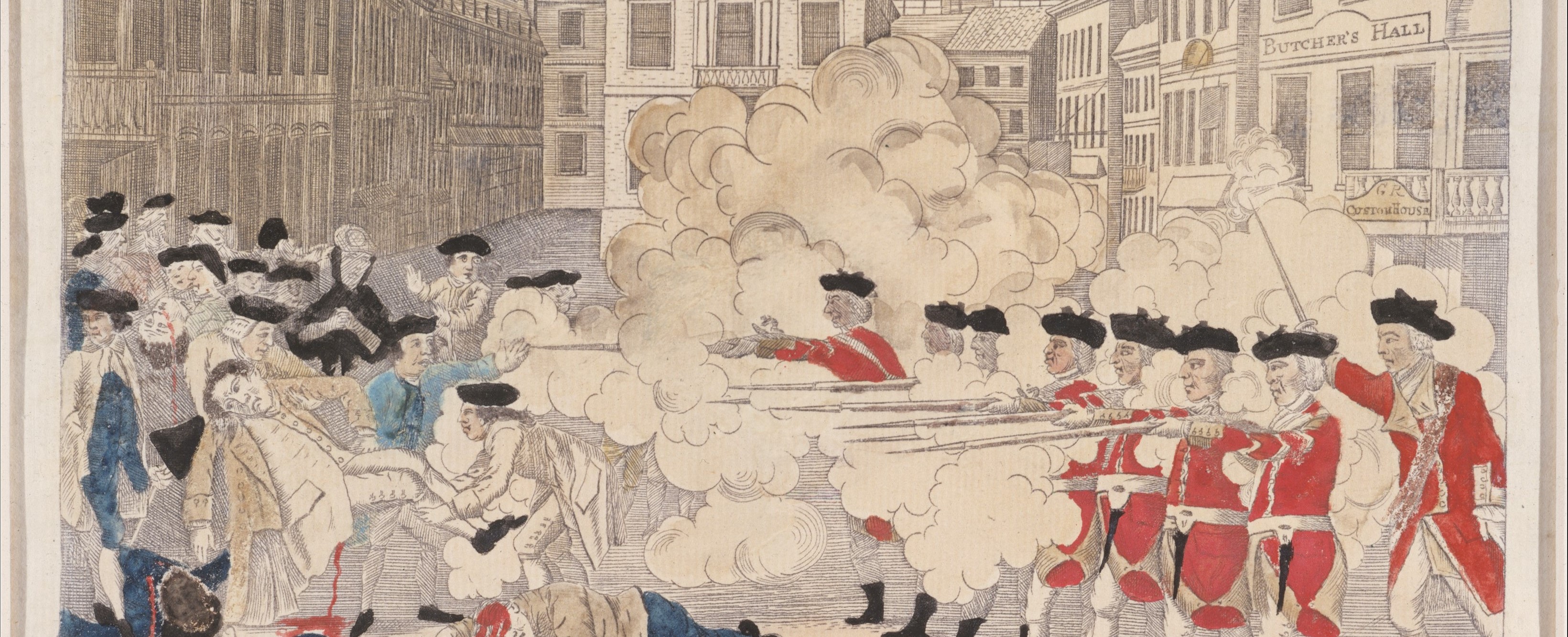
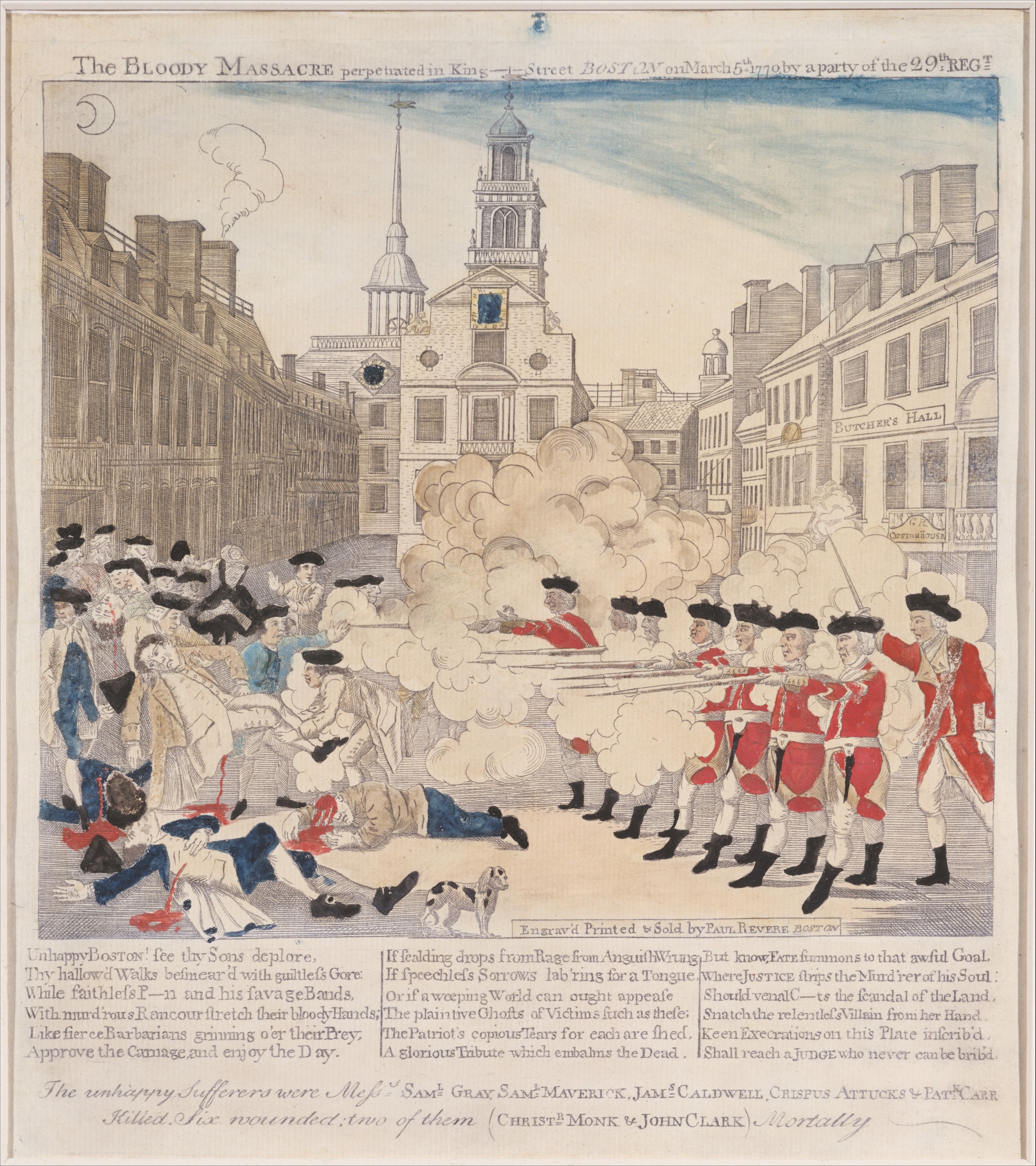
Another example is the 1770 Boston Massacre, where British soldiers fired on a crowd of civilians. The incident helped lead to the American Revolution and loss of the colonies to the Crown.
3. Maintain law and order. If this is your aim, then the question you need to ask is “Can my troops manage civil unrest without escalating violence?” Again, it’s nuanced.
As before, there are examples on both sides8, although the answer is more likely to be “no.” Let’s weigh some examples again:
The case in favour
Soldiers can be used to fill a gap when needed. With the right preparation and planning, they can be effective, or at least no worse than the police would be.
The Pentagon Protest, mentioned above, is an example of military non-escalation9. The Selma to Montgomery marches in 1965, Jackson State killings in 1970 (both USA), and Bloody Sunday (1913 iteration) in Dublin are all examples of police forces behaving just as abominably as soldiers in the examples cited
The case against
Soldiers are not trained for crowd control and often respond with unnecessary force causing mass casualties.
Aside from the examples mentioned above, other infamous cases include the Jallianwala Bagh (Amritsar) Massacre of 1919 and the 1970 Kent State Shootings in the USA.
A final word. If you are trying to maintain law and order, then proper training and operational planning are essential. No army yet has all the strategic corporals they need to make the right decisions in a chaotic law enforcement environment. Plan for every contingency, demand the best, and expect the worst.
That’s all for this week folks. I hope you enjoyed this follow on from a fortnight ago. Please let me know what you think in the comments below. Please share this article with a friend, it would really help me build up this project. Finally, if you haven’t subscribed yet, please do so using the handy link below.
Featured Image: The Boston Massacre, Paul Revere, Public domain, via Wikimedia Commons
- Or “street,” if you prefer plain English. ↩︎
- I mean, seriously. Almost literally, in fact. For example, you might spend 15 minutes describing the route that the patrol will take to the target, with several “RV” points along the way. Then you might outline contingency plans for getting lost between RV 1 and RV 2, between RV 2 and RV 3, and so on. Then, what if we encounter a civilian? There might also be a different contingency depending on where along the route you are. Being seen by the enemy, injury, encountering lights (you’re usually operating at night)… you could go on. If you’re travelling in vehicles, now there’s a whole host of breakdown-related contingencies. ↩︎
- If you haven’t seen/read Children of Men, the premise is that worldwide infertility has led to no babies being born in nearly 20 years. So for these soldiers it is quite a shock to see a newborn. It’s quite a powerful scene, in my opinion. ↩︎
- The example usually given is something like this: a corporal is in charge of a vehicle checkpoint overseas. A car doesn’t stop. Does he open fire? His orders and rules of engagement might say “yes,” but what if the car has a sick child being brought to the hospital? And what a journalist is sitting in the next car in line, sees, videos, and tweets this? Within minutes, the entire force faces questions at home and opprobrium abroad. This might have strategic effects, e.g. the mission gets pulled and the troops go home. On the other hand, the car could contain a suicide bomber. The corporal on the checkpoint has to make an instantaneous decision that could have strategic consequences. ↩︎
- Peacekeeping and counterinsurgency are very different types of operation, but the definitions of the three blocks changes depending on who’s explaining it. ↩︎
- Riot control is really, really strenuous. ↩︎
- Stripping them naked, making them wear bags over their heads, forcing them to clean toilets with their bare hands, stepping on their back while they did push-ups. ↩︎
- I think this does overlap a lot with the previous question, but there is still a distinction worth making. Repressing a movement faster than it gathers new converts is probably more of an autocrat’s problem, whereas preventing civil unrest from escalating is more of a democratic ruler’s concern, but not exclusively. ↩︎
- Although this isn’t entirely true: the evening after the protest, some of the troops did beat up protestors, so violence was used, even if firepower wasn’t. ↩︎



Leave a Reply