Interlude 1 of the Dublin Occupation Diaries
| << The Barrack Rats | TBC >> |
Hello again and welcome back for another week of the Dublin Occupation Diaries. I’m delighted this week to introduce the writing of my good friend and comrade-in-arms Michael D. Barry.
As well as giving me a much needed break, Michael’s contribution this week brings a level of rigour and additional realism (and you know that’s what this site is all about) when it comes to military operations.
By way of reminder:
- Our first episode was told from the point of view of Sean, a civil servant working for the occupation administration in Dublin.
- Our second episode focused on Ciara, an officer in a flying column which ambushes occupation convoys before melting into the hills.
- Our third episode was about Declan, a collaborator with the occupation forces who has some pretty nasty ideas for how to keep the locals down.
The three siblings will return after this week’s interlude, so please watch this space. In the meantime, enjoy reading the grim details of how poor Ireland ended up in this sorry situation.
Before you start, please subscribe to Military Realism if you haven’t already. You can use the link below. If you’ve enjoyed this story, please share it with a friend.
If you enjoy this blog and want to support it, please consider a contribution. Keeping this blog going doesn’t cost much, but it isn’t free either, so any help would be very much appreciated👍
Interlude 1 | The Commanding General
The General looked up from his desk as his staff officer entered the wood panelled President’s Study.
“It’s time for the Commander’s Update Brief, sir. Your Colonels are assembled in the Council of State Room.”
The General glanced at the stack of reports next to him. The monthly production figures lay unopened on the corner of the desk. Every report told the same story: missed quotas, sabotaged infrastructure, power outages and a population that refused to cooperate. Nothing but problems, he thought. He was still thinking about the conversation he’d just had with one of his Irish staff officers. Lt Col Delaney had been full of ideas. He might just be a glorified Hiwi, but he was thinking about solutions, for a change. And they said the Irish were stupid.
The General stood, adjusted his jacket, and followed the officer from the room.
He strode down the main corridor of the Military Governor’s Residence. The building used to bear the wild and unpronounceable name “Áras an Uachtaráin,” and this corridor had been lined with bronze busts of the aforementioned “Uachtaráin,” or Presidents. Now the plinths were empty, the heads piled in a heap in a dusty storeroom. Patrick Hillary’s head resting unceremoniously atop Mary Robinson’s, Douglas Hyde lying supine and face-to-face with Erskine Childers… The General had checked to make sure they were all there. That was the kind of detail he didn’t leave to chance, or unreliable subordinates. A President’s head would be exactly the kind of souvenir some staff officer would smuggle home.
The General turned off the corridor into the Council of State Room, where screens and maps of Ireland covered the walls where paintings had hung. On cue the General Divisional Staff Officers, plus Commanders of the land, air and sea component stood smartly to attention.
“Sit, sit all of you”, the General said, taking his seat. “Please, begin the briefing”.
The Lieutenant Colonel of the Joint Operating Centre kicked into action. “Sirs, Ma’ams, I will now begin the operational briefing for the last 24 hours.
“In the air domain, our aircraft have conducted 6 Air Denial Combat Patrols, focused on the zone West of Kerry. The Enemy continue to be deterred from this area, and no manned or unmanned aircraft were detected.
“In the maritime domain, an Irish fishing vessel was detected outside the permitted zone, and was sunk by our naval assets as a precaution. No reported survivors. The civilian administration has been informed. No enemy naval activity detected”.
“Did the civilian administration respond?”
“Yes, sir. They have lodged a formal protest, alleging that the vessel posed no threat and that its destruction was unlawful.”
The General nodded. “Acknowledge the protest and advise them that maritime exclusion measures will remain in force. Any vessel entering restricted waters without prior clearance assumes responsibility for the consequences. We cannot afford gaps in our security perimeter. Land incidents?”.
“In the Land Domain, 16th Mechanised Brigade have retaken the Falls and Shankill Road area in Belfast, but clearing buildings of IEDs and booby traps will take several weeks. Snipers remain active throughout the city, and all movement must be conducted in armour.”
“Casualties?”
“In the last 24 hours, 35 injured troops, 9 KIA”.
The General removed his glasses and rubbed the brow of his forehead. Bringing Belfast to heel was taking too long. “Don’t we have proxy forces there? The Republicans. Or is it the Loyalists? I can never remember. Anyway, they should be taking these casualties, not us. We’re paying them enough, if I recall correctly.”
“Yes sir. I’ll look into that.”
“And the rest of the island?” he asked.
“Counter Resistance Patrols continue in all urban areas and in several isolated rural hot spots.” He started tapping parts of the map with a rod. “The North Wicklow Mountains, the Ox Mountains of Mayo, and the Galtee Mountains in particular.
“No reported ambushes in the last 24 hours.” The Lt Col paused. “There was, of course, the attack we spoke about at yesterday’s CUB—”
“I haven’t forgotten,” said the General.
“No sir, of course not. Efforts to find and fix that Resistance column are continuing.”
“Continuing without success, it seems, or else you would be telling me about it.” The General sighed theatrically. “Tell me, colonel, is it true that these savages executed our men in cold blood?”
“Yes sir. At least a dozen of them, lined up and shot in the back of the head. Barbarians.”
“And yet these barbarians continue to elude our grasp. This is despite the advanced capabilities I’ve procured for this formation.”
There was no answer to this. The General expected none. His point made, he waved the presented to continue.
“Intelligence summaries report the sentiment towards our presence trending negative. It is assessed as highly likely that more fighting age native males and females will continue to be attracted to existing Resistance groups”.
The General listened in silence. The figures were familiar. Every month arrests increased, more Resistance cells appeared, and opinion polls showed a population becoming more hostile rather than less. Supreme Command was intensifying its calls for stability in Ireland.
Having seized Iceland, the 7th Atlantic Expeditionary Division’s initial occupation of Ireland had gone well. War plans had long included these two islands given their strategic locations for control of the ocean. Ireland was an indispensable platform to deny the Greater Enemy access to the Northern Atlantic and to the European mainland by air and sea. They were unsinkable aircraft carriers.
He became wistful for a moment, recalling his defeat of the Irish Defence Forces. It had been child’s play. He’d studied the lessons from the Russians at Hostomel Airport in 2022 after being tasked with leading an air assault on Shannon Airport. This was considered the best location for anti-ship and surface-to-surface missiles.
The General had gone ashore with the Special Operations recce party on a cold December night. His first taste of Ireland had been the brackish spray of the Shannon Estuary washing over the bow of the rigid hulled inflatable boat as it rode the waves right up to the airport breakwater and jetty.
Normally the General would never have taken a chance like that, but he was confident of his unit’s overwhelming military advantage. Like any good commander, he knew the enemy’s plans as well as his own. His intelligence cell had cultivated assets within the Defence Forces, so he knew the disposition of the enemy’s units. Some of these brave insiders transferred onto the General’s own staff after the articles of surrender were signed. Delaney was one.
After coming ashore, the General let his Special Operations commander take tactical control. He was only a figurehead, at least until the main body arrived. The plan was in motion and out of his hands. It had been the most liberating experience of the General’s career, silently patrolling along the deserted airport road, knowing full well that any significant opposition was half a day away. He’d been almost disappointed once they’d set up the landing zone for the airborne battalion, because then he was expected to lead once more. For those precious few hours he’d been a rifleman. He even used his weapon, firing a burst at a police car which had swiftly turned tail.
The police only knew of the infiltration because the control tower had called them. They didn’t realise that the blips on their civil radar screens were military transport aircraft. Ireland, having no primary military radar, had no idea that an airborne brigade was in the sky above them. Upon landing, the paratroopers established a perimeter around the airport. Two two small passenger ferries sailed up the Shannon Estuary to Foynes. Ireland, having no significant naval capability, could neither detect nor intercept these forces. Out of the ferries rolled tanks, armoured vehicles and ballistic missile transporter-erector-launchers to bolster the airport forces. Ireland, having no integrated intelligence capability, couldn’t proactively scan normal maritime traffic for signs of enemy activity.

With his forces established, the fun part was over and the General went back to being a manager of managers. He approved high-value target lists for his missiles. Sarsfield Barracks in Limerick City was hit, killing many. Naval Service vessels at sea and docked in Haulbowline, Co. Cork, were hit and sunk. Strikes on known ammunition depots destroyed much of the Army’s already limited operational reserves. The Defence Forces’ single air defence battery, based in Athlone, could not provide any protection.
He received intelligence updates and so knew when An tUachtaráin, the President of Ireland and Commander in Chief of the Defence Forces, ordered Shannon to be retaken. He stood in the tactical operations centre and watched the little red enemy icons as they were plotted in real time. There was the fabled Army Ranger Wing reconnoitring the airport and here were their infantry comrades establishing a cordon.
The General hadn’t worried, because his staff officers hadn’t. He ordered his field commanders to dig in and prepare defensive positions while his drone fires commander coordinated strikes on the exposed enemy who lacked sufficient transport. Lacking counter drone capabilities, the Irish troops took heavy casualties. All the time his armoured columns were winding their way around via Limerick to take them in the rear.
He didn’t let up. As the Irish concentrated their forces to attack, he leaned on his intelligence officer again to locate the form-up area. The General ordered this entire square kilometre to be saturated with artillery and drone strikes. The Irish lacked main battle tanks and the few armoured personnel carriers they had were scant protection from the blizzard of deadly fragments.
To the General’s surprise, the Irish forces attacked nonetheless, and with great ferocity. His staff had been prepared for this, of course, but it was still unexpected. For hours, dismounted Irish troops ran and crawled across open fields under murderous machinegun fire. With limited reserves of ammunition, the attackers did little to attrit the General’s own armour and entrenched troops. Still, in places the Irish managed to break through the General’s perimeter and into the airport’s buildings, where grim close quarter fighting erupted. It took the full commitment of the General’s Special Forces reserve to seal the breach in his lines.
His relief column only arrived after the attack had been repulsed. All the Shannon crossings, including the tunnel, had been blocked by tractors and lorries. His men got through, of course, but it took precious hours to clear a path through. There was at least one lesson to be learned here. When they did arrive, his mechanised infantry smashed the remnants of the Irish infantry forces.
A methodical professional, the General didn’t stop there. As the military adage went, ‘two is one and one is none,’ so he gave the go-ahead for a second air assault on Knock Airport to maintain the initiative. This time 1,400 paratroopers landed and the armour came ashore completely unopposed at Westport.
This had been the crucial window of opportunity, and the General wasn’t found wanting. The Irish lacked the reserves and the combat power to retake both airports, so he could reasonably have held his ground. However, he’d ordered his forces to advance to a line on the Shannon river, creating a large stand-off zone to prevent the Irish Defence Forces coming close enough to disrupt his missile launches.
Meanwhile the ballistic missiles flew unhindered, opening up a new attack surface against the Greater Enemy and scoring notable successes against land and sea targets. A great strategic gain had been made at relatively little cost, and the General received a personal note of commendation from the Leader.
The General had indulged in some celebration after this success. He suspected that things would only go downhill from here, and he was right. The Irish refused to give up. Guerrilla attacks targeted the launchers and their resupply convoys, necessitating counter strikes against Irish troops and the civilians likely sheltering them. The General had reluctantly expanded the zone of occupation so the saboteurs could be hunted down. The Irish government refused to facilitate the occupation of its vital installations, so Dublin was seized and a new, more accommodating regime was installed under the guise of the “Interim Administration of Ireland.”
Now he was a civilian administrator as much as a military commander, and the General found himself spending more and more time at Dublin Castle, the heart of the IAI. Compared to the occupation of Ireland, efforts to extract actual value out of it had met with mixed success. The new government was adequately spineless, but the people, as truculent as their ancestors had been against the British, refused to accede to the new regime. In particular, paramilitarism of all shades had seen a resurgence in and around Belfast, hence the current counter insurgency operation to retake the city.
The General had spent many hours and many such meetings reflecting on this problem, how a simple and successful military operation draws forces into a slow but sustained war of attrition. He longed at times like this to be back in his combat fatigues, with his rifle, with wet feet and a clear head on a crisp December night, an almost lone invader in a virgin country.
“We must stop this now,” the General said, coming back to the present and cutting off his intelligence officer. “It is time for decisive action.” He sighed, then stood up. He took off his glasses again and started to walk around the large table. There were some perks to being a general. He went on.
“History teaches uncomfortable lessons. We did not create the realities of power. We merely operate within them. As we find ourselves in the position that ancient Athens once held, so Ireland finds itself in the position of Melos. The strategic consequences are unfortunate, but they remain consequences nonetheless”.
Vapid stares met the General from his seated staff officers; it was clear that they did not understand the metaphor. All except a Major, a junior member of the Intelligence Cell, who sat at the back nodding his head.
“Major, your colleagues show me their profound ignorance of history and the nature of the world. Enlighten them please.”
The Major rose, conscious of the icy looks of the colonels and brigadier generals who were being upstaged by their junior. Good, though the General, let him get used to their jealousy. He would need to accustom himself to this viper pit if he had ambitions.
“Sir”, the Major began, “I believe that you are referring to the Melian Dialogue from Thucydides’ History of the Peloponnesian War between ancient Athens and Sparta”.
“Correct. Please continue”.
“Thucydides described how the diplomats of Athens demanded that the neutral island of Melos submit and pay them tribute, as this would help Athens in their war against Sparta. The Melians argued that they had a right to remain neutral, and that the Gods or Sparta would come to their aid.
“The Athenians famously rejected this argument, stating ‘The strong do what they can, and the weak suffer what they must.’ In Athens’ view, justice only exists between equals in power. As Athens was much stronger, resisting them was irrational. When the Melians refused to surrender, Athens laid siege to the island, captured it, executed the adult males, and took the women and children into slavery”.
“Bravo, Major, excellent. Please sit down”. The General stood and began to pace around the room. “Gentlemen, Thucydides’ ideas of political realism, of realpolitik, are as valid today as they were 2,500 years ago. Countries will act according to their vital self-interest. Moral arguments count for little compared to these interests. Without a higher, stronger authority to enforce justice, the law of the jungle prevails. If it has not been made clear to you, occupying Ireland serves our self-interest as a lever to inflict damage on the Greater Enemy, so we have done it. If Ireland chooses to be weak, they will be devoured by us, the strong.
“Supreme Command has instructed us to reduce troop numbers in Ireland to free them for operations on the European mainland. To do this we must rapidly bring this island into compliance and exert sufficient force to do this.
“Colonel.” The General turned to address his Operations Officer. “Current force-protection measures are proving inadequate. Effective immediately, commanders are authorised to engage persons who violate curfew and fail to comply with warning procedures. Any civilian structure used to support armed attacks against our forces, and any other building within a 200-meter radius is to be treated as a legitimate military objective and targeted as such.” Several officers looked down at their notes, the implication being clear.
The Legal Officer chimed in, as the General knew he would. “But sir, collective reprisals against civilian communities would violate international humanitarian law.”
“As I have told you previously, Colonel, the Law is a tool to inflict on our enemies, and to be ignored when it does not suit us. International law presumes a security environment that no longer exists. My responsibility is to accomplish the mission assigned by Supreme Command and to protect our personnel while doing so.
“To be clear gentlemen, terror and violence work as means of securing compliance. It is unwilling compliance, but compliance nonetheless. When I read the history of this wet, miserable island, I see that Cromwell subdued the country by burning cities. It seems to me the British lost Ireland in 1921 by not burning enough cities! Let us learn from these mistakes of the past, and apply what has worked before. Are there any questions?”
There were none, of course. The meeting turned to other matters. The Cyber Officer gave a brief on the harvesting of data from Google’s Dublin-based data centres, to be gainfully used in hacking other global enterprises.
Logistics came next, with discussions of resupply of ballistic missiles with which to attack the Greater Enemy, and the mass export of foodstuffs to feed the population in the homeland. As he glanced through the manifests of items to be brought in from the mass transporters, a particular entry caught the General’s attention. “Balloons? Why are we requisitioning 20-meter balloons?”
“Sir,” the Intelligence Cell Colonel stood up, no doubt delighted with the attention and the chance to outshine his Greek-loving subordinate, “The balloons support our force protection and surveillance efforts. Each of our barracks will have a large balloon floating above it, tethered by rope. Each balloon will carry a suite of cameras to give a 360-degree, 24-hour live view of the vicinity of the barracks, thereby improving our situational awareness. This is part of the broader Project Panopticon.”
This cheered the General. He turned to the Logistics Officer. “When will we have sufficient drones for continuous surveillance of major cities and towns?”
“Sir, the Directorate of Sustainment has informed me that the required quantity of drones required to cover every road and junction on a 24-hour basis will arrive in five weeks’ time. Ten percent of these drones will have thermal imaging, allowing us to view movements of civilians within their homes.”
“Good,” said the General. He turned back to his Intelligence Colonel. “Remind me how we will make sense of the camera feeds.”
“All feeds will be fed directly into our AI models to develop patterns of life for all civilians in a given town,” said the Intelligence Colonel. “We already have access to social media, banking app details, smart phone GPS locations, and automated transcripts of calls. This volume of data would require thousands of analysts to process, but the computing power of the seized data centres allows us to identify seditious activity in near-real time.”
He went on. “For your decision, sir: our Rules of Engagement currently state that we must be 80 percent confident that a civilian is planning or conducting suspicious activity before we move to arrest them. Given your intent to suppress dissent, may we lower this threshold to 50 percent?”
The General considered this. His analysts had been requesting greater operational freedom for months. Every review board meeting followed the same pattern: investigators identified suspected resistance supporters; the lawyers demanded additional evidence; and the suspects disappeared before arrest warrants could be approved.
“If the objective is prevention rather than prosecution, 40 percent is sufficient. We can review the threshold once detention capacity becomes constrained.”
The briefing wrapped up and the staff departed. To clear his head, the General decided to take a stroll in the Gardens of the Áras. As he walked, he looked South, through Phoenix Park and to the distant Wicklow Mountains. Flashes lit up a patch of forest near Kippure. It looked, to his trained eye, like the effects of a multiple rocket launcher battery. The General was glad to see that his guidance was already being put into practice. On his next lap he looked up again and saw the impact area levelled, cleared of forestry, with just a few lone trees standing alone and smouldering.
The General walked back inside and took his seat in the Dining Room for supper. As the waiter lifted a silver dome, the General absently wondered what such a rocket strike would do to Belfast once the battery was redeployed North.
To be continued…
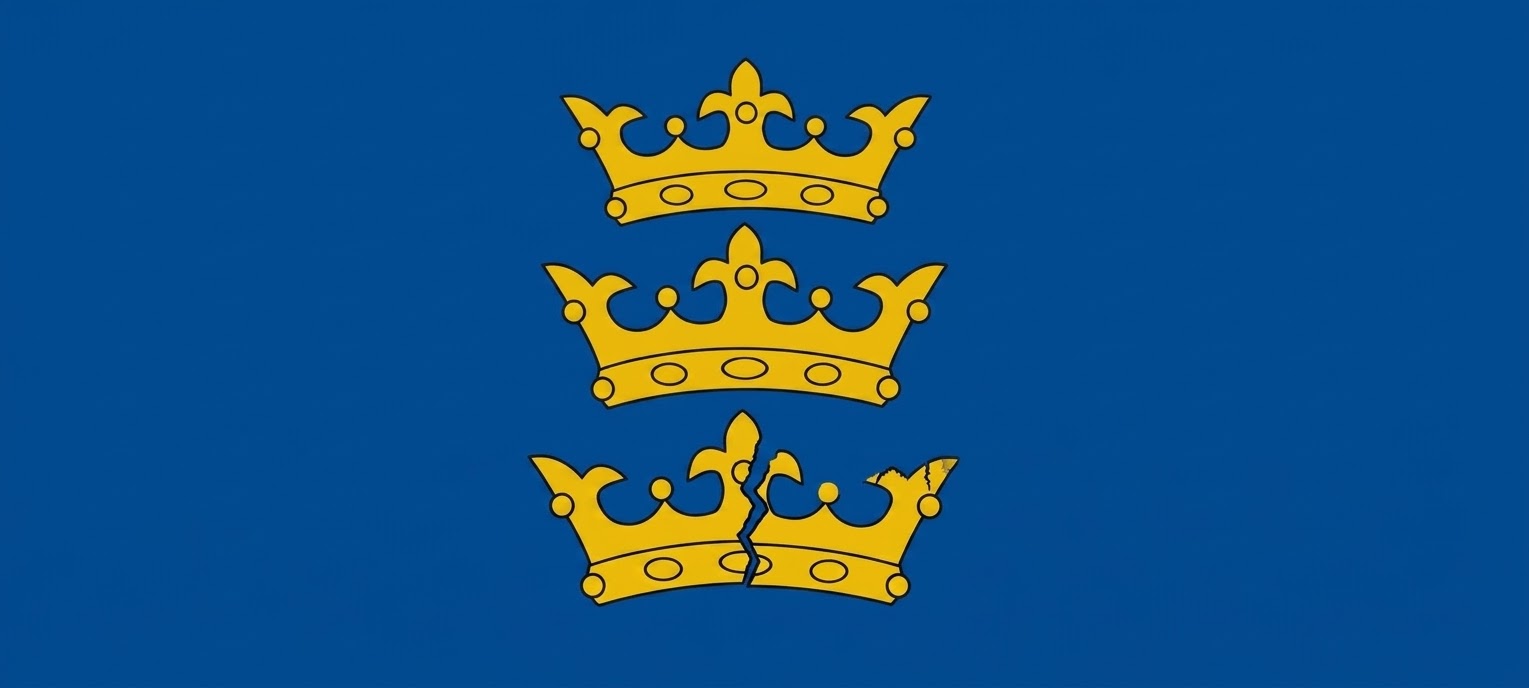
Cover picture: Adapted from: The banner of the Lordship of Ireland, NsMn, CC BY 3.0, via Wikimedia Commons


Leave a Reply