The threat posed by nuclear-powered nuclear-armed missiles
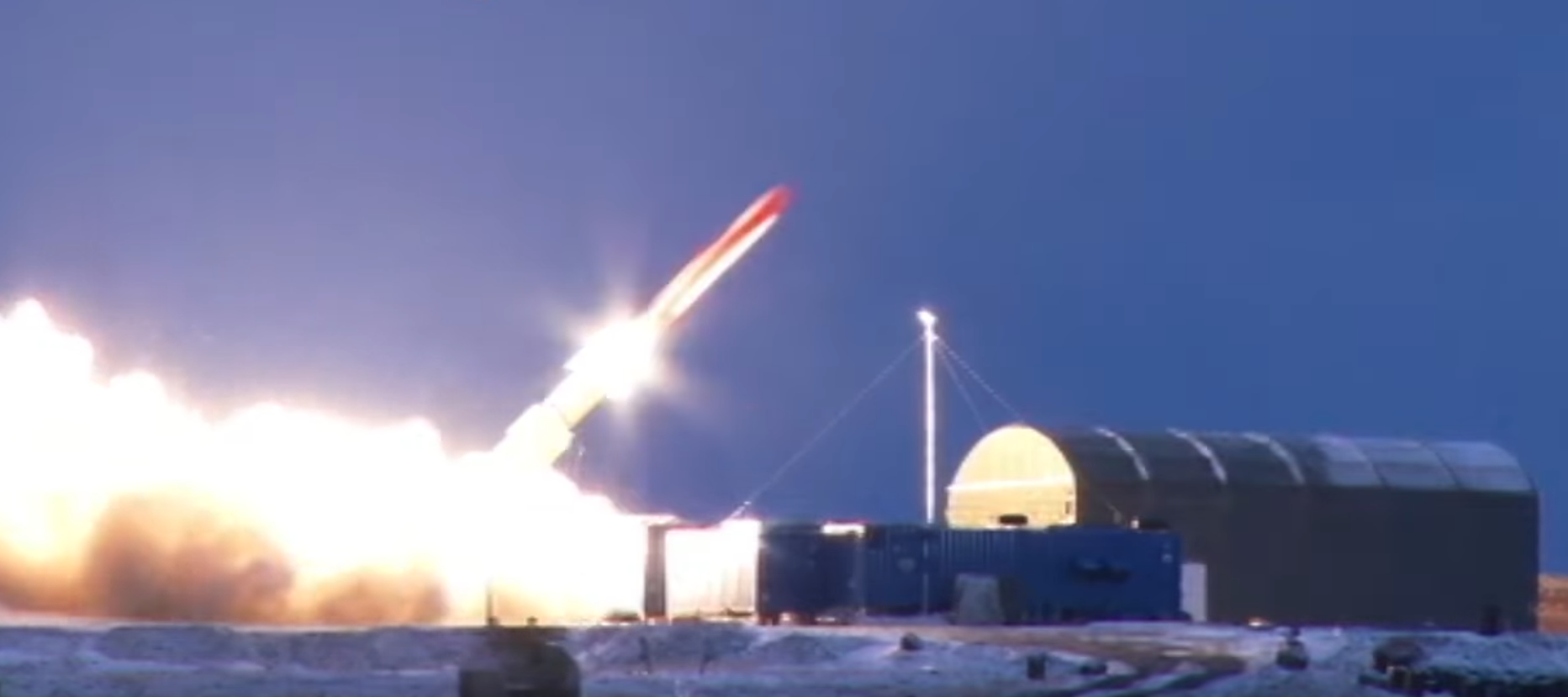
Hi there. I’m interrupting normal service (we were talking about military world-building, and will get back to it) to report on the latest developments from Russia, specifically the 9M730 Burevestnik nuclear-powered cruise missile. Putin claims that his forces tested the weapon on 21st October 2025 and it covered 14,000 km over 15 hours.
I recently wrote about the confusing terminology which separates nuclear-armed from nuclear-powered submarines. Until now, we didn’t have to worry about making the same mistake with nuclear missiles. A nuke is a nuke, and that’s a simple (and scary) rule. Now, it seems, we might need to start making the same distinction when it comes to missiles. The mind starts to boggle:

If you’re wondering what makes this new weapon so special, and what its implications are, then read on. I’ll start with describing some of the categories and design considerations for missiles in general. Then I’ll explain the advantage that nuclear-powered missiles (NPMs) bring. I’ll finish up by discussing the extra risks associated with NPMs, which might not be exactly what you’re thinking.
A caveat before we dive in: I’m basing this post on the very limited open-source information available, backed up by my own general knowledge of missile propulsion systems and nuclear deterrence. This post will be out of date as new developments occur in NPMs; let’s hope such developments don’t render posts like this completely irrelevant in a smouldering post-nuclear wasteland.
As always, let me encourage you to subscribe to the blog using the link below. As always, I’d love to see your comments below, or you can contact me via webform here or email here. Finally, if you’ve enjoyed this post, please share it with a friend.
If you enjoy this blog and want to support it, please consider a donation. Keeping this blog going doesn’t cost much, but it isn’t free either, so any help would be very much appreciated👍
Missiles are all about ballistics, and ballistics is all about energy
If you’ve been reading my recent ballistics series (especially external ballistics) you’ll be familiar with my repeated refrain: it’s all about energy. The weapon designer needs to get the payload (the warhead) to the target, which usually means getting it to go as far as possible.
When we covered ballistics previously, we looked mostly at bullets and shells, where the energy dump happens at the very start, and the design is based around minimising energy lost to drag and other effects. Rockets and air-breathing engines give the designer another option, which is to spread out that energy release:

There are two types of missile: ballistic and cruise. Ballistic missiles are more like bullets or shells, because they gain all their kinetic energy close to the start of their travel, whereas cruise missiles release energy throughout their flight to the target. Ballistic missiles loft high into the air (or space) and descend at a blistering speed onto the target, accelerated by gravity. Cruise missiles, on the other hand, accelerate to a set speed and stay at this until they reach the target.
Ballistic missiles are faster, but cruise missiles have one big advantage: they can breathe. Rather than a rocket engine, which needs to carry all of its fuel and oxidiser on board, an air-breathing engine such as a turbojet or turbofan can use the “free” oxidiser in the air all around. Here’s how it works:

Hypersonic missiles are a more recent development and straddle the two categories above. Hypersonic cruise missiles use faster air-breathing engines such as scramjets, and hypersonic glide missiles are launched like ballistic missiles but, after getting up to speed, stay high in the atmosphere and glide to the target.

The first ballistic missile ever used in war was Nazi Germany’s V-2 rocket in 1944. The first cruise missile was the V-1 flying bomb, also used in 1944-45.
Where do nuclear powered missiles fit into all this? Let’s talk about this next.
NPMs can fly and manoeuvre farther and faster
In the last section we saw how cruise missiles use air-breathing engines to get more kinetic energy out for an equivalent level of chemical energy carried. We can represent any air-breathing engine as a simple block diagram:

In most gas turbine engines, like an aeroplane’s turbofan engine, the “BANG” part happens by burning aviation fuel. This adds heat energy to the airflow. But there’s no reason you couldn’t use something else to add energy to the airflow. How about something that releases lots of energy for a very small amount of fuel. Sounds ideal, right? And there’s nothing better for this than nuclear fission1.
Why bother messing about with annoying chemistry, and all its limitations, when we can cut out the middlemen (electrons) and go straight to the physics? Splitting atoms releases a mind-boggling amount of energy (and sorry for using this graph for the umpteenth time, but it makes the point so well):

The problem, and the reason that not all missiles are nuclear-powered, is the same reason that your car, your bicycle, and even our aeroplanes aren’t nuclear-powered. The reactors we need for safely2 converting nuclear energy to heat energy are heavy, bulky, and complex. They’re also expensive—much more so than an air-breathing engine.
Despite these drawbacks, nuclear propulsion remains as an interesting option for propulsion, at least in theory. For a superpower’s strategic (read: nuclear) weapons, the huge development and manufacturing costs of a nuclear-powered missile would be worth it if the payoff was increased effectiveness.
The Americans tested a nuclear-powered turbojet cruise missile in the 1960s with Project Pluto. Although it never flew, they did run the engine successfully. Unfortunately3, the advent of intercontinental ballistic missiles4 (ICBMs) negated the need for an American NPM:
Project Pluto was shelved because there was no need to an unlimited range cruise missile when you had much faster ICBMs, which could also reach anywhere on Earth.
Recent years have seen large powers start to develop missile defence shields. These have brought cruise missiles back into the conversation, because their lower altitude means they aren’t detected until they’re much closer to the target.
An NPM, having much more stored energy than a chemical engine, can fly far and low. It also has the ability to change its course repeatedly. This means it can fly on courses which avoid radar cover and can carry out evasive manoeuvres against any interceptors. It can also loiter close to a target area for a long time, flying a holding pattern before getting orders to find and destroy its target.
NPMs present two risks, one of which is existential
It’s not all rosy for NPMs (just in case you though any part of the foregoing was rosy). They present two big risks. The first is the threat to nuclear deterrence. Although this isn’t exactly an NPM problem, it’s one which modern NPMs could exacerbate. Nuclear deterrence is based on this simple idea:

That’s a stable situation. Not ideal, sure. We’d all rather if no-one was squaring off with each other, threatening to kick them. But they are, and at least the kickers are in a stable equilibrium where neither one is incentivised to kick. Now let’s add shin pads, i.e. a missile defence shield, to the scenario:

NPMs upset the “normal” equilibrium of mutually assured destruction by ICBM. Arguably, however, missile defence shields are a much greater threat to deterrence, and NPMs and hypersonic glide missiles are a way to rebalance the equilibrium. Either way, however, if you’re reading this from somewhere in “the West,” then Russian NPMs are not a something you should welcome.
The second big risk, and the one that probably springs to mind when you think about nuclear-powered missiles, is contamination. If we’re using a nuclear reactor to “add heat” in the same way as burning hydrocarbon fuel, then we have to think about the stuff that comes out the back end along with the heated air.
For a normal air-breathing engine, these are products of combustion: carbon dioxide, water, maybe some carbon monoxide and unburnt carbon. Not great for global warming, and we wouldn’t want to be in a confined space with them, but on the whole they are harmless. For a nuclear-powered air-breathing engine, the exhaust contains products of nuclear fission. These are a mixture of short-lived but very radioactive particles and long-lived, less radioactive elements (pdf link).

The other problem with a nuclear reactor is that it emits gamma and neutron radiation directly. Normally (e.g. in civilian power or ship propulsion) we can shield this with thick concrete or lead walls. Thick, heavy shielding is not an option for anything that flies. The other difference is that normal reactors use a closed loop of radioactive coolant, i.e. the water which takes heat from the nuclear fuel never mixes with the water which drives the steam turbines and gets released. This extra engineering is another added weight which can’t be justified in a missile.
The designers behind Project Pluto thought this problem was surmountable. After all, the missile was designed to fly fast. Although its exhaust stream carried radioactive particles, it would disperse in air and the missile wouldn’t be in one place for very long. Still, they were reluctant to test it over home territory. Anything that can’t be tested, can’t be relied upon, and this limitation is what killed the project.
Even if you accepted the radiation risk to your own forces and the distributed increased radioactivity from the rocket exhaust, you would need to deal with the occasional crash or explosion in testing. These would scatter lots of radioactive material and could affect public buy-in for the project. In fact, this is exactly what happened during testing of the Russian Burevestnik in 2019: it killed five nuclear workers in an explosion and caused a local spike in radiation. This is equivalent to the threat posed by a “dirty bomb,” or radiological dispersion device: real, but not dramatic.
Now that we can see the big and medium risks posed by NPMs, how should we feel about the latest tests from Russia?
Conclusion: How worried should we be?
As I mentioned at the outset, I (and everyone, really) am working off the very scant information available, which mainly comes from a presentation which Putin gave to the Federal Assembly in 2018. The whole, 2-hour speech is available on the Kremlin’s website, with the relevant bit at around the 1:38:30 mark. I’ve looped some of the clip below, and you can see how (un)impressive it is:

There is considerable speculation out there as to the actual design of the Russian missile, with estimates ranging from ramjets and turbojets (air-breathers, as described above) to nuclear thermal rocket.
If Russia already deploys hypersonic cruise and glide missiles, then it already has the capability to get around any existing or planned missile defence shield. The nuclear-powered missile adds nothing new, apart from, perhaps, the ability to loiter. It’s not going to be a game-changer.
Another thing to remember is that planned or existing missile defence shields are far from perfect. Although they can detect an ICBM launch anywhere on Earth, they have a very limited ability of actually intercepting one. This was illustrated recently in the Kathryn Bigelow film A House of Dynamite, which I’m going to discuss in more detail next week.
Will I be losing any sleep over the Russian nuclear-powered missile? No more than the usual amount attributable to the imminent threat of nuclear annihilation. The nuclear propulsion system is not a weapon of mass destruction. The warhead at the front might be, however.
Thanks for reading and please remember, if you haven’t already, to subscribe using the link below. Please also share this article with a friend. See you next week. If you’re interested in reading more about nuclear propulsion for aircraft and missiles, here are some interesting sources I came across and used:
- Iain Boyd, Nuclear-powered missiles: An aerospace engineer explains how they work – and what Russia’s claimed test means for global strategic stability, The Conversation, 29 Oct 2025
- James Hadley, THE TORY II-A REACTOR TESTS FINAL REPORT, UNIVERSITY OF CALIFORNIA Lawrence Radiation Laboratory, Livermore, California, 3 May 1963
- David Burningham, Amelia Greig, Peter Layton, Michael Spencer, Nuclear Engine Air Power, Canberra: Air Power Development Centre, 2020
Featured Image: Screenshot of 9M730 Burevestnik launch, Mil.ru, CC BY 4.0, via Wikimedia Commons


Leave a Reply to Loren PechtelCancel reply